Yosemite
National Park
California
An iconic representation of the beauty of nature and the importance of preservation
Fast Facts
Location
In the Sierra Mountains of California, west of San Francisco
Established in
1980
Established by
President Lincoln
Size
1,169 sq. miles
Known For
- First government protected land in history
- Yosemite Falls is the tallest waterfall in North America and the fifth tallest waterfall in the world at 2,425 ft.
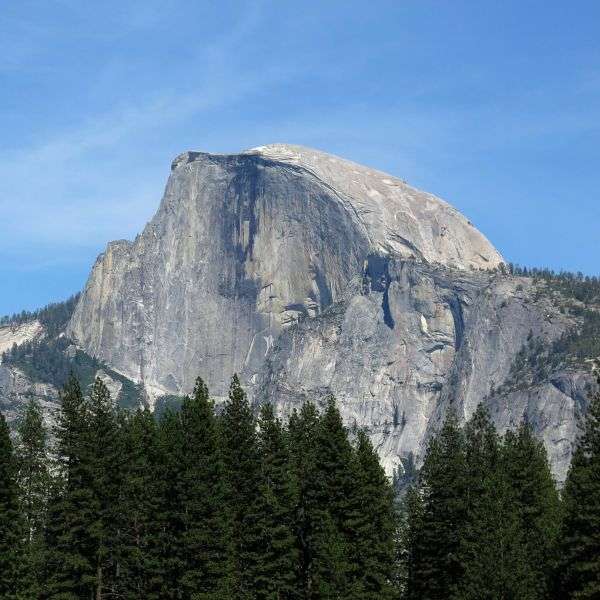
- Famous granite rock formations including Half Dome and El Capitan make it a popular destination for rock climbing
History
Natural History and Formation
Yosemite National Park's distinctive landscape formed through millions of years of volcanic activity, tectonic movement, erosion, and glaciation. Granite cliffs, domes, waterfalls, and U-shaped valleys are some of the most visible results of these processes.
Formation of the Sierra Nevada Range: Much of Yosemite's granite formed between about 105 and 85 million years ago. At that time, an oceanic tectonic plate was moving beneath the North American Plate. This process caused magma to rise deep underground. The magma slowly cooled and hardened into granite and other granitic rocks that became part of the Sierra Nevada Batholith.
Uplift and Erosion: Over millions of years, the Sierra Nevada was uplifted and tilted. Rivers and other forces of erosion removed the rock above the granite and exposed the hard rock at the surface. In the last 20 million years or so, uplift and faulting helped create the mountain range's modern shape. Rivers also cut deep, narrow valleys into the rock.
Glacial Activity: Glaciers became a major force in shaping Yosemite during the Ice Age. Glaciers formed in the high Sierra Nevada and moved down existing river valleys. Their enormous weight and movement widened and deepened the valleys, creating U-shaped valleys. Glaciers also polished granite, shaped domes and peaks, and left behind deposits called moraines. The most recent major glaciation, called the Tioga Glaciation, reached its greatest extent about 20,000 years ago.
Yosemite Valley Formation: Yosemite Valley began as a river-cut canyon with a V-shaped profile. Later, repeated glaciers carved the canyon deeper and wider, changing it into the broad U-shaped valley seen today. The Merced River helped create the original canyon, while glaciers were the main force that shaped its modern form. Features such as El Capitan, Half Dome, steep valley walls, and waterfalls were influenced by these long periods of erosion and glaciation.
Ongoing Changes: Yosemite's landscape is still changing today. Rockfalls, rivers, weathering, and erosion continue to reshape the park's cliffs and valleys. These processes mean that Yosemite's famous landscape is not finished—it continues to evolve.
Native History
Yosemite Valley has been home to Native American people for thousands of years. The National Park Service says people have lived in the Yosemite area for at least 8,000 years. Several Native American groups have traditional connections to Yosemite, including the Southern Sierra Miwok, Central Miwok, Mono Lake Paiute, Western Mono, and Chukchansi Yokuts.
The Ahwahneechee: The Ahwahneechee were a group of Native people who lived in Yosemite Valley when non-Native people first entered the valley in 1851. They called the valley Ahwahnee. The Ahwahneechee hunted, fished, gathered plants, and used the area's natural resources for food, tools, clothing, and shelter. Their way of life was closely connected to the land.
The Miwok: Southern and Central Miwok people have deep and continuing connections to Yosemite. By the late 1700s, Southern Miwok people appear to have made up much of the population of Yosemite, while Central Miwok people used areas in the northern part of the park. Miwok families gathered plants, hunted, fished, traded, and moved between different areas depending on the season.
The Mono and Paiute: Mono Lake Paiute people and Western Mono people also had important connections to Yosemite. People traveled across the Sierra Nevada to hunt, gather food, trade, and visit family and other communities. Some Mono and Paiute people later lived in Yosemite Valley and worked as guides, cooks, laborers, and basket makers.
Life and Culture: Native people used many plants and animals found in Yosemite. Acorns were an important food, and people also gathered berries, seeds, roots, and other plants. They hunted animals and caught fish. Basket making was an important skill and tradition. Homes and other structures were built from materials such as wood, bark, and plants found in the area.
Displacement and Survival: The California Gold Rush brought thousands of non-Native miners and settlers to the Sierra Nevada. In 1851, the Mariposa Battalion entered Yosemite Valley and tried to remove Native people from the area. Villages and food supplies were destroyed, and many Native people were killed, forced away, or displaced. However, Native people did not disappear from Yosemite. Many survivors returned or remained nearby, and their descendants continue to have strong connections to the park today.
Native Communities Today: The National Park Service recognizes seven tribes and tribal groups with traditional connections to Yosemite. These include the Southern Sierra Miwuk Nation, Bishop Paiute Tribe, Bridgeport Indian Colony, Mono Lake Kootzadika'a Tribe, North Fork Rancheria of Mono Indians, Picayune Rancheria of the Chukchansi Indians, and Tuolumne Band of Me-Wuk Indians. Native communities continue to practice traditions and hold ceremonies connected to Yosemite.
Fact check: The original text needs several corrections. It is not accurate to say that the Ahwahneechee were the "first known inhabitants" of Yosemite Valley or that the Monache simply "followed" them. People have lived in the Yosemite area for at least 8,000 years, and the valley's Native community included people from several groups. It is also incorrect to say that the Miwok first lived in Yosemite as early as 4500 BC based on clear archaeological evidence. Archaeologists cannot reliably assign specific tribal identities to people from such early periods.
Preservation
Yosemite National Park has a long history of conservation that began in the 1800s. Native American people lived in the Yosemite area for thousands of years before Euro-American settlement. Today, the park works to protect both its natural landscapes and its cultural history.
Native American Presence: Native American people have lived in and around Yosemite for at least 8,000 years. Several tribes and tribal groups have traditional connections to the area, including the Southern Sierra Miwok, Central Miwok, Mono Lake Paiute, and Western Mono. They hunted, fished, gathered plants, traded, and cared for the land.
Euro-American Exploration: Euro-American visitors entered Yosemite Valley in the 1850s. The arrival of settlers and tourists brought major changes to the valley and its Native communities. News, drawings, and photographs of Yosemite's waterfalls and cliffs soon attracted visitors from across the country.
The Yosemite Grant: In 1864, President Abraham Lincoln signed the Yosemite Grant. It gave Yosemite Valley and the Mariposa Grove of Giant Sequoias to California to be protected for public use and enjoyment. This was an important early step in the history of land conservation in the United States.
Creation of Yosemite National Park: In 1890, Congress created Yosemite National Park. The new park protected a much larger area than the Yosemite Grant. Yosemite Valley and Mariposa Grove remained under California's control until 1906, when they were transferred to the federal government and became part of the national park.
John Muir and Conservation: Naturalist and writer John Muir became one of Yosemite's most famous conservation supporters. His writings helped convince people to protect Yosemite and other wild places. He also helped inspire the creation of the Sierra Club in 1892.
Early National Park Management: The National Park Service was created in 1916. Stephen Mather became its first director in 1917. He helped improve roads, trails, campgrounds, and other visitor facilities while promoting the protection of national parks.
Changes to the Park: Yosemite's boundaries changed several times after the park was created. These changes helped protect additional forests, mountain areas, lakes, and other habitats. Important landmarks such as El Capitan and Half Dome were already within the park when it was established in 1890, so they were not later added through an expansion.
Conservation Challenges: Yosemite has faced challenges from increasing visitation, development, wildfires, invasive species, air pollution, and climate change. The National Park Service works to protect wildlife, forests, water, and other natural resources while allowing people to visit and enjoy the park.
UNESCO World Heritage Site: In 1984, UNESCO named Yosemite National Park a World Heritage Site. The designation recognizes Yosemite for its outstanding natural beauty, geology, ecosystems, and diverse plant and animal life.
Modern Conservation: Today, Yosemite continues to balance public access with conservation. Park staff, scientists, tribal communities, conservation groups, and visitors all have a role in protecting Yosemite's natural and cultural resources for future generations.
Future Preservation
Yosemite National Park faces several challenges today. Climate change, wildfires, drought, invasive species, and heavy visitation can affect the park's plants, animals, water, and cultural resources. Park managers and scientists are working to protect Yosemite while allowing people to enjoy it.
Climate Change: Climate change is affecting Yosemite in many ways. Warmer temperatures, less snow, earlier snowmelt, and changes in rainfall can affect forests, rivers, plants, and animals. Climate change can also increase the risk of severe wildfires and drought.
Drought and Water: Drought is a major concern in California. Less snow and rain can reduce water in rivers and streams. This can affect plants, wildlife, fish, and the people who visit the park. Yosemite's water supply also depends heavily on snow in the Sierra Nevada.
Loss of Biodiversity: Changes in climate, wildfire, disease, and invasive species can affect Yosemite's plants and animals. Sierra Nevada bighorn sheep are endangered, and the great gray owl is considered a threatened species in California. Protecting habitat is important for these and many other species.
Overcrowding and Visitor Management: Millions of people visit Yosemite each year. Heavy visitation can cause traffic, crowded trails, overflowing parking areas, and damage to sensitive areas. The National Park Service uses reservations, shuttles, trail management, and other strategies at different times and places to help manage visitors.
Wildfire: Fire is a natural part of many Sierra Nevada ecosystems, but hotter and drier conditions can make some fires larger and more difficult to control. Yosemite uses prescribed fire, forest thinning, and other methods to reduce dangerous fuels while allowing natural fire to play its important role.
Cultural and Historic Preservation: Yosemite contains important Native American cultural sites as well as historic buildings and other structures. Protecting these places requires careful work. The National Park Service also works with Native American tribes and other communities to preserve Yosemite's cultural heritage.
Air Quality: Yosemite can experience air pollution from sources outside the park, including pollution carried by wind from California's Central Valley and other areas. Smoke from wildfires can also make the air unhealthy. Poor air quality can affect people, plants, and wildlife.
Looking Ahead: Protecting Yosemite will require continued research, careful visitor management, habitat restoration, wildfire planning, and cooperation with Native American tribes and nearby communities. These efforts can help protect Yosemite's natural and cultural resources for future generations.
Geography
Yosemite National Park is located in California's Sierra Nevada mountains and is known for its varied and dramatic geography. The park includes deep valleys, towering granite cliffs, forests, meadows, rivers, lakes, and high mountain peaks. Famous landmarks such as Yosemite Valley, Half Dome, and El Capitan help make Yosemite one of the most recognizable landscapes in the United States.
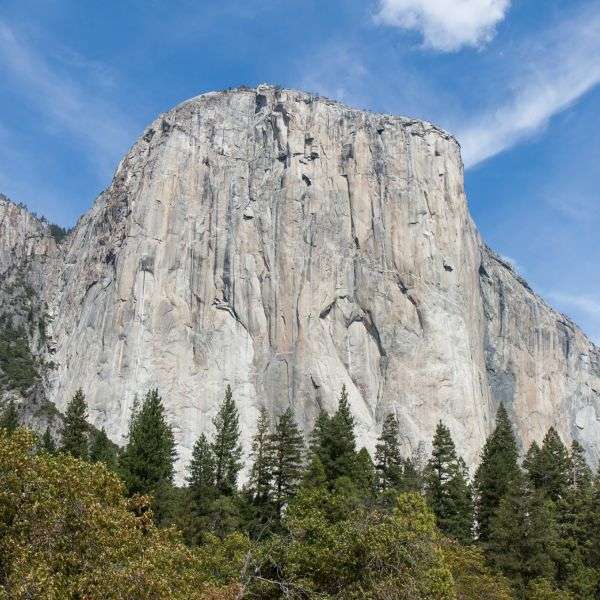
Granite Cliffs and Rock Formations
Yosemite is famous for its massive granite cliffs and rock formations. El Capitan and Half Dome are iconic granite monoliths that attract rock climbers and hikers from around the world. These formations were created by geological processes including uplift and erosion.
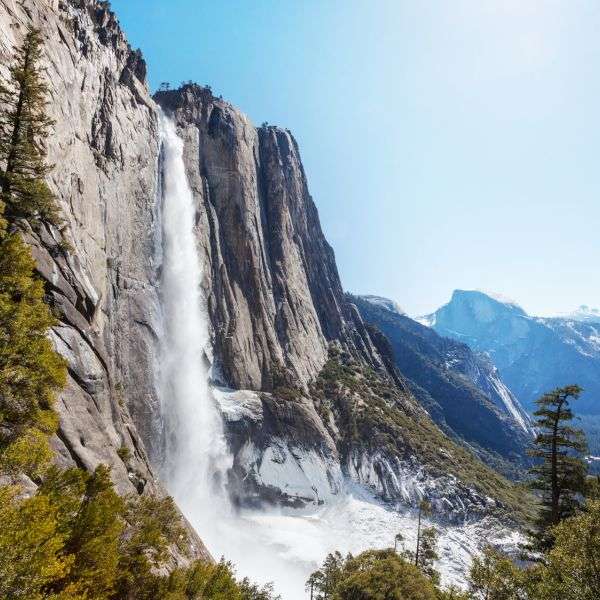
Waterfalls
Yosemite is home to numerous waterfalls, with Yosemite Falls being the tallest waterfall in North America. Bridalveil Fall, Vernal Fall, and Nevada Fall are other prominent waterfalls within the park. These waterfalls are fed by the snowmelt from the surrounding mountains.
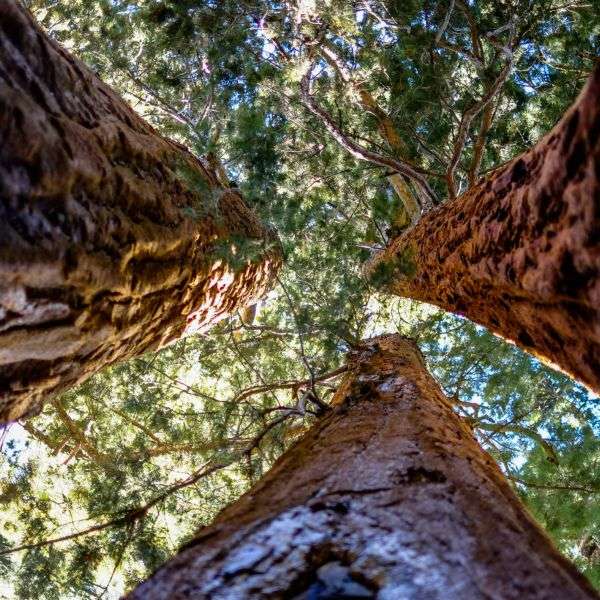
Giant Sequoia Groves
Yosemite National Park contains three groves of giant sequoia trees: the Mariposa Grove, the Tuolumne Grove, and the Merced Grove. These ancient trees, some of which are over 3,000 years old, are among the largest living organisms on Earth. The Grizzly Giant and the Tunnel Tree are famous sequoias within the park.
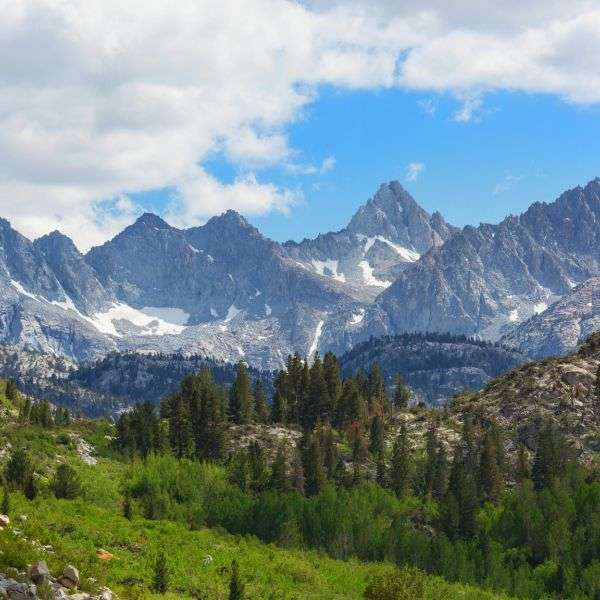
High Sierra Wilderness
Yosemite is located in the High Sierra region of the Sierra Nevada mountain range. The park's elevation ranges from about 2,000 feet (600 meters) to over 13,000 feet (4,000 meters) above sea level. The high alpine environment is characterized by rugged peaks, alpine lakes, and subalpine and alpine ecosystems.
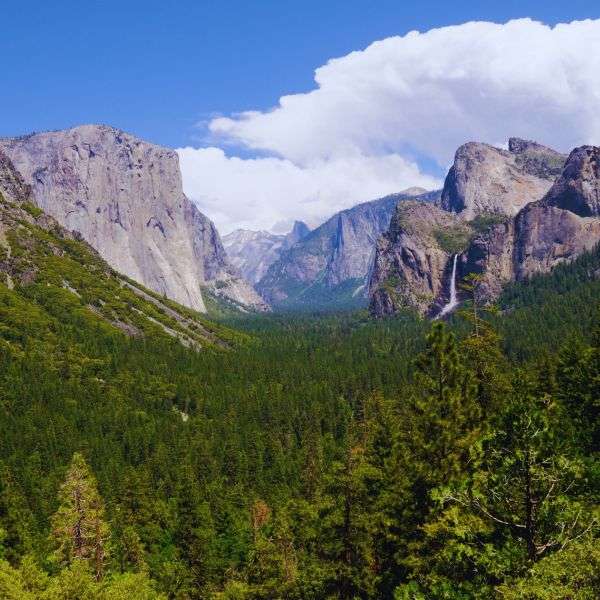
Glacial Features
Yosemite's landscape bears evidence of past glacial activity. Glacial erosion created the park's distinctive U-shaped valleys, such as Yosemite Valley and Hetch Hetchy Valley. Glacially polished granite cliffs and moraines are also notable features.
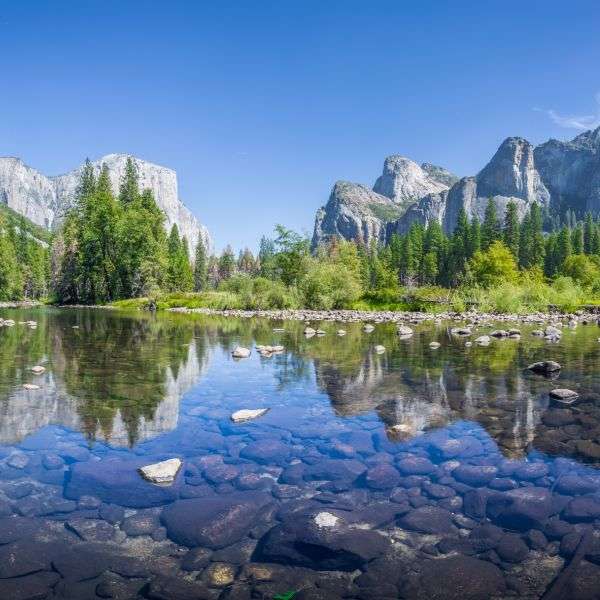
Meadows, Forests and Rivers
Yosemite National Park is home to lush meadows, including the Tuolumne Meadows, which provide habitat for a variety of plant and animal species. The park's diverse forests consist of pine, fir, cedar, and oak trees, supporting a wide range of wildlife. The park is crisscrossed by several rivers, including the Merced River, Tuolumne River, and the South Fork of the Merced River.
Plants
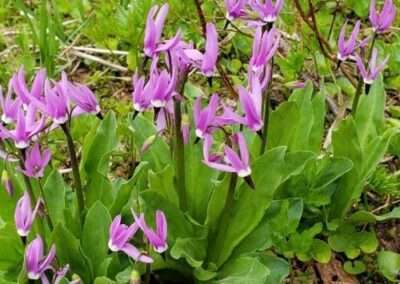
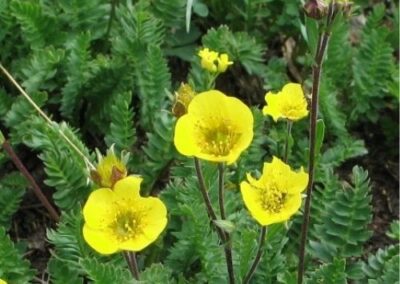
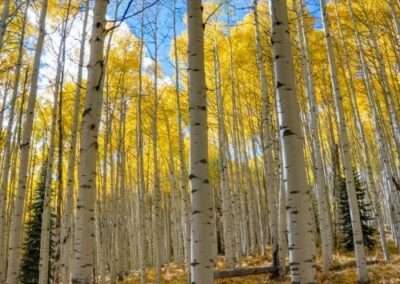
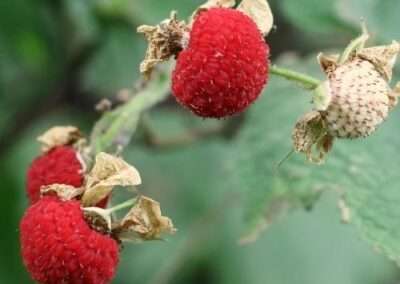
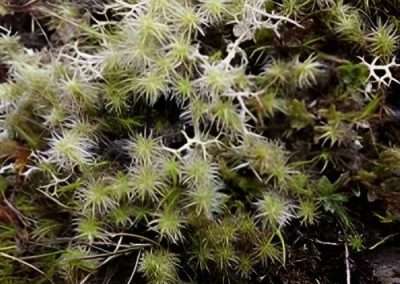
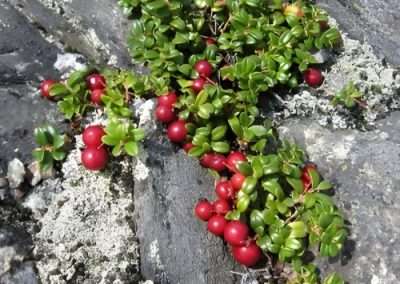
Yosemite National Park is home to a wide variety of plants because of its many different habitats and elevations. The park's plant life includes towering giant sequoias, ponderosa pines, firs, oaks, shrubs, and many colorful wildflowers. Plants grow from the warm, dry foothills to the cool alpine areas high in the Sierra Nevada. This rich plant life provides food and shelter for wildlife and plays an important role in Yosemite's ecosystems.


Animals
Mammals
Yosemite National Park is home to many kinds of mammals, from large predators to small animals that live in forests, meadows, and high mountain areas. These mammals play important roles in the park's ecosystems. Some are easy to spot, while others are rarely seen because they are shy or active mostly at night.
American Black Bear (Ursus americanus): Black bears are one of Yosemite's best-known mammals. They live in forests and other habitats throughout the park and eat plants, insects, and animals. Visitors must store food and scented items properly because bears can be attracted to human food.
Mountain Lion (Puma concolor): Mountain lions, also called cougars or pumas, live in Yosemite. They are solitary and difficult to see. They hunt animals such as deer and play an important role as predators in the park.
Coyote (Canis latrans): Coyotes are common and adaptable animals in Yosemite. They live in many habitats and eat small mammals, birds, insects, and other foods. They may also eat food they find around people, which is why visitors should never feed wildlife.
Gray Wolf (Canis lupus): Gray wolves are not a regular resident species in Yosemite. Wolves once lived in California but were removed from the state by the 1920s. In recent years, individual wolves have returned to parts of California, but there is no established wolf population in Yosemite.
Bobcat (Lynx rufus): Bobcats live throughout Yosemite and are sometimes seen in forests, meadows, and rocky areas. They are mostly solitary and hunt small mammals, birds, and other animals.
Sierra Nevada Bighorn Sheep (Ovis canadensis sierrae): Sierra Nevada bighorn sheep are native to the Sierra Nevada and use steep, rocky mountain habitats. They are excellent climbers and are specially adapted to life in high elevations. The Sierra Nevada population is endangered and is the focus of conservation efforts.
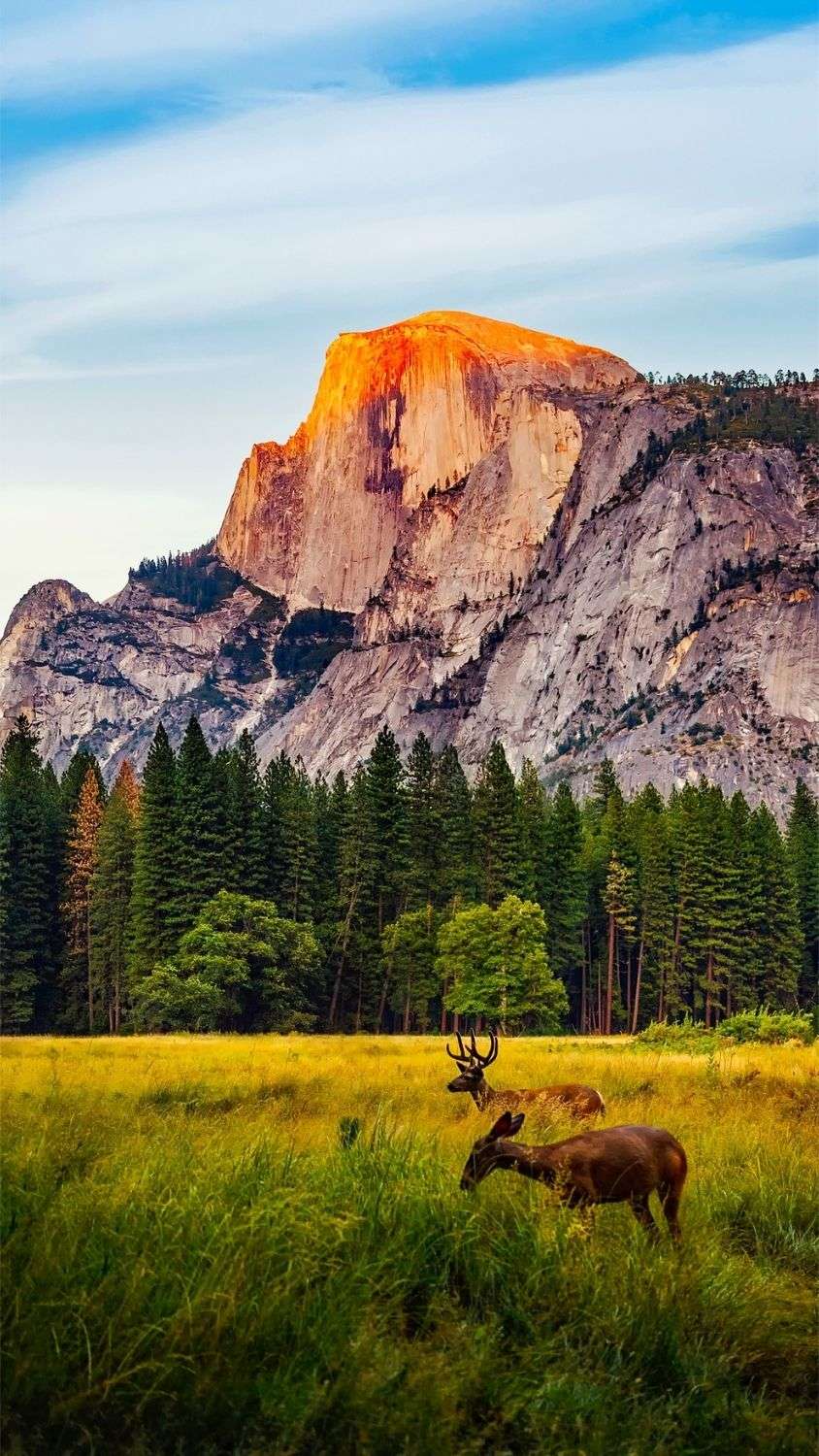
Mule Deer (Odocoileus hemionus): Mule deer are common in Yosemite. They eat grasses, leaves, shrubs, and other plants and can be found in forests, meadows, and mountain areas.
Yellow-bellied Marmot (Marmota flaviventris): Yellow-bellied marmots are large members of the squirrel family. They live in rocky areas at higher elevations and spend much of the warmer months eating plants and storing energy for winter. Their loud whistles can often be heard before the animals are seen.
Red Fox (Vulpes vulpes): Red foxes live in parts of Yosemite, but they are not often seen. They eat small mammals, birds, insects, fruit, and other foods. The Sierra Nevada also has a separate population of Sierra Nevada red foxes, which are specially adapted to high-elevation habitats.
American Marten (Martes caurina): American martens are small members of the weasel family that live mainly in mature conifer forests. They are excellent climbers and hunt small mammals, birds, and other prey. They are rarely seen because they are secretive and often active at night.
Fact check: Most of the mammals in the original list are found in Yosemite. The biggest correction is the gray wolf: there is no established wolf population in Yosemite, so it should not be presented as a regular park mammal. Also, the Sierra Nevada bighorn sheep should be identified by its full scientific name, Ovis canadensis sierrae, because it is a distinct population of bighorn sheep that is important to Yosemite's conservation work.
Reptiles
Yosemite National Park has several species of reptiles, although reptiles are less diverse than some other animal groups in the park. Lizards and snakes can be found in forests, rocky areas, meadows, and other habitats. Yosemite is also home to amphibians, such as the Sierra newt, but amphibians are not reptiles and should be listed separately.
Western Fence Lizard (Sceloporus occidentalis): Western fence lizards are common in Yosemite. They are often seen warming themselves on rocks, logs, and other sunny surfaces. They are sometimes called "blue-bellies" because males can have bright blue coloring on their throats and bellies.
Northern Alligator Lizard (Elgaria coerulea): Northern alligator lizards are found in parts of Yosemite, especially in forested areas. They have long bodies, rough scales, and strong jaws. They often hide under logs, rocks, and other cover.
Rubber Boa (Charina bottae): Rubber boas are small, nonvenomous snakes with smooth, shiny skin. They live in forested areas and are rarely seen because they spend much of their time under rocks, logs, and other cover. Their blunt tail can look similar to their head.
Common Garter Snake (Thamnophis sirtalis): Common garter snakes can be found in suitable habitats in Yosemite. They are often found near water and have long, slender bodies with stripes. They are not considered dangerous to people.
Northern Pacific Rattlesnake (Crotalus oreganus): Northern Pacific rattlesnakes are found in Yosemite and are the park's only venomous snake. They are usually found at lower and warmer elevations. Visitors should never approach or disturb a rattlesnake.
Western Skink (Plestiodon skiltonianus): Western skinks are small lizards that can be found in parts of Yosemite. They have smooth scales and young skinks often have a bright blue tail. They eat insects and other small animals.
Sierra Newt (Taricha sierrae): The Sierra newt is an amphibian, not a reptile. It lives in and around ponds, streams, and other wet habitats in Yosemite. Sierra newts have rough skin and can produce powerful toxins that help protect them from predators.
Fact check: The original list was mostly accurate, but the Sierra newt should be moved to the amphibian section. Also, rattlesnakes should be listed as the Northern Pacific rattlesnake rather than simply saying that several rattlesnake species live in Yosemite. Yosemite's reptile species are generally more common in the park's warmer, lower-elevation areas.
Birds
Yosemite National Park is home to a wide variety of birds. Its forests, meadows, rivers, lakes, cliffs, and high mountain areas provide habitats for many species. Birds in Yosemite include colorful songbirds, woodpeckers, water birds, and powerful birds of prey.
Steller's Jay (Cyanocitta stelleri): Steller's jays are common in Yosemite's forests and campgrounds. They have dark heads and bright blue bodies and are known for their loud calls. Visitors should not feed them or other wildlife.
Mountain Bluebird (Sialia currucoides): Mountain bluebirds can be found in open areas, meadows, and higher elevations. Males have bright blue feathers, while females are more grayish in color.
Peregrine Falcon (Falco peregrinus): Peregrine falcons nest on Yosemite's cliffs. They are powerful hunters and can reach very high speeds when diving after prey. Yosemite's cliffs provide excellent nesting sites for these birds.
Bald Eagle (Haliaeetus leucocephalus): Bald eagles can be seen around Yosemite's lakes and rivers, especially during the winter. They often eat fish and water birds and may be seen soaring high above the landscape.
Great Gray Owl (Strix nebulosa): Great gray owls are among the largest owls in North America. Yosemite supports a small and important population of these rare birds. They live mainly in high-elevation forests and meadows.
Western Tanager (Piranga ludoviciana): Western tanagers are colorful songbirds that arrive in Yosemite during the warmer months. Males have bright yellow bodies, black wings, and reddish coloring on the face. They eat insects, fruit, and berries.
White-headed Woodpecker (Dryobates albolarvatus): White-headed woodpeckers are closely associated with pine forests in the Sierra Nevada. They have black bodies, white heads, and white patches on their wings. They often eat pine seeds and insects.
American Dipper (Cinclus mexicanus): American dippers live along fast-moving mountain streams. They can walk along the bottom of shallow water and dive underwater to search for insects and other small prey.
Clark's Nutcracker (Nucifraga columbiana): Clark's nutcrackers play an important role in Yosemite's mountain forests. They collect and bury thousands of seeds, especially from whitebark pine. Some of the seeds they leave behind can grow into new trees.
Canyon Wren (Catherpes mexicanus): Canyon wrens live around rocky cliffs and canyons. They are small, brown birds with bright white throats. Their clear, descending songs can often be heard echoing from rocky walls.
Fact check: The birds listed above can all be found in Yosemite. One scientific name needed an update: the white-headed woodpecker is now generally listed as Dryobates albolarvatus, rather than Leuconotopicus albolarvatus. Great gray owls are also especially important to Yosemite because the Sierra Nevada population is small and considered threatened in California.
Fish
Yosemite National Park has several species of fish that live in its lakes, rivers, and streams. These fish are part of the park's aquatic ecosystems and provide food for animals such as bears, birds, and otters. Some fish are native to the Sierra Nevada, while others were introduced by people.
Rainbow Trout (Oncorhynchus mykiss): Rainbow trout are common in many of Yosemite's streams and lakes. They are native to western North America and prefer cold, clear water. Some populations in Yosemite are native, while others came from fish stocking.
Brown Trout (Salmo trutta): Brown trout are native to Europe and were introduced to California. They live in some of Yosemite's rivers and streams. They can compete with native fish for food and habitat.
Brook Trout (Salvelinus fontinalis): Brook trout are native to eastern North America and were introduced to parts of the Sierra Nevada. They prefer cold water and can be found in some of Yosemite's high-elevation lakes and streams.
California Golden Trout (Oncorhynchus mykiss aguabonita): California golden trout are native to the southern Sierra Nevada. They are the official freshwater fish of California and are known for their bright golden color. They are not widespread throughout Yosemite, so they should not be described as a common Yosemite fish.
Lahontan Cutthroat Trout (Oncorhynchus clarkii henshawi): Lahontan cutthroat trout are native to the Great Basin and are not native to Yosemite. They have been introduced into some waters in the Sierra Nevada, but they are not a major native fish of Yosemite.
Mountain Whitefish (Prosopium williamsoni): Mountain whitefish are native to parts of western North America. They live in cold rivers and streams and can be found in some areas of Yosemite.
Sacramento Pikeminnow (Ptychocheilus grandis): Sacramento pikeminnow are native to California's Central Valley and nearby river systems. They can be found in some lower-elevation waterways connected to the park's drainage systems, but they are not a common fish throughout Yosemite.
Fact check: The original list needs a few corrections. Lahontan cutthroat trout are not native to Yosemite, and California golden trout are native to the southern Sierra Nevada but have a limited distribution in Yosemite. Also, rainbow trout are native to the region, but some populations in Yosemite were introduced through fish stocking. The exact fish species found in a particular Yosemite lake or stream can vary because of elevation, water conditions, and past stocking.
Amphibians
Yosemite National Park is home to several amphibian species, including frogs, toads, and salamanders. These animals live in forests, meadows, ponds, streams, and high-elevation wetlands. Amphibians are an important part of Yosemite's ecosystems because they eat insects and other small animals and provide food for predators.
Sierra Newt (Taricha sierrae): Sierra newts live in ponds, streams, and other wet habitats. They have rough skin and an orange or yellow belly. They produce powerful toxins that help protect them from predators.
Mountain Yellow-legged Frog (Rana muscosa): Mountain yellow-legged frogs are native to the Sierra Nevada and live in high-elevation lakes, ponds, and streams. Their numbers have declined greatly because of introduced fish, disease, drought, and other threats. Conservation projects are helping restore their populations in Yosemite.
California Tree Frog (Pseudacris cadaverina): The California tree frog is found in parts of Yosemite and other areas of the Sierra Nevada. It is a small frog that often lives near streams and rocky areas. The original text incorrectly called this species a Pacific treefrog. The Pacific treefrog is a different species, Pseudacris regilla.
Western Toad (Anaxyrus boreas): Western toads live in many parts of Yosemite, including meadows, forests, and wetlands. They have dry, warty skin and usually have a light stripe running down their backs.
Yosemite Toad (Anaxyrus canorus): The Yosemite toad is found only in the Sierra Nevada of California, making it an endemic species. It lives mainly in high-elevation meadows and breeds in shallow ponds and pools. The species is federally listed as threatened.
Rough-skinned Newt (Taricha granulosa): Rough-skinned newts are not a confirmed resident amphibian species of Yosemite National Park. They are found mainly farther north along the Pacific Coast, so they should not be included as a regular Yosemite species.
California Slender Salamander (Batrachoseps attenuatus): California slender salamanders live in moist forests and other damp habitats. They are small, thin salamanders that do not have lungs and breathe through their skin.
Ensatina (Ensatina eschscholtzii): Ensatina salamanders are found in moist forests and woodlands in parts of the Sierra Nevada. They breathe through their skin and the lining of their mouths rather than using lungs.
Fact check: The original list included several species that needed correction. The California toad should be called the western toad in Yosemite, and the Pacific treefrog should be replaced with the California tree frog. The rough-skinned newt is not considered a regular Yosemite amphibian. The Yosemite toad and mountain yellow-legged frog are especially important because both are protected species facing major conservation challenges.
"Yosemite, along with all of creation, calls us to wake up, stand up, and stop the insane destruction of the earth before it’s too late.”
― John Dear
“Yosemite Valley, to me, is always a sunrise, a glitter of green and golden wonder in a vast edifice of stone and space.”
― Ansel Adams
“I crave time in Yosemite like I crave food and water.”
― Tommy Caldwell
“But no temple made with hands can compare with Yosemite. Every rock in its walls seems to glow with life...as if into this one mountain mansion Nature had gathered her choicest treasures.”
— John Muir
Explore More With Us
Stay updated on National Parks EDU resources, park news, community updates, and and ways to explore, and protect.

National Parks Edu's mission is to help kids and families understand what makes these places so important. Because when you learn about nature, you start to care about protecting it.
National Parks EDU is an independent educational website and is not affiliated with, endorsed by, sponsored by, or officially connected to the National Park Service (NPS) or the U.S. government. © National Parks EDU. All Rights Reserved. October 18, 2026