Shenandoah
National Park
Virginia
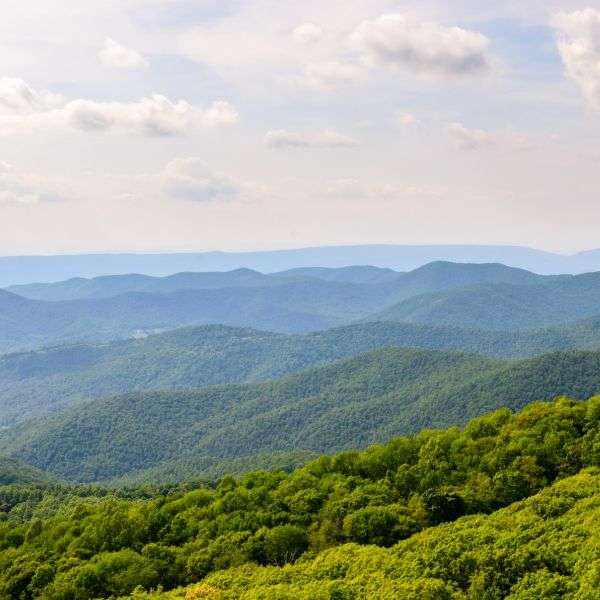
a portion of the Blue Ridge Mountains known for its scenic beauty, trails, and Skyline Drive
Fast Facts
Location
Located in Virginia, west of Washington D.C.
Established in
1926
Established by
President Franklin Roosevelt
Size
311 sq. miles
Known For
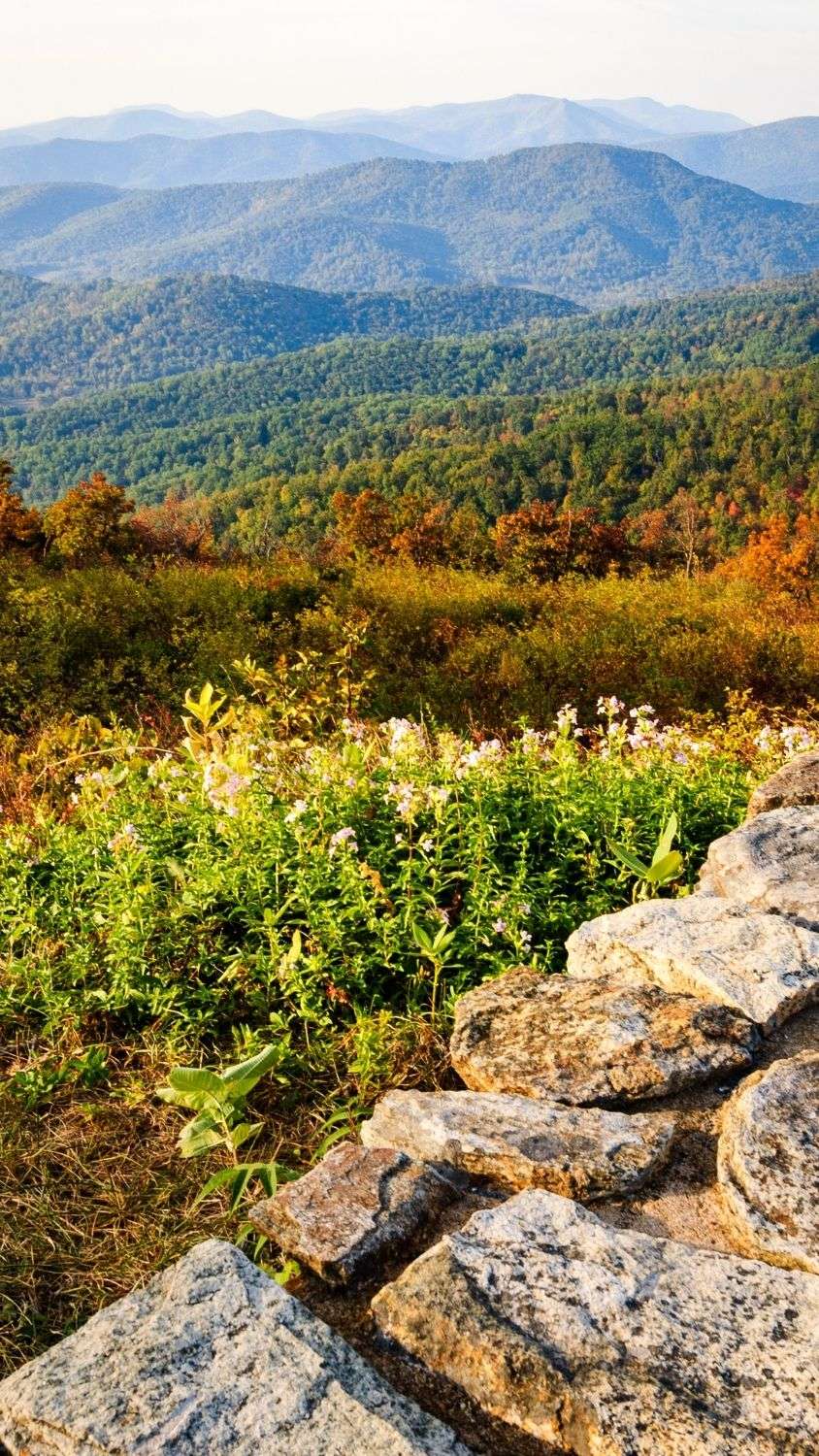
- Renowned for its stunning and diverse landscapes, including rolling hills, lush forests, and panoramic views of the Shenandoah Valley
- Shenandoah National Park is particularly famous for its vibrant fall foliage
- Shenandoah is a hiker's paradise, offering over 200 miles of trails that range from easy walks to challenging hikes
History
Natural History and Formation
Shenandoah National Park is situated in the Blue Ridge Mountains of the Appalachian range, and its landscape reflects hundreds of millions of years of tectonic activity, erosion, and weathering.
Blue Ridge Mountains: The park's mountains are part of the ancient Appalachian Mountains, which formed through multiple episodes of continental collision and mountain building. These processes uplifted and deformed the rocks that now make up the Blue Ridge.
Ancient Rocks: Shenandoah contains some of the oldest rocks in the region, including ancient granitic and metamorphic rocks. These rocks have undergone extensive heating, pressure, deformation, and erosion over geological time.
Faulting and Folding: Tectonic forces fractured, folded, and uplifted the bedrock, contributing to the ridges and valleys that characterize the park. Although the major mountain-building events are ancient, their geological legacy remains visible in the park's terrain.
Erosion and Weathering: After the mountains were uplifted, millions of years of weathering and erosion gradually wore down the landscape. Streams, groundwater, frost, and other processes continue to break down and transport rock, shaping the park's slopes and valleys.
River and Stream Erosion: Numerous streams originating in the Blue Ridge flow through Shenandoah National Park. Their persistent erosion has carved hollows, valleys, and channels into the mountainous terrain and continues to modify the landscape.
Mass Wasting: Gravity-driven processes such as landslides, rockfalls, and soil movement also contribute to the park's changing landscape. These events are especially important on steep slopes and help redistribute weathered rock and soil.
Geological Diversity: The combination of resistant and less-resistant rock types has influenced the development of Shenandoah's distinctive ridges, peaks, waterfalls, and valleys. Differences in how rocks respond to erosion help explain the park's varied topography.
Modern Landscape: Shenandoah's mountains are remnants of a much older Appalachian landscape that has been continuously reshaped by erosion and weathering. Today, these processes continue to create the scenic ridges, wooded hollows, waterfalls, and exposed rock formations that define the park.
Native History
The area now encompassed by Shenandoah National Park has a long and complex Native American history, with Indigenous peoples living in and traveling through the Blue Ridge and Shenandoah Valley for thousands of years. The region's forests, rivers, mountains, and valleys provided important resources for hunting, fishing, gathering, trade, and cultural practices.
Early Inhabitants: Archaeological evidence indicates that Indigenous peoples occupied the Shenandoah Valley and surrounding Blue Ridge region for thousands of years. Early communities hunted game, gathered wild plants, fished in streams and rivers, and developed increasingly diverse seasonal lifeways.
Indigenous Peoples of the Region: Several Native American peoples have historical connections to the broader Shenandoah Valley and Blue Ridge region, including the Monacan, Manahoac, Shawnee, and other Indigenous communities. Tribal territories and patterns of movement changed over time, and the region was an important meeting and travel corridor.
Shenandoah Valley: The valley provided fertile soils, abundant water, wildlife, and plant resources. Rivers and streams served as sources of food and water as well as natural transportation routes, while the surrounding mountains supplied timber, game, medicinal plants, and other resources.
Trade and Interaction: The Shenandoah Valley functioned as a corridor connecting different Indigenous communities. Trade networks facilitated the exchange of materials, food, tools, and cultural knowledge across the Appalachian region.
European Contact: European colonization beginning in the 17th century brought profound changes. Disease, warfare, displacement, changing trade relationships, and increasing settlement pressure disrupted Indigenous communities and their traditional relationships with the land.
Displacement and Removal: During the colonial and early United States periods, Indigenous peoples throughout Virginia and the broader Southeast experienced land loss and forced displacement. These changes contributed to the disruption of traditional communities and access to ancestral territories.
Cultural Significance: The mountains, valleys, waterways, and other natural features of the region have long held cultural significance for Indigenous peoples. Traditional knowledge, stories, and relationships with the landscape remain important parts of the region's Indigenous heritage.
Archaeological Evidence: Archaeological resources in and around Shenandoah National Park provide evidence of long-term Indigenous occupation. Stone tools, pottery, projectile points, and other remains help researchers understand how people lived in and interacted with the Blue Ridge environment.
Preserving Indigenous History: Understanding Shenandoah's history requires recognizing that Indigenous peoples were present long before the establishment of the national park. Today, archaeological research, historical interpretation, and engagement with descendant communities help preserve and communicate the Indigenous heritage of the Shenandoah region.
Preservation
The preservation history of Shenandoah National Park reflects the growth of the American conservation movement, the development of scenic recreation, and the complicated human history surrounding the creation of protected lands.
Early Conservation Movement: During the late 19th and early 20th centuries, growing concerns about logging, agriculture, development, and the loss of natural landscapes encouraged conservationists to advocate for protecting portions of the Blue Ridge Mountains.
Shenandoah Valley and Blue Ridge Preservation: Conservation advocates recognized the scenic and recreational value of the Blue Ridge landscape. Proposals for a large protected area eventually gained support as national parks became an increasingly important part of American conservation policy.
Skyline Drive: Plans for a scenic roadway along the crest of the Blue Ridge developed during the 1920s and became closely associated with the creation of Shenandoah National Park. Skyline Drive was envisioned as a way to provide public access to the mountain scenery while creating a major recreational attraction.
Establishment of Shenandoah National Park: Shenandoah National Park was authorized in 1926 and officially established on December 26, 1935, after land acquisition and other requirements were completed. The park ultimately encompassed more than 190,000 acres of the Blue Ridge Mountains.
Displacement of Residents: The establishment of the park involved the removal of many people who had lived within the proposed park boundaries. Hundreds of families were displaced through land acquisition and government action. The disruption of established communities remains an important and sometimes painful part of the park's preservation history.
Civilian Conservation Corps: During the 1930s, the Civilian Conservation Corps played a major role in developing Shenandoah. CCC workers constructed trails, roads, overlooks, picnic areas, campgrounds, and other facilities while also carrying out conservation and erosion-control projects.
Wilderness Preservation: Over subsequent decades, conservation efforts increasingly emphasized protecting undeveloped areas and maintaining natural ecological processes. Large portions of Shenandoah are now managed as wilderness or other forms of protected backcountry.
Historic and Cultural Resource Protection: Preservation efforts have expanded beyond scenery and wildlife to include historic structures, archaeological sites, cemeteries, former homesteads, and other cultural resources associated with the people who lived in the region before and after the park was established.
Balancing Conservation and Recreation: Today, Shenandoah National Park's preservation mission involves balancing protection of forests, streams, wildlife, wilderness, and cultural resources with recreational opportunities such as hiking, camping, scenic driving, and wildlife viewing.
Continuing Preservation: The park's preservation story continues through habitat conservation, wildfire and forest management, protection of historic resources, scientific research, and efforts to better recognize the experiences of the communities that were affected by the park's creation.
Future Preservation
Preserving Shenandoah National Park for future generations requires addressing a range of environmental, cultural, and management challenges. Protecting the park's forests, waterways, wildlife, historic resources, and wilderness while accommodating public use requires ongoing research, monitoring, and adaptive management.
Air Pollution: Air pollution from sources outside the park can affect Shenandoah's forests, soils, streams, and visibility. Ozone, nitrogen compounds, and other pollutants can stress vegetation and contribute to changes in aquatic and terrestrial ecosystems. Regional cooperation to reduce air pollution remains important for protecting the park's natural resources.
Invasive Species: Invasive plants, insects, diseases, and other nonnative organisms can threaten native ecosystems. Species such as invasive plants may compete with native vegetation, alter forest composition, and reduce habitat quality. Early detection, removal, and long-term monitoring are important components of invasive-species management.
Climate Change: Rising temperatures, changing precipitation patterns, shifting seasons, and more frequent extreme weather events may alter Shenandoah's forests, streams, wildlife, and plant communities. Warmer conditions can also allow some pests and diseases to expand their ranges. Adaptive management and continued scientific monitoring are essential for increasing ecosystem resilience.
Visitor Impacts: Millions of visitors are attracted to Shenandoah each year, creating pressure on trails, roads, campgrounds, wildlife habitat, and other facilities. Heavy use can cause soil erosion, vegetation damage, litter, and wildlife disturbance. Careful visitor management, trail maintenance, education, and responsible recreation help reduce these impacts.
Water Quality: Shenandoah's streams and watersheds are important components of the park's ecosystems. Sedimentation, nutrient pollution, acidification, and runoff from surrounding lands can affect aquatic habitats. Protecting watersheds and monitoring stream conditions are important for maintaining healthy aquatic ecosystems.
Forest Health: The park's forests face pressures from invasive pests, diseases, changing climate conditions, severe storms, and altered ecological processes. Maintaining healthy and diverse forests requires monitoring forest conditions and responding to emerging threats while allowing natural processes to continue where appropriate.
Cultural Resource Preservation: Shenandoah contains historic structures, archaeological sites, cemeteries, landscapes, and other resources connected to the people who lived in the region. Protecting these resources from deterioration, vandalism, erosion, and natural processes requires careful documentation, maintenance, and interpretation.
Land Use and Development: Although the park protects a large area, development and land-use changes outside its boundaries can affect wildlife corridors, water quality, scenic views, and ecological connectivity. Cooperation with neighboring communities and landowners can help reduce fragmentation and protect important connections between the park and surrounding landscapes.
Wildlife Conservation: Maintaining healthy populations of native wildlife requires protecting habitat and monitoring changes in species populations. Climate change, invasive species, disease, habitat fragmentation, and human disturbance can all influence wildlife. Conservation efforts seek to maintain the ecological relationships that support the park's biodiversity.
Infrastructure and Funding: Roads, trails, bridges, campgrounds, visitor facilities, and historic structures require continual maintenance. Adequate funding and staffing are necessary to keep infrastructure safe while minimizing its environmental footprint and ensuring that conservation programs can continue.
Balancing Preservation and Public Enjoyment: A central challenge is balancing the protection of Shenandoah's natural and cultural resources with opportunities for hiking, camping, scenic driving, education, and other forms of recreation. Sustainable visitor practices, public education, scientific research, and adaptive management will remain essential to preserving the park for future generations.
Geography
Shenandoah National Park, located in the Blue Ridge Mountains of Virginia, is renowned for its scenic mountain landscapes, extensive forests, and numerous waterfalls. The park's geography is characterized by long ridges, deep wooded hollows, rocky outcrops, and gently rolling mountain slopes. Skyline Drive follows the crest of the Blue Ridge for approximately 105 miles, providing access to numerous overlooks and scenic viewpoints. With its diverse habitats, flowing streams, cascading waterfalls, and abundant wildlife, Shenandoah National Park offers visitors an opportunity to experience the natural beauty and cultural heritage of the Appalachian Mountains.
Blue Ridge Mountains
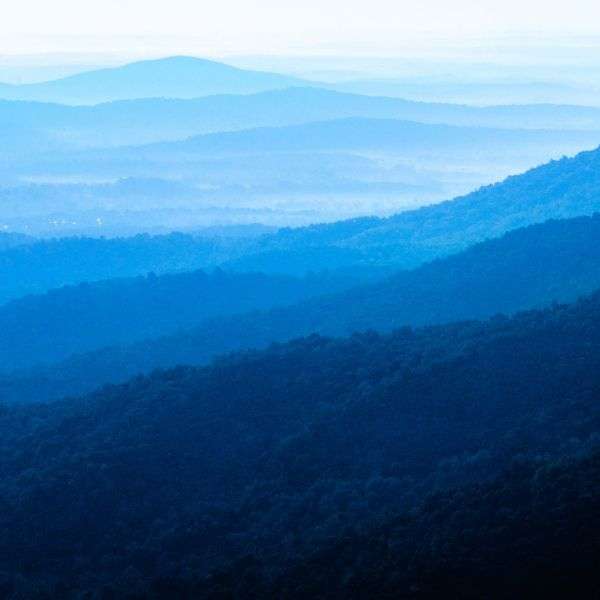
The park is situated along the crest of the Blue Ridge Mountains, which extend from Georgia to Pennsylvania. The Blue Ridge Mountains are known for their rolling peaks and distinctive bluish hue, which is attributed to the release of volatile organic compounds from the trees.
Elevation
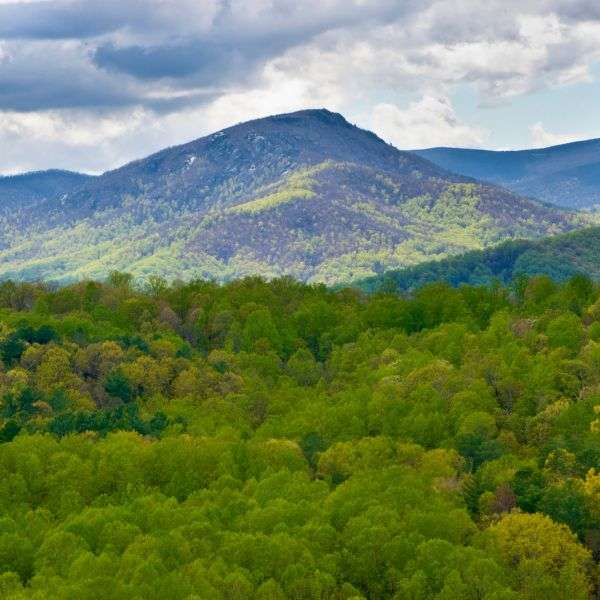
The park's elevation varies significantly, ranging from around 600 feet at the lowest point near the Thornton Gap entrance to over 4,000 feet at the highest points along the Skyline Drive. Some prominent peaks include Hawksbill Mountain, Stony Man Mountain, and Old Rag Mountain.
Valleys
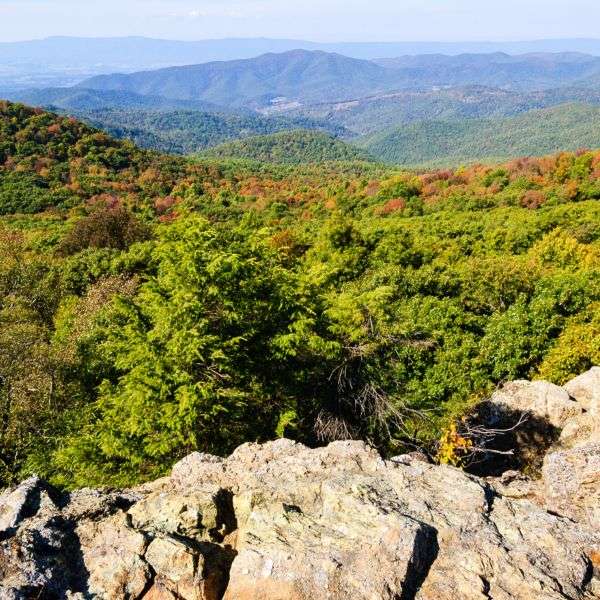
The Shenandoah Valley lies to the west of the park, separating the Blue Ridge Mountains from the parallel Ridge-and-Valley Appalachians to the west. The park is traversed by numerous smaller valleys, providing scenic views and diverse habitats.
Shenandoah River
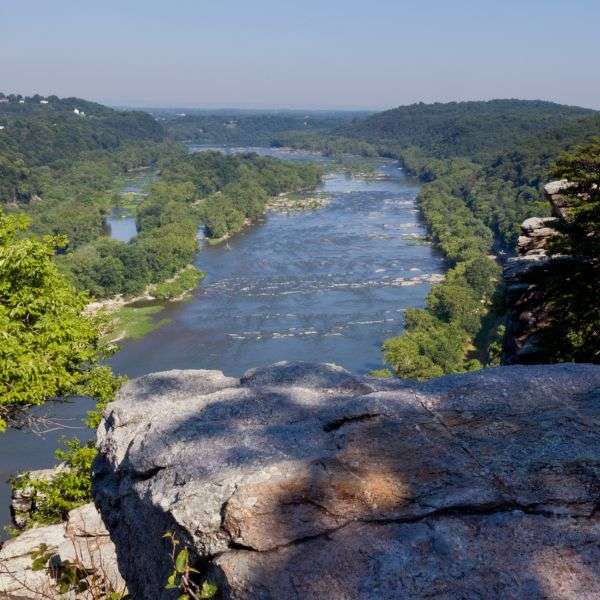
The Shenandoah River flows along the western edge of the park. It is a tributary of the Potomac River and plays a vital role in the park's hydrology. The river, along with its tributaries, supports diverse aquatic ecosystems.
Waterfalls
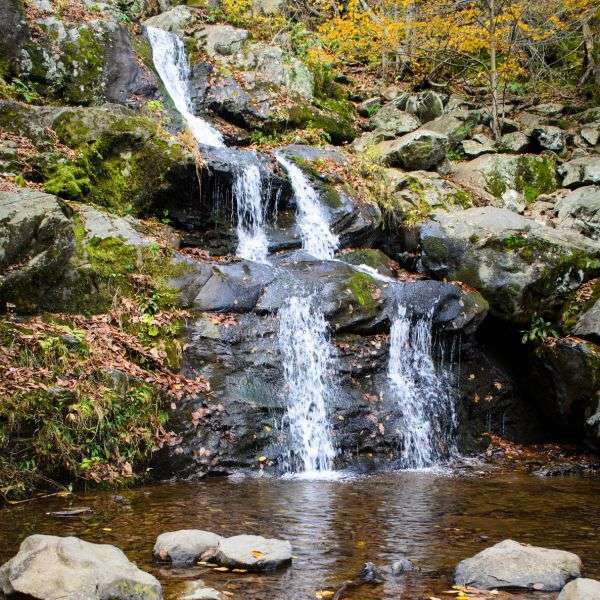
Shenandoah National Park features several picturesque waterfalls, including Dark Hollow Falls, Whiteoak Canyon Falls, and South River Falls. These waterfalls contribute to the scenic beauty of the park and provide popular destinations for hikers.
Geological Formations
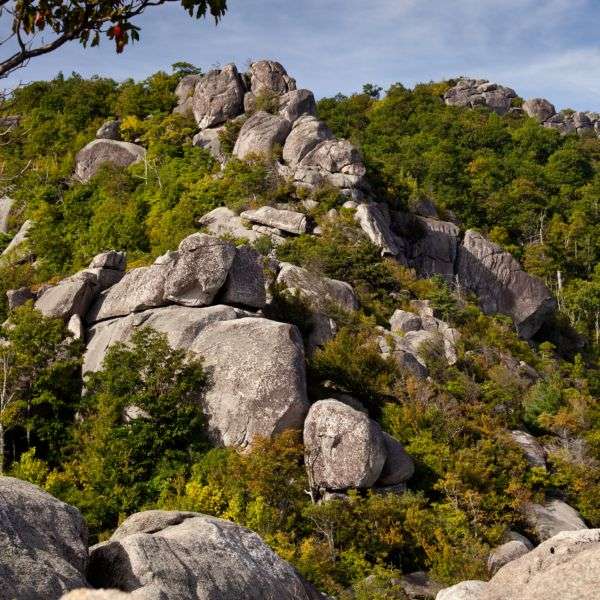
The geology of Shenandoah National Park includes granite, gneiss, and other metamorphic rocks. The park's landscape has been shaped by tectonic forces, erosion, and other geological processes over millions of years.
Plants
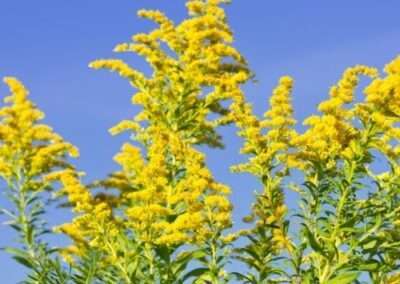
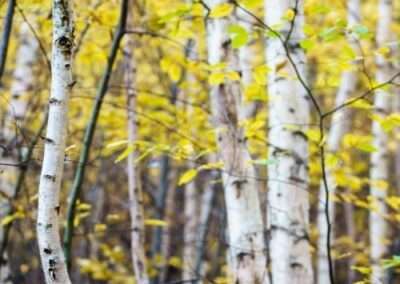
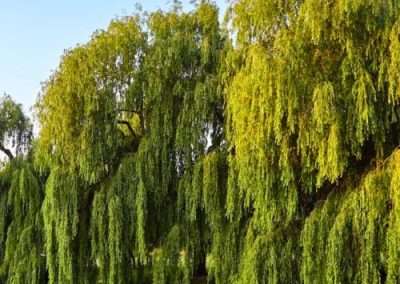
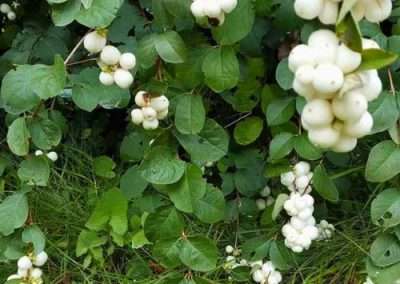
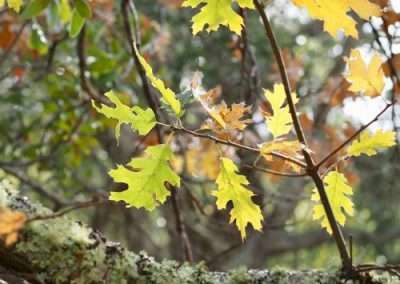
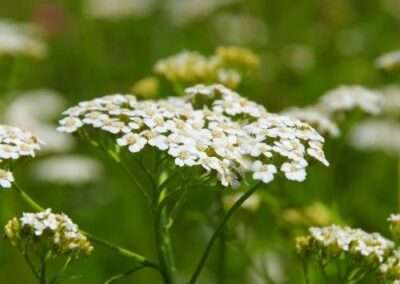
Shenandoah National Park is home to a diverse array of plant life, flourishing across its forests, mountain slopes, wetlands, and open meadows. The park's flora includes abundant hardwoods such as tulip poplar, oaks, maples, and hickories, along with conifers and a rich variety of shrubs, ferns, and flowering plants. Throughout spring, summer, and fall, colorful wildflowers add seasonal beauty to the landscape, while native grasses and other plants provide important food and habitat for wildlife. Visitors to Shenandoah National Park can explore this botanical diversity along its many trails and scenic areas, experiencing the ecological richness of the Blue Ridge Mountains.

Animals
Mammals
Shenandoah National Park supports a diverse community of mammals, ranging from large herbivores and predators to small rodents and bats. Its forests, meadows, streams, and rocky habitats provide food, shelter, and breeding areas for many species.
White-tailed Deer (Odocoileus virginianus): White-tailed deer are abundant throughout Shenandoah National Park and can be encountered in forests, meadows, and along roadsides. They are important herbivores within the park's ecosystems.
Black Bear (Ursus americanus): Black bears are one of Shenandoah's most recognizable mammals. They inhabit extensive forested areas and have an omnivorous diet that includes berries, nuts, insects, plants, and occasionally animal matter. Visitors should follow proper bear-safety practices when traveling through the park.
Eastern Cottontail (Sylvilagus floridanus): Eastern cottontails inhabit grassy areas, meadows, forest edges, and other locations with dense vegetation. They feed primarily on grasses and other plant material and are most active around dawn and dusk.
Eastern Gray Squirrel (Sciurus carolinensis): These common tree squirrels are widespread throughout the park's forests. They feed on nuts, seeds, buds, fruits, and other plant material and play an important role in dispersing tree seeds.
Eastern Chipmunk (Tamias striatus): Eastern chipmunks are small, striped rodents commonly seen along trails and in forested areas. They gather seeds, nuts, fruits, and other foods and store provisions in underground burrows.
Red Fox (Vulpes vulpes): Red foxes inhabit a variety of environments, including forests, meadows, and forest edges. They are opportunistic predators and omnivores that feed on small mammals, birds, insects, fruits, and other available foods.
Coyote (Canis latrans): Coyotes are adaptable predators found throughout the park. They occupy forests, meadows, and other habitats and feed on a wide range of prey, including rodents, rabbits, and other small animals.
Bobcat (Lynx rufus): Bobcats are solitary and elusive predators that occur in Shenandoah's forests and other suitable habitats. They primarily hunt rabbits, rodents, birds, and other small animals, making sightings relatively uncommon.
Eastern Mole (Scalopus aquaticus): Eastern moles spend much of their lives underground, creating tunnels through the soil in search of earthworms, insects, and other invertebrates. Their burrowing activity contributes to soil disturbance and nutrient cycling.
Virginia Opossum (Didelphis virginiana): Virginia opossums are nocturnal and adaptable mammals found in wooded areas, forest edges, and other habitats. They are omnivorous scavengers that consume insects, fruits, small animals, and carrion.
Eastern Red Bat (Lasiurus borealis): Eastern red bats are among the bat species that can occur in the park. They feed primarily on flying insects and contribute to natural insect control. Like other bats, they are important components of forest ecosystems.
Woodland Jumping Mouse (Napaeozapus insignis): This small nocturnal rodent inhabits moist forest environments and feeds on seeds, fruits, insects, and other foods. Its powerful hind legs allow it to make remarkably long jumps relative to its body size.
Reptiles
Shenandoah National Park is home to a diverse community of reptiles, including snakes, turtles, and lizards. These species occupy a variety of habitats, from forests and rocky slopes to meadows, wetlands, and stream corridors, and play important roles in the park's ecosystems.
Eastern Garter Snake (Thamnophis sirtalis): Eastern garter snakes are widespread and adaptable, occurring in forests, meadows, and areas near streams and wetlands. They feed on a variety of prey, including amphibians, earthworms, insects, and small animals.
Eastern Ratsnake (Pantherophis alleghaniensis): Also known as the black ratsnake, this large, nonvenomous snake occurs in forests, rocky areas, and forest edges. It is an effective climber and feeds on rodents, birds, eggs, and other small animals.
Eastern Copperhead (Agkistrodon contortrix): Eastern copperheads are venomous pit vipers that inhabit rocky, wooded areas and forest edges. They are generally secretive and avoid people, but visitors should never approach or handle them.
Eastern Box Turtle (Terrapene carolina carolina): Eastern box turtles are terrestrial turtles commonly associated with forested habitats, clearings, and woodland edges. Their high-domed shells and hinged lower shells provide effective protection from predators.
Common Five-lined Skink (Plestiodon fasciatus): Five-lined skinks are active lizards often found around rocks, logs, tree stumps, and sunny forest openings. Young individuals typically have prominent stripes and a bright blue tail.
Eastern Fence Lizard (Sceloporus undulatus): Eastern fence lizards inhabit sunny rocky areas, open woodlands, and forest edges. They frequently bask on rocks, logs, and tree trunks and feed primarily on insects and other small invertebrates.
Northern Watersnake (Nerodia sipedon): Northern watersnakes are nonvenomous snakes strongly associated with aquatic environments such as streams, ponds, and wetlands. They are capable swimmers and feed on fish, amphibians, and other aquatic prey.
Eastern Wormsnake (Carphophis amoenus): This small, secretive snake spends much of its time beneath leaf litter, rocks, and loose soil. It primarily feeds on earthworms and other soft-bodied invertebrates.
Timber Rattlesnake (Crotalus horridus): Timber rattlesnakes are venomous snakes associated with forested and rocky habitats. They are generally elusive and should be observed from a safe distance if encountered.
Eastern Musk Turtle (Sternotherus odoratus): Eastern musk turtles are small aquatic turtles that inhabit ponds, streams, and other slow-moving waters. They spend much of their time in or near water and feed on aquatic invertebrates and other small organisms.
Smooth Green Snake (Opheodrys vernalis): Smooth green snakes are small, nonvenomous snakes associated with grassy areas, meadows, and vegetation along forest edges. Their bright green coloration provides camouflage among plants.
Eastern Milksnake (Lampropeltis triangulum): Eastern milksnakes are nonvenomous snakes that can occur in forests, rocky areas, and fields. Their patterned coloration can resemble that of other banded snakes, but they are harmless to humans and primarily feed on small animals.
Birds
Shenandoah National Park is home to a diverse variety of fish, particularly in its streams and rivers. The park's cool, clear mountain waters provide habitat for several native and introduced species.
Brook Trout (Salvelinus fontinalis): Brook trout are native to Shenandoah's mountain streams and are an important species in the park's aquatic ecosystems. They are especially associated with cold, clean, high-elevation waters.
Rainbow Trout (Oncorhynchus mykiss): Rainbow trout have been introduced into some waters of the park and can be found in suitable streams. They are popular among recreational anglers.
Brown Trout (Salmo trutta): Brown trout are a non-native species found in some of Shenandoah's streams. They are adaptable fish that can thrive in cool mountain waters.
Blacknose Dace (Rhinichthys atratulus): Blacknose dace are small native minnows commonly found in shallow streams and riffles. They feed primarily on aquatic insects and other small organisms.
Longnose Dace (Rhinichthys cataractae): Longnose dace inhabit rocky, fast-flowing sections of streams. Their streamlined bodies allow them to withstand strong currents while searching for food.
Creek Chub (Semotilus atromaculatus): Creek chubs are widespread freshwater minnows that can inhabit streams and pools throughout the region. They feed on insects, small aquatic organisms, and plant material.
White Sucker (Catostomus commersonii): White suckers are bottom-feeding fish found in streams and other freshwater habitats. They help recycle nutrients by feeding on organic material and small aquatic organisms.
Fantail Darter (Etheostoma flabellare): Fantail darters are small bottom-dwelling fish associated with rocky stream habitats. They are adapted to life in flowing water and feed largely on aquatic invertebrates.
Johnny Darter (Etheostoma nigrum): Johnny darters are small freshwater fish that occur in shallow streams and pools. They forage along the stream bottom for insects and other invertebrates.
Bluegill (Lepomis macrochirus): Bluegill are freshwater sunfish that may occur in slower-moving waters and ponds in the broader Shenandoah region. They feed on insects, small aquatic organisms, and vegetation.
Fish
Shenandoah National Park is home to a diverse community of freshwater fish. Its numerous streams and rivers provide habitats ranging from cold, fast-flowing mountain waters to larger, slower-moving waterways, supporting both native and introduced species.
Brook Trout (Salvelinus fontinalis): Brook trout, also known as speckled trout, are native to the Appalachian region and are one of the park's most characteristic fish. They thrive in cold, clean mountain streams.
Rainbow Trout (Oncorhynchus mykiss): Rainbow trout inhabit some of the park's larger streams and are valued as a recreational sportfish. They are an introduced species in the region.
Brown Trout (Salmo trutta): Brown trout are another introduced species found in some Shenandoah waterways. They are adaptable fish that can inhabit cool streams and larger rivers.
Smallmouth Bass (Micropterus dolomieu): Smallmouth bass are associated with larger streams and rivers, particularly areas with clear water and rocky bottoms. They are popular with recreational anglers.
Rock Bass (Ambloplites rupestris): Rock bass are freshwater sunfish commonly found around rocky areas of streams and rivers. They feed on insects, crayfish, and other small aquatic organisms.
Redbreast Sunfish (Lepomis auritus): Redbreast sunfish are colorful native fish that inhabit streams and rivers, particularly areas with rocky substrates and relatively slow-moving water.
Eastern Blacknose Dace (Rhinichthys atratulus): This small native minnow is common in streams and is well adapted to shallow, flowing water. It feeds primarily on aquatic insects and other small organisms.
Longnose Dace (Rhinichthys cataractae): Longnose dace are small, slender minnows that inhabit rocky, fast-flowing sections of streams. Their streamlined bodies help them withstand strong currents.
Common Shiner (Luxilus cornutus): Common shiners are native minnows that occur in a variety of freshwater habitats, including streams and rivers. They feed on insects, small aquatic organisms, and plant material.
Creek Chub (Semotilus atromaculatus): Creek chubs are widespread freshwater minnows found in habitats ranging from small streams to larger waterways. They are opportunistic feeders and are an important part of the park's aquatic food web.
Amphibians
Shenandoah National Park is home to a rich diversity of amphibians, including salamanders, frogs, and toads. Its forests, streams, wetlands, and seasonal pools provide important breeding and terrestrial habitats for these species.
Eastern Red-backed Salamander (Plethodon cinereus): This small terrestrial salamander is common in the park's moist forests, where it can be found beneath leaf litter, logs, and rocks. Individuals may have a distinctive reddish stripe along the back.
Northern Dusky Salamander (Desmognathus fuscus): Northern dusky salamanders are associated with cool, moist habitats near streams and seeps. They are often found beneath rocks and debris along the edges of flowing water.
Eastern Newt (Notophthalmus viridescens): Eastern newts have a complex life cycle that includes aquatic adults and a terrestrial juvenile stage known as the red eft. They can be found around ponds, wetlands, and forested areas throughout the park.
American Toad (Anaxyrus americanus): American toads are adaptable amphibians found in forests, meadows, gardens, and areas near water. They are recognizable by their warty skin and distinctive breeding calls.
Spring Peeper (Pseudacris crucifer): These tiny tree frogs are famous for their loud, high-pitched calls during the spring breeding season. They commonly reproduce in temporary pools and other shallow wetlands.
Wood Frog (Lithobates sylvaticus): Wood frogs breed very early in the year, often appearing at temporary pools and wetlands soon after winter. They spend much of the year in forested habitats.
Green Frog (Lithobates clamitans): Green frogs inhabit ponds, wetlands, and slow-moving streams. Their distinctive calls are commonly heard near suitable aquatic habitats during the warmer months.
Eastern Spadefoot Toad (Scaphiopus holbrookii): Eastern spadefoot toads are specialized burrowers that spend much of their lives underground. They emerge following heavy rainfall to breed in temporary pools.
Northern Slimy Salamander (Plethodon glutinosus): This lungless salamander is associated with moist forest habitats and can often be found beneath rocks, logs, and other cover. It absorbs oxygen through its skin rather than using lungs.
Eastern Tiger Salamander (Ambystoma tigrinum): Eastern tiger salamanders are large, burrowing salamanders that use ponds and temporary pools for breeding. They spend much of their adult lives in terrestrial habitats.
"People from Shenandoah’s past can be found all around... Every trail and campground, every overlook and bend on Skyline Drive has been traveled before."
- National Park Services
“Amidst the Blue Ridge mountains, there are remarkable expressions of life. Tapestries woven by generations that are always on trial...”
―
“Several shades of hazy blue hung over the landscape like a heavy tapestry, giving the Blue Ridge Mountains its name."
― Debi Tolbert Duggar
“If you drive to, say, Shenandoah National park, or the Great Smoky Mountains, you’ll get some appreciation for the scale and beauty of the outdoors. When you walk into it, then you see it in a completely different way. You discover it in a much slower, more majestic sort of way.”
- Bill Bryson
Explore More With Us
Stay updated on National Parks EDU resources, park news, community updates, and and ways to explore, and protect.

National Parks Edu's mission is to help kids and families understand what makes these places so important. Because when you learn about nature, you start to care about protecting it.
National Parks EDU is an independent educational website and is not affiliated with, endorsed by, sponsored by, or officially connected to the National Park Service (NPS) or the U.S. government. © National Parks EDU. All Rights Reserved. October 18, 2026