Olympic
National Park
Washington
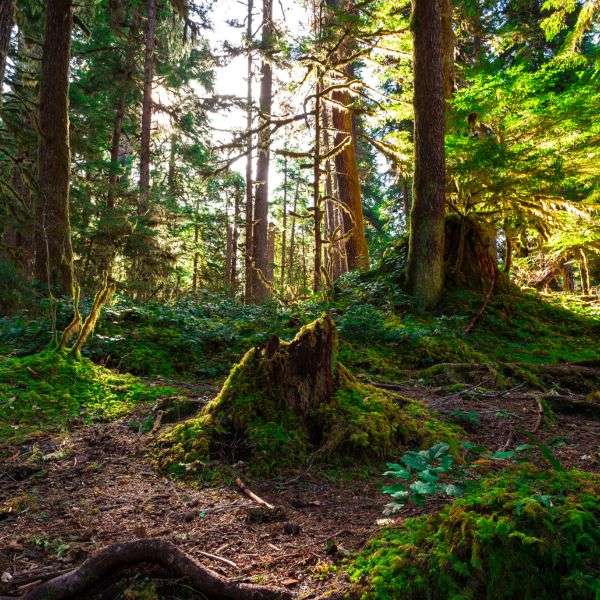
diverse ecosystems, with lush rainforests, alpine peaks, and rugged coastlines
Fast Facts
Location
coastal Washington
Established in
1938
Established by
President Franklin Roosevelt
Size
1,400 sq. miles
Known For
- Renowned for its varied ecosystems, including temperate rainforests, alpine meadows, and rugged coastline
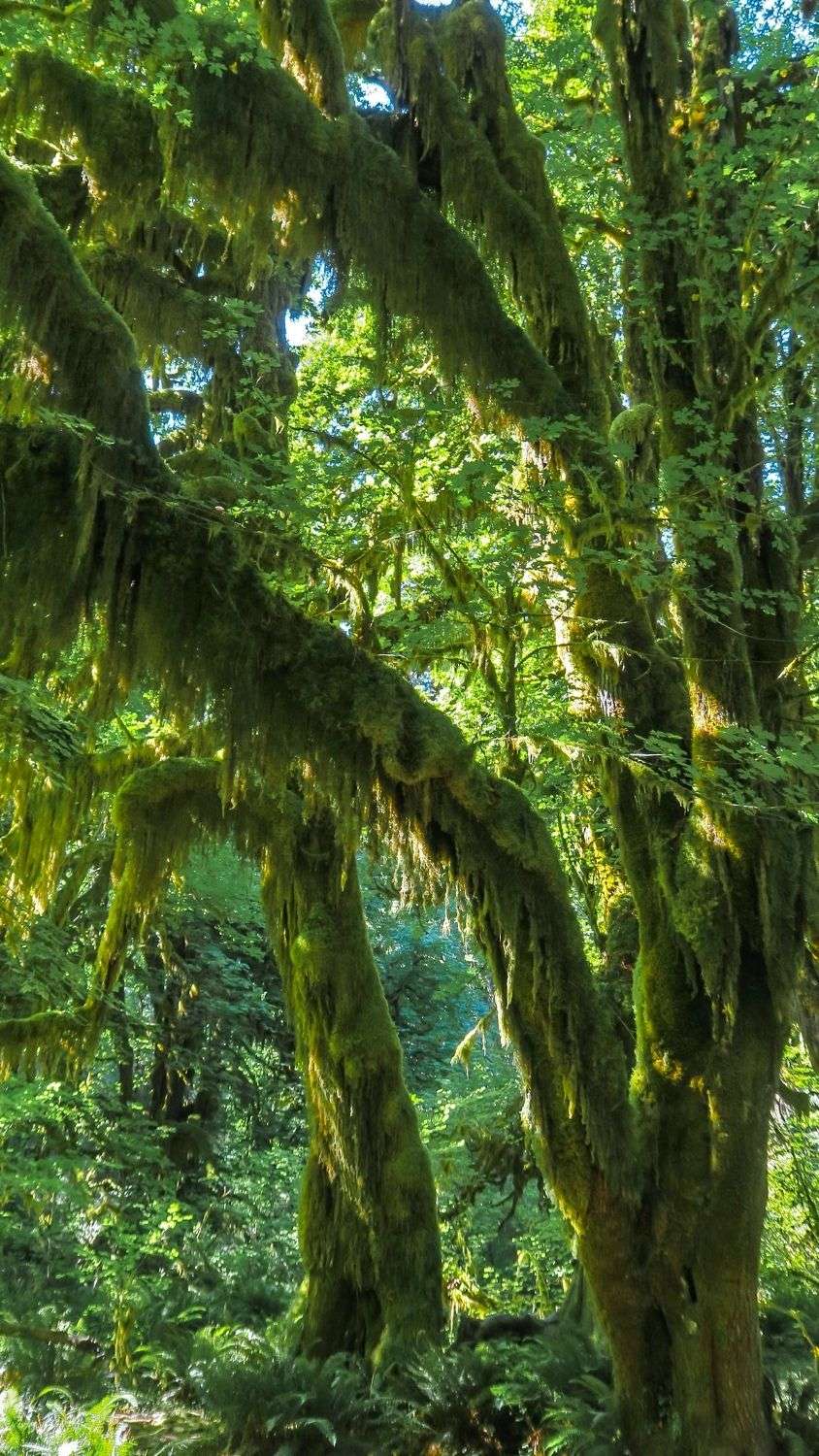
- One of the wettest places in the continental United States, the Hoh Rainforest within the park is famous for its lush vegetation and moss-covered trees
- The park is home to Mount Olympus, the highest peak on the Olympic Peninsula, standing at 7,980 feet
History
Natural History and Formation
The geological history of Olympic National Park is a remarkable story of mountain building, volcanic activity, glacial sculpting, and coastal change that has unfolded over millions of years. The park’s dramatic landscapes, including the Olympic Mountains, temperate rainforests, alpine valleys, and rugged Pacific coastline, were created through a combination of powerful Earth processes that continue to shape the region today.
Tectonic Activity: The formation of Olympic National Park is closely linked to the subduction of the Juan de Fuca Plate beneath the North American Plate along the Cascadia Subduction Zone. This ongoing tectonic process has caused layers of oceanic sediments and volcanic materials to be compressed, folded, and uplifted, gradually forming the Olympic Mountains over millions of years.
Formation of the Olympic Mountains: The Olympic Mountains developed through intense tectonic uplift, folding, and faulting. Unlike many mountain ranges formed primarily from volcanic activity, the Olympics are largely composed of ancient marine sediments, basaltic rocks, and metamorphic rocks such as gneiss and schist. These materials were pushed upward from the seafloor, creating the rugged peaks and ridges seen today.
Glaciation: During the Pleistocene Ice Ages, massive glaciers covered portions of the Olympic Peninsula and dramatically reshaped the landscape. Moving ice carved deep valleys, sharp ridges, cirques, and U-shaped mountain valleys. Glacial activity also helped create many of the park’s alpine lakes and contributed to the dramatic scenery of the high country.
Glacial Features and Deposits: Evidence of past glaciation can be seen throughout Olympic National Park in the form of moraines, glacial valleys, polished bedrock, and striations left behind by moving ice. These features provide important clues about the region’s climatic and geological history.
Coastal Formation and Erosion: Along the park’s Pacific coastline, waves and storms have continuously reshaped the landscape through erosion. This process has created sea stacks, rocky headlands, tide pools, and dramatic coastal cliffs. The interaction between the ocean and land continues to modify the shoreline today.
Volcanic Influence: Although the Olympic Mountains are not volcanic in origin like nearby Cascade Range peaks, volcanic materials from ancient oceanic environments contributed to the region’s geological makeup. Basalt formations and other volcanic rocks provide evidence of the area’s complex tectonic past.
Ongoing Geological Processes: Olympic National Park remains an active geological landscape. Earthquakes, erosion, landslides, river activity, coastal wave action, and glacial retreat continue to alter the terrain. These ongoing processes ensure that the park’s mountains, forests, rivers, and coastline remain dynamic and ever-changing.
The geological history of Olympic National Park reveals the incredible forces that have shaped the Pacific Northwest. From tectonic uplift and ancient ocean floors to glaciers and coastal erosion, these processes have created one of the most diverse and spectacular landscapes in the United States.
Native History
The Olympic Peninsula, including the lands now protected as Olympic National Park, has a deep and enduring Native American history that stretches back thousands of years. Indigenous communities have maintained strong cultural, spiritual, and economic connections to the region’s mountains, forests, rivers, and coastline. Tribes associated with the area, including the Klallam, Quinault, Hoh, Quileute, and Makah, have developed unique traditions and ways of life closely tied to the peninsula’s diverse ecosystems.
Ancient Inhabitants: Archaeological evidence shows that Native peoples have lived on the Olympic Peninsula for thousands of years. These communities developed sophisticated societies based on fishing, hunting, gathering, and trade. The abundant resources of the region, including salmon, shellfish, wildlife, and native plants, supported thriving cultures adapted to the peninsula’s varied environments.
Traditional Land Use: Indigenous tribes traditionally managed and used the lands of the Olympic Peninsula in ways that reflected a deep understanding of local ecosystems. Fishing, especially for salmon, was central to many communities, while hunting, gathering berries and medicinal plants, and harvesting materials from forests and coastal areas were essential parts of daily life.
Ceremonial and Spiritual Importance: The landscapes of the Olympic Peninsula hold profound spiritual significance for Native American communities. Mountains, rivers, forests, and coastal areas are connected to traditional stories, ceremonies, and cultural teachings. Many natural features are viewed not only as resources but as living parts of a larger spiritual relationship between people and the environment.
Resource Stewardship: Native communities practiced careful resource management to maintain the health of their lands and waters. Traditional ecological knowledge guided activities such as selective harvesting, controlled burning, and sustainable fishing practices. These methods helped maintain plant diversity, improve habitats, and support wildlife populations.
Canoes and Coastal Networks: Canoe travel was an important part of life on the Olympic Peninsula. Coastal waters, rivers, and waterways served as transportation routes that connected communities and supported trade between tribes. Canoes allowed people to travel efficiently along the coast, transport goods, and maintain social and cultural connections across the region.
European Contact: European exploration and settlement beginning in the late 18th and 19th centuries brought significant changes to Native communities. New diseases, competition over resources, land pressures, and government policies disrupted traditional ways of life and caused major population declines among Indigenous peoples.
Treaties and Reservations: During the mid-19th century, treaties between the United States government and Native tribes resulted in the creation of reservations and changes in land ownership. These agreements affected tribal access to traditional lands and resources, while also establishing ongoing legal relationships between tribes and the federal government.
Cultural Resilience and Continuity: Despite historical challenges, Native American communities of the Olympic Peninsula have preserved and revitalized their cultural traditions. Tribal members continue to practice traditional ceremonies, protect languages, maintain cultural teachings, and advocate for the protection of ancestral lands and resources.
Collaboration with Olympic National Park: Olympic National Park recognizes the importance of Indigenous knowledge and the continuing relationship between tribes and the landscape. Partnerships between the National Park Service and tribal communities help incorporate traditional ecological knowledge, protect cultural resources, and honor the enduring presence of Native peoples in the region.
The Native American history of Olympic National Park reflects a relationship between people and place that has existed for thousands of years. Understanding this history provides a deeper appreciation of the park’s cultural significance and the ongoing role Indigenous communities play in caring for these lands.
Preservation
The preservation history of Olympic National Park reflects more than a century of conservation efforts focused on protecting the Olympic Peninsula’s extraordinary landscapes, ecosystems, and cultural resources. From its towering mountains and ancient forests to its rugged coastline and diverse wildlife, the park has been recognized as a place of exceptional natural importance requiring long-term protection.
Early Recognition of Natural Importance: During the late 19th and early 20th centuries, explorers, scientists, and conservationists began drawing attention to the unique beauty and ecological value of the Olympic Peninsula. Naturalists and environmental advocates promoted the protection of the region’s old-growth forests, glaciers, mountain landscapes, and wildlife habitats from increasing development and resource extraction.
Establishment as a National Monument: In 1909, President Theodore Roosevelt established Mount Olympus National Monument to protect portions of the Olympic Peninsula’s mountainous landscapes and forests. This designation represented an important early conservation effort and helped preserve some of the region’s most valuable natural areas.
Creation of Olympic National Park: In 1938, President Franklin D. Roosevelt signed legislation establishing Olympic National Park. The new park expanded protection beyond the mountains to include the peninsula’s diverse ecosystems, including temperate rainforests, alpine meadows, glaciers, rivers, and coastal environments. The creation of the park ensured that these unique landscapes would be preserved for future generations.
Wilderness Protection: In 1988, large portions of Olympic National Park were designated as wilderness under the Wilderness Act. This additional protection helped preserve the park’s undeveloped character by limiting certain activities and maintaining natural ecological processes. The wilderness designation safeguards vast areas of forests, mountains, and rivers from major human impacts.
UNESCO World Heritage Recognition: In 1981, Olympic National Park was designated a UNESCO World Heritage Site in recognition of its exceptional natural features and global ecological importance. This recognition highlights the park’s significance as one of the world’s outstanding protected natural areas.
Conservation and Restoration Programs: The National Park Service and conservation partners continue to protect Olympic National Park through habitat restoration, wildlife conservation, invasive species management, and scientific research. Programs focus on preserving native species, restoring damaged ecosystems, protecting watersheds, and addressing challenges such as climate change and changing environmental conditions.
Collaboration with Indigenous Communities: Modern preservation efforts increasingly recognize the importance of working with Native American tribes connected to the Olympic Peninsula. Collaboration with tribes such as the Hoh, Quinault, Quileute, Makah, and Klallam helps incorporate traditional ecological knowledge and supports the protection of cultural resources and ancestral connections to the land.
The preservation history of Olympic National Park demonstrates a continuing commitment to protecting one of the most biologically diverse landscapes in the United States. Through national park designation, wilderness protection, scientific research, and collaboration with Indigenous communities, the park remains a lasting example of conservation and stewardship.
Future Preservation
Preserving Olympic National Park for future generations requires addressing a range of environmental, cultural, and management challenges. The park’s remarkable diversity, including temperate rainforests, alpine ecosystems, glaciers, rivers, and coastal habitats, makes conservation efforts complex and essential for maintaining its ecological integrity.
Climate Change: Climate change is one of the greatest challenges facing Olympic National Park. Rising temperatures, shifting precipitation patterns, reduced snowpack, and glacier loss can alter ecosystems and affect the availability of water resources. These changes may impact native plants, wildlife habitats, and the relationships between species that have developed over thousands of years.
Glacial Retreat: The park’s glaciers and permanent snowfields are declining due to warming temperatures. Glacial retreat can affect river systems, aquatic habitats, and the availability of cold-water environments needed by species such as salmon and trout. Monitoring these changes and understanding their long-term impacts are important parts of the park’s conservation efforts.
Invasive Species: Non-native plants, animals, and diseases pose a significant threat to Olympic National Park’s ecosystems. Invasive species can compete with native organisms, reduce biodiversity, and disrupt natural ecological processes. Managing invasive species requires ongoing monitoring, removal efforts, and prevention programs.
Visitor Management: The popularity of Olympic National Park creates challenges in balancing public enjoyment with resource protection. High visitation can lead to trail erosion, damaged vegetation, wildlife disturbances, overcrowding, and increased waste. Sustainable visitor management strategies are necessary to protect sensitive areas while allowing people to experience the park’s natural beauty.
Wildfire Management: Changing climate conditions have increased concerns about wildfire risk in the region. While fire plays an important ecological role in some ecosystems, managing wildfire threats requires careful planning to protect communities, park infrastructure, and natural resources while maintaining healthy ecological processes.
Water Quality Protection: The park’s rivers, streams, lakes, and coastal waters are essential to its ecosystems. Pollution, sedimentation, and runoff from outside the park can affect aquatic habitats and species such as salmon. Protecting water quality requires cooperation between park managers, nearby communities, and regional conservation organizations.
Cultural Resource Preservation: Olympic National Park contains many important cultural sites connected to Native American tribes with ancestral ties to the region. Protecting archaeological sites, traditional landscapes, and cultural resources while sharing the history of these places with visitors requires careful management and respect for Indigenous knowledge and traditions.
Limited Resources: Maintaining a large and diverse national park requires significant funding, staffing, and scientific research. Limited resources can make it difficult to address challenges such as habitat restoration, infrastructure maintenance, wildlife monitoring, and invasive species control.
Collaboration with Native American Tribes: Continued partnerships with tribes including the Hoh, Quinault, Quileute, Makah, and Klallam are essential for effective stewardship of Olympic National Park. Recognizing tribal sovereignty and incorporating traditional ecological knowledge can improve conservation strategies and strengthen the relationship between Indigenous communities and park management.
Protecting Olympic National Park requires a long-term, collaborative approach that combines scientific research, adaptive management, public involvement, and respect for cultural traditions. By addressing these challenges, the National Park Service, Indigenous communities, conservation organizations, and visitors can work together to ensure that Olympic National Park remains a protected and inspiring landscape for generations to come.
Geography
Olympic National Park, located on Washington State’s Olympic Peninsula, is a spectacular wilderness area known for its remarkable diversity of landscapes and ecosystems. From moss-covered temperate rainforests and pristine rivers to rugged Pacific Ocean shorelines and the towering, glacier-capped Olympic Mountains, the park offers an extraordinary glimpse into the natural beauty of the Pacific Northwest. Its unique geography, rich biodiversity, and protected wilderness make Olympic National Park a place of scientific importance, cultural significance, and unforgettable exploration.
Olympic Mountains
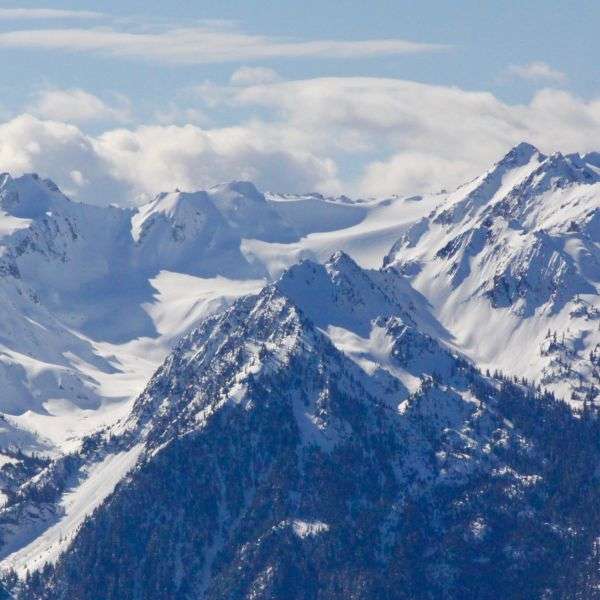
The central feature of the park, the Olympic Mountains, dominates the landscape. Mount Olympus, the highest peak at 7,980 feet, is surrounded by other prominent peaks, alpine meadows, and glaciers.
Temperate Rainforests
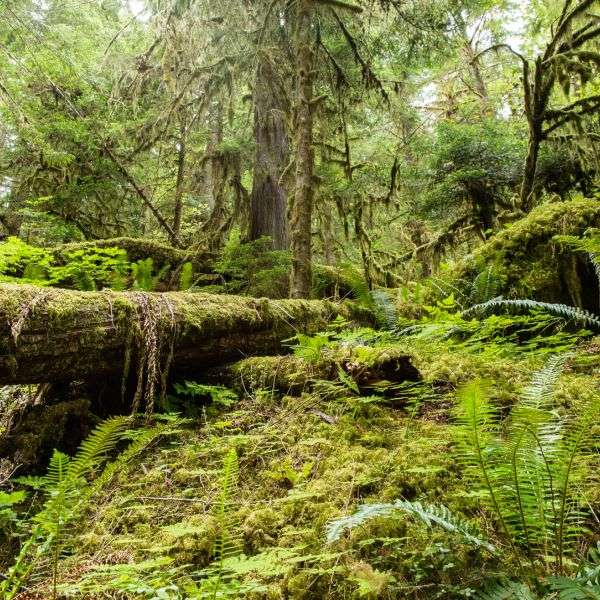
The park is home to temperate rainforests, characterized by dense vegetation, moss-covered trees, and high levels of precipitation. The Hoh Rainforest, one of the park's most famous areas, receives significant rainfall, contributing to its lush and vibrant ecosystem.
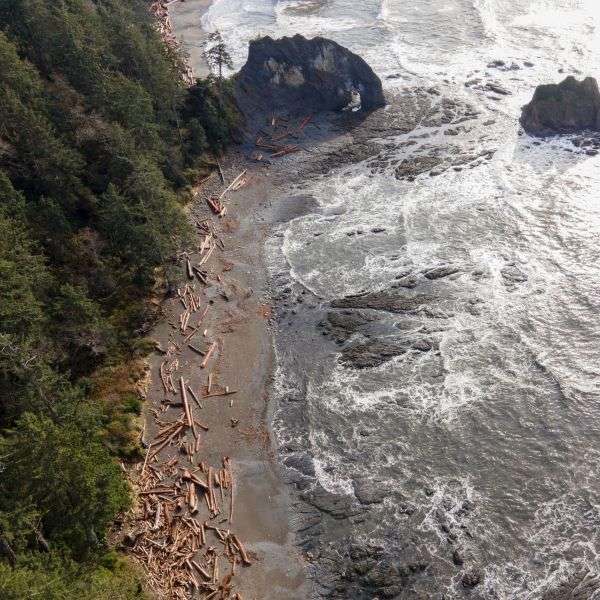
Pacific Coastline
The western edge of Olympic National Park borders the Pacific Ocean, offering rugged and picturesque coastline. This area includes sea stacks, tide pools, and scenic beaches such as Rialto Beach and Second Beach.
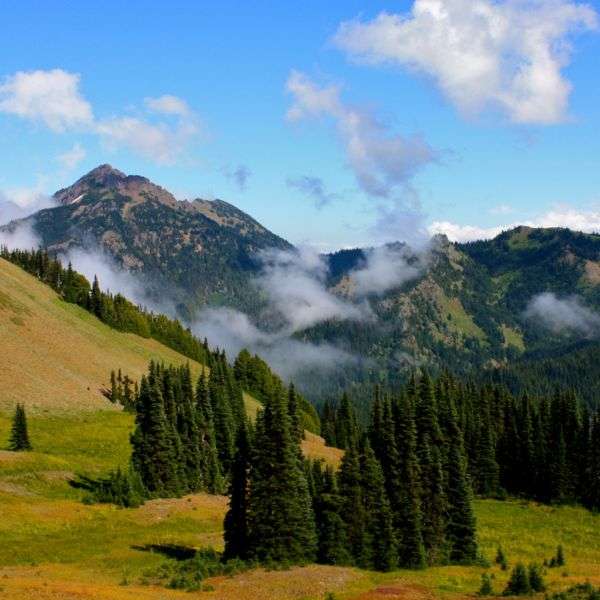
Valleys and Glacial Valleys
Numerous valleys, carved by glacial activity, are nestled between the Olympic peaks. These valleys exhibit U-shaped profiles and showcase the legacy of past glaciation in shaping the park's terrain.
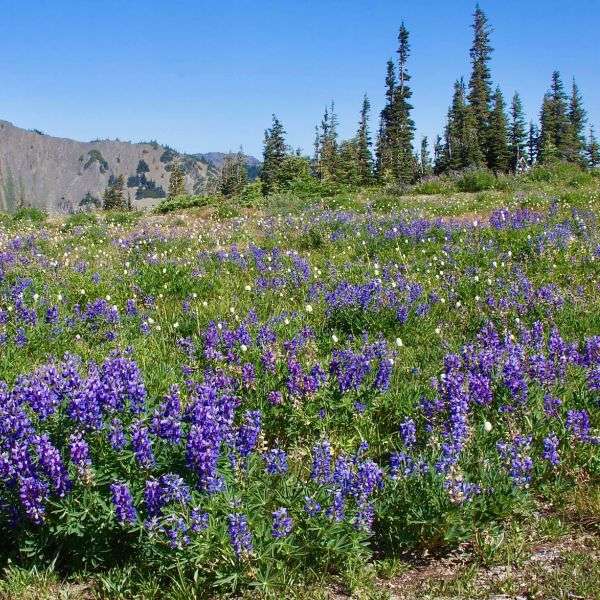
Alpine Meadows
Higher elevations in the Olympic Mountains feature alpine meadows with diverse plant life adapted to the harsh conditions. These meadows burst into bloom during the summer months, creating a vibrant display of colors.
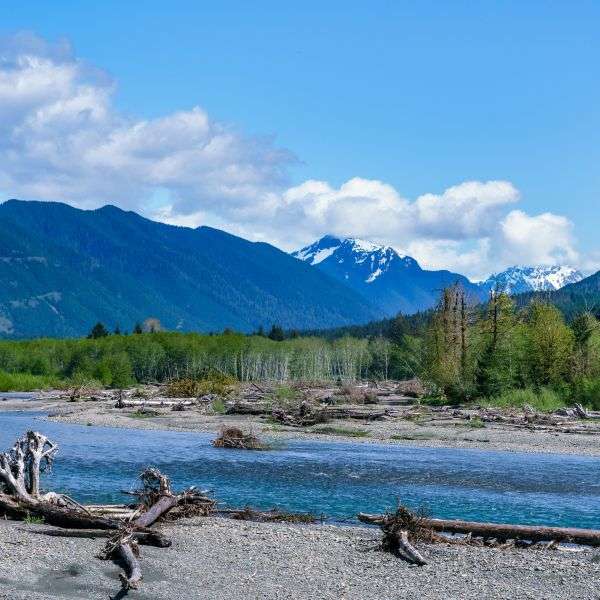
Lakes and Rivers
The park is dotted with numerous lakes and traversed by rivers, contributing to the rich biodiversity of the region. Lake Crescent, for example, is a stunning glacially carved lake located in the northern part of the park.
Plants
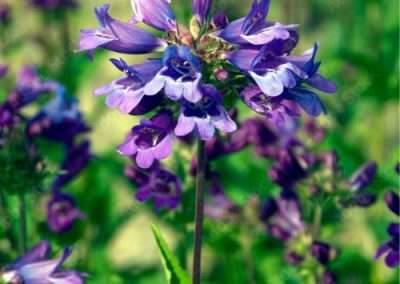
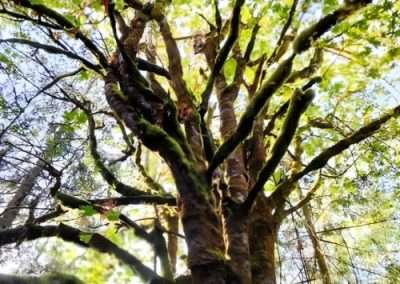
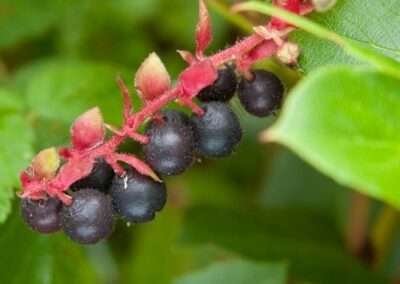
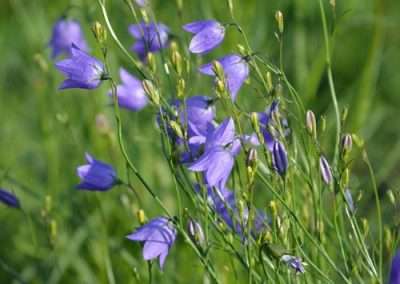
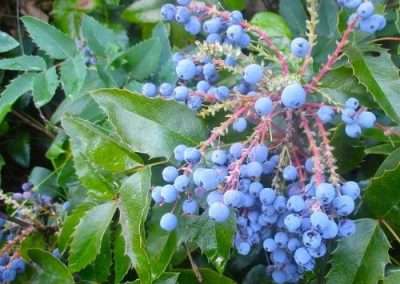
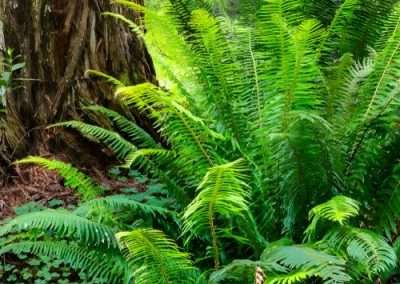
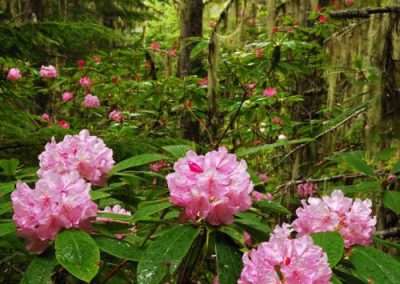
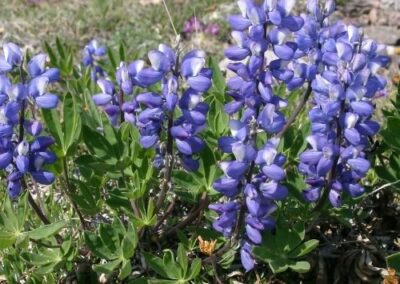
Olympic National Park is home to an extraordinary diversity of plant life, supported by its wide range of ecosystems, including ancient temperate rainforests, coastal forests, river valleys, and alpine meadows. The park’s flora features iconic species such as towering Douglas fir, western red cedar, Sitka spruce, and Pacific silver fir, along with vibrant wildflowers, delicate ferns, mosses, and unique alpine plants. These diverse plant communities play an essential role in supporting wildlife, protecting ecosystems, and creating the lush, scenic landscapes that define the Olympic Peninsula. Visitors to Olympic National Park can experience the region’s botanical richness while exploring forests, mountain slopes, and meadows filled with remarkable plant species.
Animals
Mammals
Olympic National Park supports a remarkable diversity of mammals due to its wide range of habitats, including temperate rainforests, alpine meadows, mountain slopes, rivers, and coastal environments. From large predators and iconic herbivores to small forest-dwelling mammals and marine species, the park provides essential habitat for a variety of wildlife adapted to the unique ecosystems of the Olympic Peninsula.
Black Bear (Ursus americanus): Black bears are one of the most commonly encountered large mammals in Olympic National Park. They inhabit forests, meadows, and river valleys, where they forage for berries, plants, insects, and small animals. Their adaptability allows them to thrive across many of the park’s diverse habitats.
Roosevelt Elk (Cervus canadensis roosevelti): The Roosevelt elk is the largest subspecies of elk and is native to the Pacific Northwest. These impressive animals are an iconic species of Olympic National Park and can often be found grazing in forests, meadows, and river valleys throughout the park.
Mountain Goat (Oreamnos americanus): Mountain goats are highly adapted to the steep, rocky terrain of the Olympic Mountains. They are typically found at higher elevations, where their specialized hooves allow them to navigate cliffs and rugged slopes while feeding on alpine vegetation.
Bobcat (Lynx rufus): Bobcats are elusive predators that inhabit forests, meadows, and shrublands within the park. These solitary hunters primarily feed on small mammals and birds and are rarely observed due to their secretive behavior.
River Otter (Lontra canadensis): River otters inhabit the park’s rivers, lakes, streams, and coastal waters. These skilled swimmers feed on fish, amphibians, and other aquatic organisms, contributing to the health of freshwater ecosystems.
Red Fox (Vulpes vulpes): Red foxes are adaptable predators found in a variety of environments, including forests, meadows, and open areas. They are opportunistic feeders that consume small mammals, birds, insects, and plant material.
American Marten (Martes americana): American martens are members of the weasel family and are well adapted to the park’s dense coniferous forests. These agile climbers hunt small mammals, birds, and insects among the trees and forest floor.
Cougar (Puma concolor): Cougars, also known as mountain lions, are powerful and solitary predators found throughout the park’s forested regions. They play an important ecological role by helping regulate populations of deer and other prey species.
Coyote (Canis latrans): Coyotes are highly adaptable predators that occupy a variety of habitats within Olympic National Park. They feed on small mammals, birds, insects, and occasionally plant material, allowing them to thrive in changing environments.
Snowshoe Hare (Lepus americanus): Snowshoe hares are adapted to the seasonal conditions of the Olympic Peninsula’s forests. Their fur changes from brown in summer to white in winter, providing camouflage in changing environments. They feed primarily on grasses, shrubs, twigs, and bark.
Harbor Seal (Phoca vitulina): Harbor seals can be observed along the park’s rugged coastline, particularly in tidal areas and near offshore rocks. These marine mammals feed on fish and other ocean organisms and represent the connection between the park’s terrestrial and marine ecosystems.
Bats: Several species of bats inhabit Olympic National Park, using forests, caves, and other sheltered areas for roosting. These nocturnal mammals play an important role in controlling insect populations and maintaining ecosystem balance.
The diversity of mammals found in Olympic National Park reflects the variety of habitats protected within the park. From mountain peaks to coastal waters, these species contribute to the ecological richness of the Olympic Peninsula and highlight the importance of continued wildlife conservation efforts.
Reptiles
Olympic National Park’s cool, moist climate and diverse landscapes support a variety of reptile species, although reptiles are less abundant compared to the park’s mammals, birds, and amphibians. Many reptiles found on the Olympic Peninsula are adapted to forest environments, wetlands, meadows, and rocky areas where they can find shelter, warmth, and food resources. These species play important roles in the park’s ecosystems by controlling insect and small animal populations.
Common Garter Snake (Thamnophis sirtalis): Common garter snakes are widespread and adaptable reptiles found throughout the Pacific Northwest. Within Olympic National Park, they inhabit meadows, forests, wetlands, and areas near streams and ponds. These non-venomous snakes feed on insects, amphibians, small fish, and other small prey.
Northwestern Garter Snake (Thamnophis ordinoides): Native to the Pacific Northwest, the Northwestern garter snake is commonly found on the Olympic Peninsula. It inhabits a variety of environments, including forests, grasslands, and moist areas, and displays a wide range of color patterns that help it blend into its surroundings.
Western Terrestrial Garter Snake (Thamnophis elegans): Western terrestrial garter snakes occur in habitats such as meadows, woodlands, and areas near water. These adaptable snakes feed on small animals, including amphibians, insects, and other small prey, and are an important part of the park’s food web.
Western Fence Lizard (Sceloporus occidentalis): Western fence lizards are less common in the cooler portions of Olympic National Park but may occur in warmer, open habitats such as rocky areas and sunny woodland edges. They are often seen basking on rocks and logs to regulate their body temperature.
Rubber Boa (Charina bottae): Rubber boas are small, non-venomous snakes adapted to the cool, moist forests of the Pacific Northwest. They have a distinctive blunt tail and smooth appearance and spend much of their time beneath logs, rocks, and forest debris searching for small prey.
Northwestern Alligator Lizard (Elgaria coerulea): Northwestern alligator lizards inhabit forested areas, rocky slopes, and semi-open habitats within the region. They are named for their rough, keeled scales and long tails, and they feed on insects, spiders, and other small animals.
Common Sharp-tailed Snake (Contia tenuis): The common sharp-tailed snake is a small, secretive species found in forested habitats. It is recognized by its slender body and pointed tail and primarily feeds on soft-bodied invertebrates such as slugs and worms.
The reptiles of Olympic National Park represent an important component of the park’s biodiversity. Although they are not as numerous as other wildlife groups, these species contribute to the ecological balance of the region and demonstrate the ability of reptiles to adapt to the cool, forested environments of the Pacific Northwest.
Birds
Olympic National Park’s diverse landscapes, including rugged coastlines, temperate rainforests, alpine meadows, rivers, and lakes, provide habitat for a remarkable variety of bird species. From powerful raptors soaring above mountain cliffs to songbirds inhabiting ancient forests and seabirds along the Pacific shoreline, the park supports both resident and migratory birds. These species contribute to the ecological richness of the Olympic Peninsula and make the park a destination for birdwatchers and nature enthusiasts.
Bald Eagle (Haliaeetus leucocephalus): Bald eagles are commonly observed along Olympic National Park’s coastlines, rivers, and lakes, where they hunt for fish and other prey. Recognized by their impressive size and distinctive white head and tail, they are one of the park’s most iconic birds of prey.
Marbled Murrelet (Brachyramphus marmoratus): The marbled murrelet is a unique seabird that depends on old-growth forests for nesting. Unlike most seabirds, it travels inland from coastal waters to lay eggs high in mature trees, making the preservation of the park’s ancient forests essential for its survival.
Northern Spotted Owl (Strix occidentalis caurina): The Northern Spotted Owl inhabits mature and old-growth forests within the Pacific Northwest. This threatened species relies on complex forest ecosystems for nesting and hunting and is often detected by its distinctive nighttime calls.
Peregrine Falcon (Falco peregrinus): Peregrine falcons are powerful aerial predators that nest on cliffs and rocky outcrops throughout the park. Known for their incredible speed during hunting dives, they prey on smaller birds and are a spectacular sight for visitors exploring mountainous areas.
Common Loon (Gavia immer): Common loons can be found on the park’s lakes and coastal waters. Their haunting calls, excellent diving abilities, and striking black-and-white plumage make them a memorable species in Olympic’s aquatic environments.
American Dipper (Cinclus mexicanus): The American dipper is a unique aquatic songbird commonly found along cold, fast-moving streams. It dives beneath the water’s surface to search for insects and other small aquatic organisms, making it specially adapted to mountain waterways.
Varied Thrush (Ixoreus naevius): Varied thrushes are characteristic birds of Pacific Northwest forests. Their striking orange and black plumage helps distinguish them among the mossy understory of Olympic’s coniferous forests, where they forage for insects and berries.
Steller’s Jay (Cyanocitta stelleri): Steller’s jays are common throughout the park’s coniferous forests. Their bright blue and black feathers and loud, distinctive calls make them one of the most recognizable forest birds in Olympic National Park.
Mountain Bluebird (Sialia currucoides): Mountain bluebirds can be seen in open alpine and subalpine meadows during warmer months. Their brilliant blue plumage stands out against the mountain landscape as they search for insects in open areas.
Song Sparrow (Melospiza melodia): Song sparrows are adaptable birds found in meadows, shrublands, forest edges, and areas near water. They are well known for their varied and melodic songs, which contribute to the sounds of the park’s natural environments.
Pacific Wren (Troglodytes pacificus): Pacific wrens are small, energetic birds that inhabit dense forests throughout the Olympic Peninsula. Despite their size, they produce powerful songs that echo through the park’s old-growth woodlands.
Harlequin Duck (Histrionicus histrionicus): Harlequin ducks are often found in fast-flowing rivers, streams, and coastal waters. Their colorful plumage, especially in males, makes them a striking species, and they are well adapted for navigating turbulent waters while feeding on aquatic invertebrates.
The bird diversity of Olympic National Park reflects the variety of habitats protected within its boundaries. From coastal seabirds and river specialists to forest songbirds and mountain raptors, these species highlight the ecological importance of preserving the park’s unique landscapes and natural resources.
Fish
Olympic National Park supports a diverse array of fish species due to its extensive aquatic environments, including glacier-fed rivers, mountain streams, freshwater lakes, estuaries, and Pacific coastal waters. These habitats provide essential spawning and feeding grounds for many native fish species, including iconic Pacific salmon and trout. The park’s fish populations play important roles in maintaining aquatic ecosystems, supporting wildlife, and sustaining cultural and recreational traditions throughout the Olympic Peninsula.
Salmon (Various Species): Several species of Pacific salmon migrate through rivers and streams connected to Olympic National Park, including Chinook, Coho, Chum, Pink, and Sockeye salmon. These fish undertake remarkable migrations between freshwater and the ocean and provide an important source of nutrients for aquatic and terrestrial ecosystems.
Steelhead Trout (Oncorhynchus mykiss): Steelhead are anadromous rainbow trout that spend part of their lives in the ocean before returning to freshwater rivers to spawn. They inhabit many of the park’s river systems and are valued for their ecological importance and recreational significance.
Coastal Cutthroat Trout (Oncorhynchus clarkii): Coastal cutthroat trout are native to the Olympic Peninsula and are found in rivers, streams, and some lakes throughout the park. They are well adapted to a variety of freshwater environments and are an important native fish species.
Bull Trout (Salvelinus confluentus): Bull trout are cold-water fish that inhabit clear, clean rivers and streams within Olympic National Park. Listed as a threatened species, they are a focus of conservation efforts due to their sensitivity to changes in water temperature, habitat quality, and ecosystem health.
Dolly Varden (Salvelinus malma): Dolly Varden are a species of char closely related to bull trout. They can be found in cold freshwater streams and nearshore coastal environments, where they depend on clean, well-oxygenated waters.
Rainbow Trout (Oncorhynchus mykiss): Rainbow trout are found throughout the park’s rivers and lakes. Known for their colorful markings and strong swimming ability, they are popular among anglers and contribute to the diversity of freshwater ecosystems.
Mountain Whitefish (Prosopium williamsoni): Mountain whitefish are native freshwater fish that inhabit cold, clear rivers and streams, particularly in higher-elevation areas. They play an important role in aquatic food webs by feeding on insects and other small organisms.
Lingcod (Ophiodon elongatus): Lingcod inhabit the rocky coastal waters adjacent to Olympic National Park. These large marine predators are important members of nearshore ecosystems and are a popular species among recreational fishermen.
Pacific Halibut (Hippoglossus stenolepis): Pacific halibut are large marine flatfish found in deeper ocean waters near the Olympic Peninsula coastline. Although they are not typically found in inland park waters, they are part of the broader marine ecosystem associated with the park’s coastal region.
The fish species of Olympic National Park demonstrate the ecological connections between mountain streams, forests, rivers, and the Pacific Ocean. Protecting these aquatic habitats is essential for maintaining healthy fish populations, preserving biodiversity, and supporting the natural processes that sustain the park’s ecosystems.
Amphibians
Olympic National Park’s diverse habitats, including temperate rainforests, wetlands, alpine meadows, streams, and lakes, provide ideal environments for a wide variety of amphibians. These species play essential roles in the park’s ecosystems by contributing to food webs, controlling insect populations, and serving as indicators of environmental health. The abundance of amphibian life reflects the park’s clean waterways and the ecological importance of protecting its aquatic and forest habitats.
Northern Red-Legged Frog (Rana aurora): Northern red-legged frogs are commonly found in wetlands, ponds, marshes, and slow-moving streams throughout the Olympic Peninsula. They are recognized by the reddish coloration on the undersides of their hind legs and rely on freshwater habitats for breeding and survival.
Pacific Treefrog (Pseudacris regilla): Pacific treefrogs are small, adaptable amphibians found throughout Olympic National Park. They inhabit wetlands, ponds, forests, and other moist environments and are well known for their distinctive calls during the breeding season.
Columbia Spotted Frog (Rana luteiventris): Columbia spotted frogs are associated with wetland ecosystems, including ponds, marshes, and slow-moving streams. Their dark spots and aquatic lifestyle make them a distinctive amphibian species within the park’s freshwater habitats.
Western Toad (Anaxyrus boreas): Western toads are highly adaptable and can be found from lowland forests to alpine meadows. Their rough, bumpy skin and distinctive markings help identify them, and they depend on ponds and wetlands for breeding.
Long-Toed Salamander (Ambystoma macrodactylum): Long-toed salamanders inhabit wetlands, ponds, and forested areas near water. They are named for their unusually long fourth toe on each hind foot and are recognized by their dark bodies with lighter markings.
Ensatina Salamander (Ensatina eschscholtzii): Ensatina salamanders are lungless salamanders that absorb oxygen through their skin. They are commonly found in moist forest environments, including the park’s coniferous forests, where they hide beneath logs, rocks, and leaf litter.
Rough-Skinned Newt (Taricha granulosa): Rough-skinned newts inhabit both aquatic and terrestrial environments within the park. They are known for their rough skin and powerful toxin, which provides protection from many predators.
Northwestern Salamander (Ambystoma gracile): Northwestern salamanders are found in moist forests, wetlands, and ponds throughout the region. They have elongated bodies and yellowish-brown coloration and spend much of their lives in damp habitats.
Pacific Giant Salamander (Dicamptodon tenebrosus): The Pacific giant salamander is one of the largest salamanders in North America. It inhabits cold streams, rivers, and riparian areas within Olympic National Park, where it plays an important role in aquatic ecosystems.
Western Redback Salamander (Plethodon vehiculum): Western redback salamanders are small, lungless salamanders found in moist forest environments. They are recognized by the reddish stripe along their backs and are commonly found beneath logs, rocks, and forest debris.
The amphibians of Olympic National Park highlight the ecological richness of the region’s forests and waterways. Their sensitivity to environmental changes makes them valuable indicators of ecosystem health, emphasizing the importance of preserving the park’s wetlands, streams, and old-growth forests for future generations.
"In the case of a wilderness area like Olympic National Park, the solution can be stated in four words: Keep it a wilderness."
- Harold L. Ickes
"With its incredible range of precipitation and elevation, diversity is the hallmark of Olympic National Park"
― National Park Services
Explore More With Us
Stay updated on National Parks EDU resources, park news, community updates, and and ways to explore, and protect.

National Parks Edu's mission is to help kids and families understand what makes these places so important. Because when you learn about nature, you start to care about protecting it.
National Parks EDU is an independent educational website and is not affiliated with, endorsed by, sponsored by, or officially connected to the National Park Service (NPS) or the U.S. government. © National Parks EDU. All Rights Reserved. October 18, 2026