Kings Canyon
National Park
California
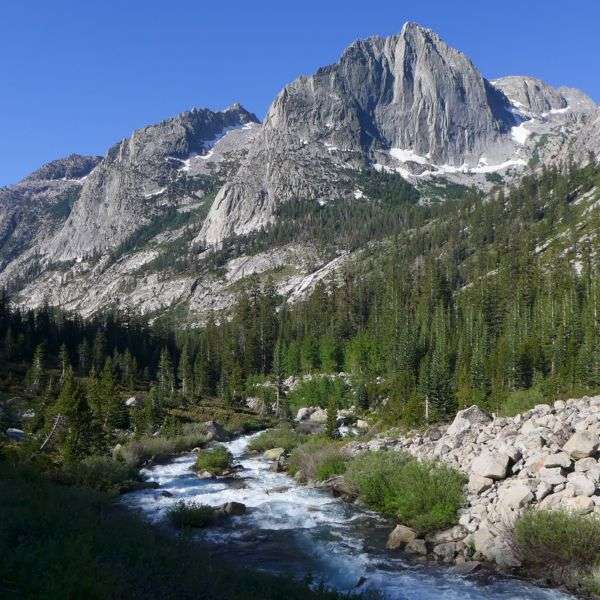
Renowned for its deep, glacier-carved canyon, towering cliffs, pristine alpine lakes, and giant sequoia groves
Fast Facts
Location
located in the southern Sierra Nevada mountain range of California
Established in
1940
Established by
President Franklin D. Roosevelt
Size
722 sq. miles
Known For
- Renowned for its deep and dramatic canyon, one of the deepest canyons in North America
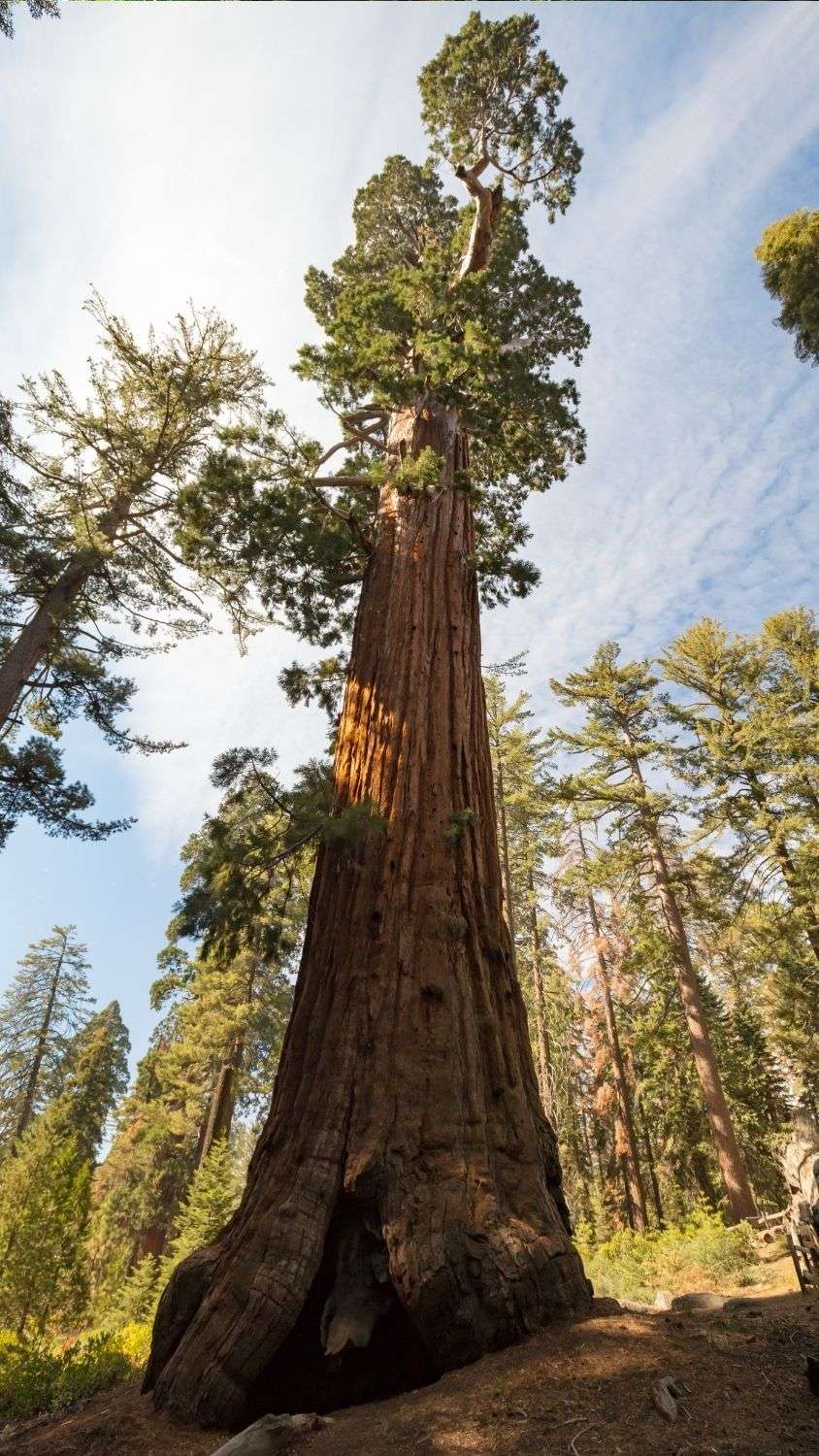
- Home to the General Grant Tree, the second-largest tree on the planet
- The park features impressive granite cliffs, including the famous Grand Sentinel
History
Natural History and Formation
Formation of the Sierra Nevada: The Sierra Nevada began forming millions of years ago through tectonic activity and uplift, creating the mountainous foundation of Kings Canyon National Park.
Formation of Granitic Rocks: Magma cooled deep beneath the Earth's surface, forming the extensive granitic rocks that characterize much of the Sierra Nevada and Kings Canyon.
Uplift and Faulting: Continued tectonic forces uplifted the Sierra Nevada and created faults that helped shape the park's rugged mountains, valleys, and steep terrain.
Glacial Activity: During the Ice Ages, glaciers carved and reshaped the landscape. Their movement created the spectacular U-shaped valleys, cliffs, domes, and other features found throughout Kings Canyon.
Volcanic Activity: Volcanic activity in the broader Sierra Nevada region contributed additional rock types and geological diversity to the landscape.
Erosion and Sedimentation: Rivers, glaciers, weathering, and erosion continue to modify the terrain. These processes have helped form river valleys, slopes, and deposits throughout the park.
Human Impact and Conservation: Human activities have influenced parts of the region, but conservation efforts and the establishment of Kings Canyon National Park in 1940 have helped protect its remarkable geological and natural resources.
Overall: The geology of Kings Canyon National Park reflects millions of years of tectonic uplift, magma intrusion, glacial carving, volcanic activity, and erosion, creating the dramatic landscapes seen today.
Native History
Kings Canyon National Park has a rich Native American history, with Indigenous peoples maintaining deep connections to the Sierra Nevada landscape for thousands of years.
Traditional Land Use: Native communities, including the Western Mono and Paiute, relied on hunting, gathering, fishing, and seasonal travel to make use of the region's diverse resources.
Cultural Significance: Mountains, rivers, forests, and other natural features held important cultural and spiritual meaning. Certain locations were used for ceremonies, gathering, and other cultural activities.
Trade Routes: The Sierra Nevada was part of regional trade networks. Indigenous communities exchanged resources and goods, including obsidian and other materials, with neighboring groups.
European Contact: The arrival of Euro-American explorers and settlers during the 19th century brought major changes, including the introduction of diseases, disruptions to traditional practices, and increasing competition for land and resources.
Forced Relocation: Indigenous communities experienced displacement and restrictions on their traditional lands as settlement expanded and government policies altered established ways of life.
Cultural Preservation: Native American communities continue to maintain and revitalize their cultural traditions and connections to the Sierra Nevada. The National Park Service works with tribal communities to recognize and protect this cultural heritage.
Enduring Connection: The Native American history of Kings Canyon National Park reflects thousands of years of Indigenous presence and a continuing relationship with the land that remains an important part of the park's cultural heritage.
Preservation
Kings Canyon National Park has a long history of conservation focused on protecting its dramatic landscapes, giant sequoias, wildlife, and cultural resources for future generations.
Early Recognition of Beauty: During the late 19th and early 20th centuries, explorers, naturalists, and conservationists recognized the exceptional beauty and ecological importance of the Kings Canyon region.
Creation of General Grant National Park: In 1890, General Grant National Park was established to protect the General Grant Grove of giant sequoias. This was an important early step in preserving the region's unique natural resources.
Conservation Advocacy: Conservationists such as John Muir and the Sierra Club advocated for broader protection of the Sierra Nevada, including the Kings River watershed and surrounding wilderness.
Establishment of Kings Canyon National Park: In 1940, General Grant National Park became part of the expanded Kings Canyon National Park. This provided greater protection for the area's deep canyons, mountains, forests, and sequoia groves.
Wilderness Protection: Extensive wilderness areas within and around the park help limit development and preserve natural landscapes. These areas provide important habitat for wildlife and opportunities for low-impact recreation.
Cultural Resource Protection: Preservation efforts also protect Native American archaeological sites, historic structures, and other cultural resources that reflect the area's long human history.
Ongoing Conservation: Today, Kings Canyon National Park is managed to balance recreation with resource protection. Research, habitat management, visitor education, and collaboration with Indigenous communities continue to support the long-term preservation of the park.
Future Preservation
Preserving Kings Canyon National Park for future generations requires addressing several environmental, cultural, and management challenges.
Climate Change: Rising temperatures, changing precipitation patterns, and earlier snowmelt can affect vegetation, wildlife habitats, water resources, and the overall health of park ecosystems.
Wildfire Management: Wildfires are a natural part of the Sierra Nevada ecosystem, but hotter and drier conditions can increase wildfire frequency and intensity. Managing fire while maintaining natural ecological processes remains a major challenge.
Invasive Species: Invasive plants and animals can compete with native species and disrupt natural ecosystems. Monitoring and controlling invasive species is important for protecting the park's biodiversity.
Air and Water Quality: Air pollution from surrounding regions can affect the park's air quality, while sedimentation and other pollutants can threaten streams, rivers, and aquatic habitats.
Visitor Impact: Increasing visitation can place pressure on trails, vegetation, wildlife, and cultural resources. Park managers must balance recreational opportunities with the protection of sensitive areas.
Infrastructure Maintenance: Roads, trails, bridges, campgrounds, and visitor facilities require regular maintenance and upgrades. Maintaining infrastructure while minimizing environmental impacts is an ongoing challenge.
Water Management: Water resources, including the Kings River and seasonal snowpack, are essential to ecosystems and surrounding communities. Balancing ecological needs with agricultural, municipal, and other demands can be difficult.
Funding and Resources: Limited funding and staffing can make it challenging to conduct research, monitor ecosystems, maintain infrastructure, and respond effectively to emerging conservation threats.
Addressing these challenges requires adaptive management, scientific research, responsible recreation, collaboration with surrounding communities and Indigenous groups, and long-term investment in conservation. These efforts are essential to maintaining Kings Canyon's natural and cultural resources for future generations.
Geography
Kings Canyon National Park, located in California's southern Sierra Nevada, is renowned for its dramatic landscapes, deep river canyons, towering granite peaks, and ancient giant sequoias. Shaped by millions of years of tectonic uplift, erosion, and glacial activity, the park features diverse ecosystems ranging from lower-elevation forests to high alpine environments. Its spectacular scenery and rich biodiversity make Kings Canyon National Park an important natural and recreational treasure of the Sierra Nevada.
Kings Canyon
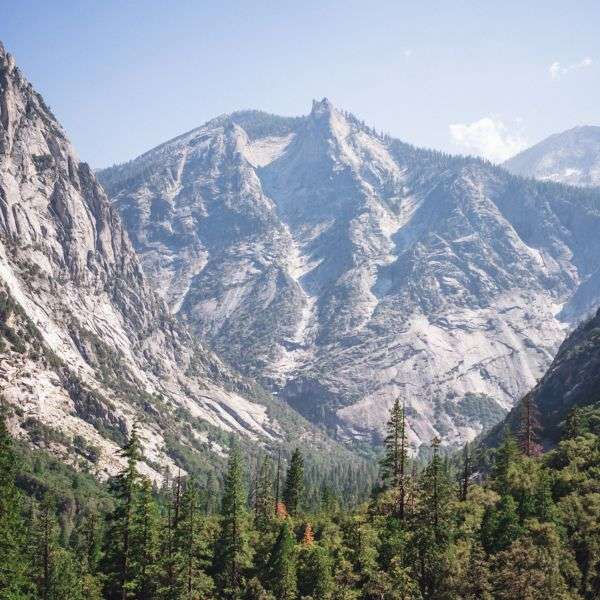
The park is named after Kings Canyon, a glacially carved canyon that ranks as one of the deepest in North America. The canyon reaches depths of over 8,000 feet (2,400 meters) and is known for its stunning granite cliffs and diverse ecosystems.
Sierra Nevada Mountains
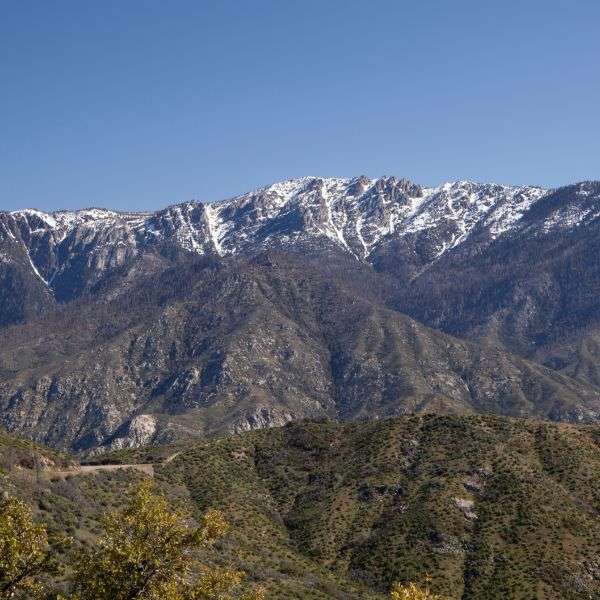
The Sierra Nevada mountain range includes several high peaks within Kings Canyon National Park. Some notable peaks include North Palisade, Split Mountain, and Mount Brewer. These towering peaks contribute to the park's dramatic and varied landscape.
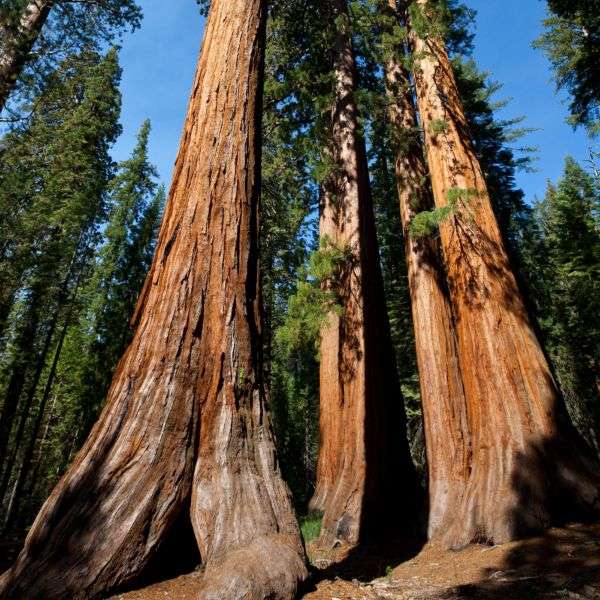
Giant Sequoia Groves
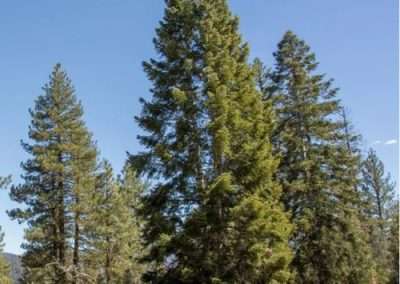
The park is home to several groves of giant sequoias, the most famous being the General Grant Grove. These ancient and massive trees, including the General Grant Tree, the second-largest tree on Earth, are a highlight of the park's natural features.
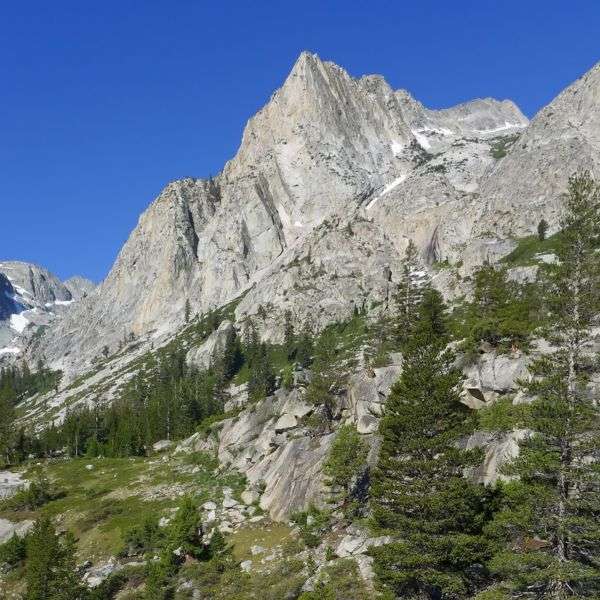
Sierra Crest
Kings Canyon National Park is situated along the Sierra Crest, which forms the boundary between eastern and western watersheds. The Sierra Crest is known for its sharp elevation changes and the high mountain passes that offer panoramic views of the surrounding landscape.
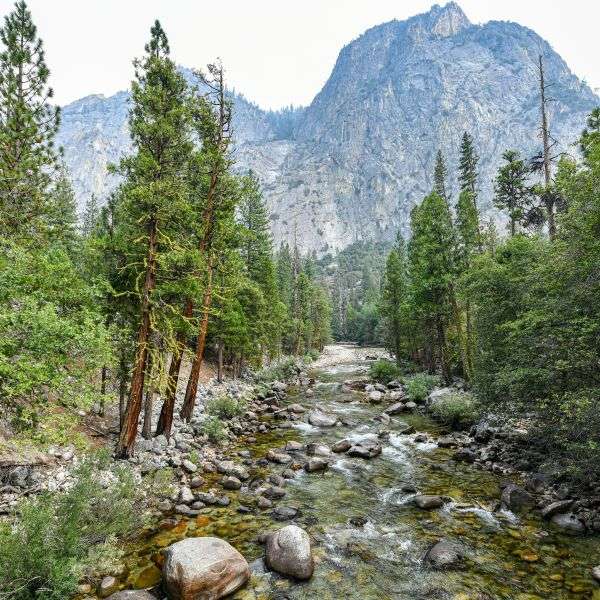
Kings River
The Kings River, which flows through the park, plays a crucial role in shaping the landscape. It has carved out Kings Canyon over millions of years and supports diverse plant and animal life.
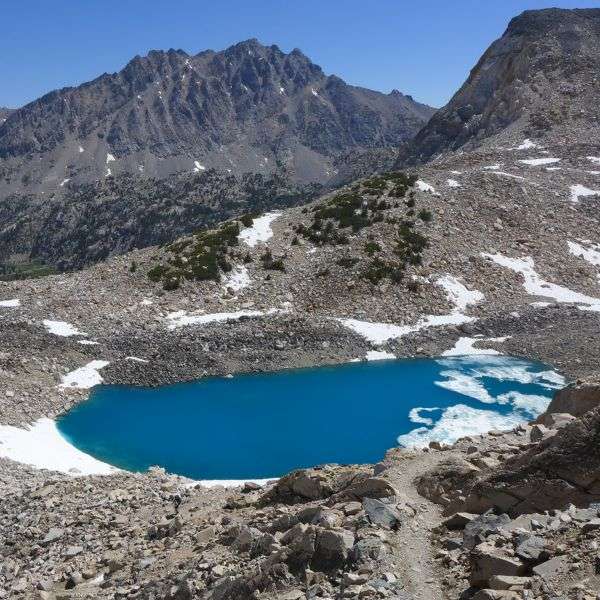
Alpine Lakes
The park features numerous alpine lakes, some of which are surrounded by picturesque meadows. These lakes are often the result of glacial activity and contribute to the park's scenic beauty.
Plants
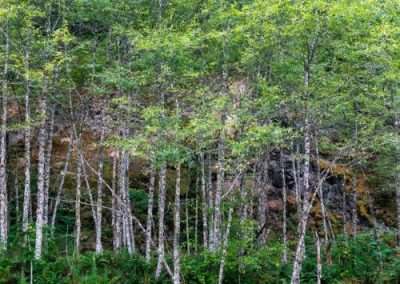
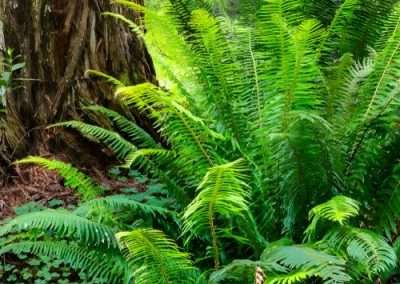
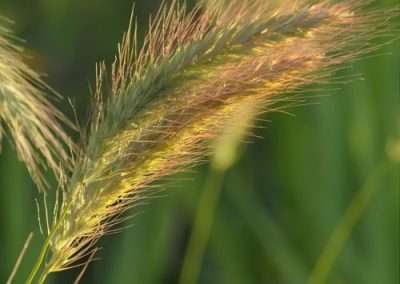
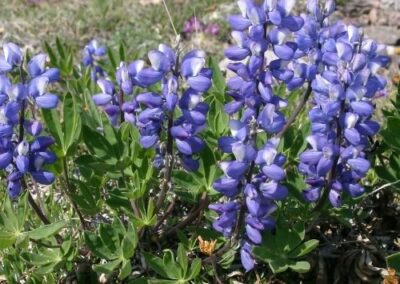
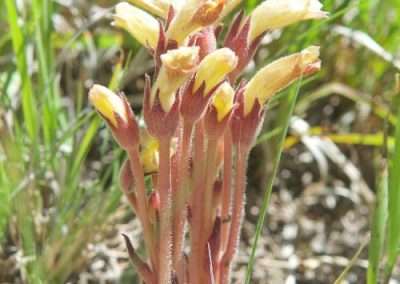
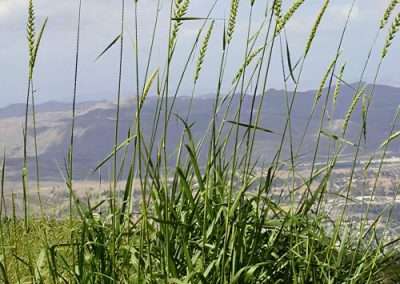
Kings Canyon National Park supports a remarkable diversity of plant life across its varied elevations and habitats, from foothill woodlands and montane forests to subalpine meadows and alpine landscapes. The park is especially known for its giant sequoias, along with towering conifers, colorful wildflowers, shrubs, and other plants adapted to the rugged Sierra Nevada environment. Together, these diverse plant communities contribute to the park's ecological richness, wildlife habitat, and spectacular scenery.

Animals
Mammals
Kings Canyon National Park is home to a diverse range of mammals, with species adapted to habitats extending from lower-elevation forests and meadows to rugged alpine environments.
Black Bear (Ursus americanus): Black bears inhabit forests, meadows, and other areas throughout the park. Visitors should properly store food and scented items to prevent attracting bears.
Mule Deer (Odocoileus hemionus): Mule deer are commonly found in montane and subalpine habitats, where they feed on grasses, shrubs, and other vegetation.
Mountain Lion (Puma concolor): Mountain lions are elusive predators that inhabit the park's forests, canyons, and mountainous terrain. They play an important role in regulating prey populations.
Sierra Nevada Bighorn Sheep (Ovis canadensis sierrae): This endangered subspecies is adapted to steep, rocky, high-elevation terrain and is one of the park's most notable mammals.
Gray Fox (Urocyon cinereoargenteus): Gray foxes inhabit forested areas and are skilled climbers. They feed on small mammals, birds, insects, and plant material.
Coyote (Canis latrans): Coyotes are highly adaptable and can live in forests, meadows, and other habitats throughout the park. They are opportunistic predators and scavengers.
Bobcat (Lynx rufus): Bobcats are solitary and elusive predators that occupy a variety of habitats. They primarily hunt small mammals and birds.
American Marten (Martes americana): American martens are agile members of the weasel family that inhabit mature coniferous forests, where they hunt small mammals and other prey.
Yellow-Bellied Marmot (Marmota flaviventris): These large rodents are commonly associated with rocky alpine environments and meadows. They hibernate through the winter and are active during warmer months.
Pocket Gopher (Thomomys spp.): Pocket gophers live underground in meadows and grasslands. Their burrowing activities help aerate soil and redistribute nutrients.
Long-Tailed Weasel (Mustela frenata): Long-tailed weasels are small, agile predators found in a range of habitats, including forests, meadows, and rocky areas.
Northern Flying Squirrel (Glaucomys sabrinus): Northern flying squirrels inhabit coniferous forests and are primarily nocturnal. They glide between trees using a membrane of skin stretched between their limbs.
Reptiles
Kings Canyon National Park supports a variety of reptiles adapted to its diverse habitats, from lower-elevation woodlands and grasslands to montane forests and rocky areas. These reptiles play important roles in the park's ecosystems as predators, prey, and insect and rodent controllers.
Western Fence Lizard (Sceloporus occidentalis): Common throughout suitable habitats, western fence lizards are often seen basking on rocks, logs, and other sunny surfaces. They feed primarily on insects and other small invertebrates.
Northern Alligator Lizard (Elgaria coerulea): These secretive lizards inhabit forested and rocky areas, where they forage for insects, spiders, and other small prey.
Western Skink (Plestiodon skiltonianus): Western skinks are small, smooth-scaled lizards found in woodlands, grasslands, and rocky habitats. They primarily feed on insects and other invertebrates.
Sierra Night Lizard (Xantusia sierrae): This small, secretive lizard is adapted to rocky and forested habitats. It is primarily active during the warmer parts of the day despite its name and is difficult to observe.
Western Yellow-Bellied Racer (Coluber constrictor mormon): This fast-moving, nonvenomous snake occurs in open habitats and woodlands. It actively hunts lizards, small mammals, insects, and other prey.
Pacific Gopher Snake (Pituophis catenifer catenifer): Gopher snakes are nonvenomous constrictors that inhabit a variety of environments. They may mimic rattlesnakes when threatened and help control populations of rodents and other small animals.
Western Terrestrial Garter Snake (Thamnophis elegans): These adaptable snakes are commonly associated with moist habitats and water sources. Their diet includes amphibians, small fish, insects, and other small animals.
Northern Rubber Boa (Charina bottae): Rubber boas are small, nonvenomous snakes with smooth, rubbery-looking skin. They are generally secretive and occur in forested and rocky habitats, where they prey on small mammals, reptiles, and other animals.
Mountain Garter Snake (Thamnophis elegans elegans): This montane subspecies of the western terrestrial garter snake is associated with mountain meadows, streams, and other moist habitats. It feeds on a variety of small animals.
Common Kingsnake (Lampropeltis californiae): Common kingsnakes are nonvenomous constrictors that can occur in a range of habitats. They prey on rodents, lizards, birds, eggs, and sometimes other snakes, helping regulate small-animal populations.
Birds
Kings Canyon National Park supports a diverse bird community across its forests, meadows, canyons, and high-elevation habitats. The park's varied elevations provide habitat for both resident and migratory birds.
Steller's Jay (Cyanocitta stelleri): Common in coniferous forests, Steller's jays are recognizable by their blue-and-black plumage and prominent crests. They feed on seeds, insects, fruits, and other foods.
Clark's Nutcracker (Nucifraga columbiana): These black, white, and gray birds are closely associated with pine forests. They cache pine seeds, helping disperse and regenerate pine trees.
Red-tailed Hawk (Buteo jamaicensis): Red-tailed hawks can often be seen soaring above open areas and canyons. They are powerful predators that hunt rodents, birds, and other small animals.
Mountain Quail (Oreortyx pictus): Mountain quail inhabit forested and brushy areas, particularly at higher elevations. They are recognizable by their distinctive head plumes and calls.
Golden Eagle (Aquila chrysaetos): Golden eagles soar over the park's mountains and canyons in search of prey. These powerful raptors are capable hunters of mammals and birds.
White-headed Woodpecker (Dryobates albolarvatus): This distinctive woodpecker is associated with mature coniferous forests, especially those containing pine trees. Its white head contrasts sharply with its mostly black body.
Peregrine Falcon (Falco peregrinus): Peregrine falcons inhabit cliffs and canyons, where they use their exceptional speed to capture birds in flight. Their high-speed hunting dives are among the fastest movements in the animal kingdom.
Mountain Bluebird (Sialia currucoides): Mountain bluebirds are commonly associated with open meadows and high-elevation habitats. They feed primarily on insects and other small invertebrates.
American Dipper (Cinclus mexicanus): American dippers are specially adapted to life along fast-flowing mountain streams. They forage underwater for aquatic insects and other small organisms.
Common Raven (Corvus corax): Common ravens are highly intelligent and adaptable birds found throughout the park. They inhabit forests, cliffs, and canyons and have a varied, opportunistic diet.
Dark-eyed Junco (Junco hyemalis): Dark-eyed juncos are common in forests, meadows, and other habitats. They feed mainly on seeds and insects and can occur across a wide range of elevations.
Fish
Kings Canyon National Park supports a variety of fish in its rivers, streams, and high-elevation lakes. These aquatic species are adapted to the cold, clear waters of the Sierra Nevada and contribute to the park's freshwater ecosystems.
Golden Trout (Oncorhynchus mykiss aguabonita): An iconic native fish of the Sierra Nevada, golden trout are known for their vivid golden coloration and are associated with cold, high-elevation streams and lakes.
Rainbow Trout (Oncorhynchus mykiss): Rainbow trout occur in streams, rivers, and lakes across the Sierra Nevada. They are recognized by their colorful markings and are popular among anglers.
Brown Trout (Salmo trutta): Brown trout are a non-native species introduced into many Sierra Nevada waters. They can inhabit both streams and lakes and may compete with native fish.
Brook Trout (Salvelinus fontinalis): Brook trout are another introduced species found in some mountain streams and lakes. They are recognizable by their distinctive spotting and coloration.
Cutthroat Trout (Oncorhynchus clarkii): Cutthroat trout are native to western North America, with several forms adapted to different watersheds. They are distinguished by the characteristic reddish coloration beneath the jaw.
Mountain Whitefish (Prosopium williamsoni): Mountain whitefish inhabit cold, clear streams and rivers. Their streamlined bodies and light-colored fins help distinguish them from trout.
California Roach (Hesperoleucus symmetricus): This small native minnow inhabits streams and other freshwater environments. It is well adapted to variable conditions in California's inland waterways.
Sacramento Pikeminnow (Ptychocheilus grandis): Sacramento pikeminnow are relatively large native minnows found in rivers and streams. They are active predators that feed on smaller fish and aquatic organisms.
Sucker Species (Catostomidae): Several sucker species occur in Sierra Nevada waters. These bottom-oriented fish feed on aquatic organisms and organic material and are an important part of freshwater food webs.
Tui Chub Species (Siphateles spp.): Tui chubs are small native freshwater fish associated with streams and lakes in the Sierra Nevada region. They contribute to aquatic food webs as both consumers and prey for larger fish and wildlife.
Amphibians
Kings Canyon National Park supports a variety of amphibians, particularly in its streams, lakes, wetlands, meadows, and moist forest habitats. These species play important roles in aquatic and terrestrial ecosystems.
Mountain Yellow-legged Frog (Rana muscosa): This native high-elevation frog is associated with alpine lakes, ponds, and streams. It has experienced significant population declines and is the focus of ongoing conservation efforts.
Sierra Nevada Yellow-legged Frog (Rana sierrae): Adapted to cold, high-elevation environments, this frog inhabits mountain lakes and streams. Habitat protection and population restoration are important conservation priorities.
California Red-legged Frog (Rana draytonii): This federally threatened frog is primarily associated with lower-elevation wetlands, ponds, and streams. Its range within the park may be limited by elevation and habitat conditions.
Pacific Treefrog (Pseudacris regilla): Pacific treefrogs are adaptable amphibians found in wetlands, meadows, woodlands, and riparian areas. They are well known for their distinctive calls and ability to vary their coloration.
Western Toad (Anaxyrus boreas): Western toads inhabit meadows, forests, wetlands, and other moist environments. Their warty skin and light-colored dorsal stripe are characteristic features.
California Toad (Anaxyrus boreas halophilus): This regional form of the western toad is associated with a variety of habitats, particularly areas near seasonal or permanent water sources.
Long-toed Salamander (Ambystoma macrodactylum): Long-toed salamanders are associated with ponds, lakes, marshes, and other wet habitats. They are named for their notably elongated fourth toe on the hind feet.
Sierra Nevada Ensatina (Ensatina eschscholtzii): Ensatina salamanders inhabit moist forest environments and can occur across a range of elevations. They are terrestrial salamanders that commonly shelter beneath logs, rocks, and leaf litter.
Rough-skinned Newt (Taricha granulosa): Rough-skinned newts are associated with ponds, streams, and other aquatic habitats. Their skin produces potent toxins that provide protection from many predators.
California Slender Salamander (Batrachoseps attenuatus): These small, lungless salamanders live in moist microhabitats such as leaf litter, soil, and beneath rocks and logs. They are primarily terrestrial and are most active under moist conditions.
"Kings Canyon National Park is an alpine wonderland, set amongst the rugged lands of the Sierra Mountains in California."
- Chance Finegan
“In the vast Sierra Wilderness far to the southward of the famous Yosemite Valley, there is a yet grander valley of the same kind. It is situated on the south fork of King’s River, above the most extensive groves and forests of the giant sequoia, and beneath the shadows of the highest mountains in the range, where the canyons are deepest and the snow-laden peaks are crowded most closely together."
- John Muir
Explore More With Us
Stay updated on National Parks EDU resources, park news, community updates, and and ways to explore, and protect.

National Parks Edu's mission is to help kids and families understand what makes these places so important. Because when you learn about nature, you start to care about protecting it.
National Parks EDU is an independent educational website and is not affiliated with, endorsed by, sponsored by, or officially connected to the National Park Service (NPS) or the U.S. government. © National Parks EDU. All Rights Reserved. October 18, 2026