Great Smoky Mountains
National Park
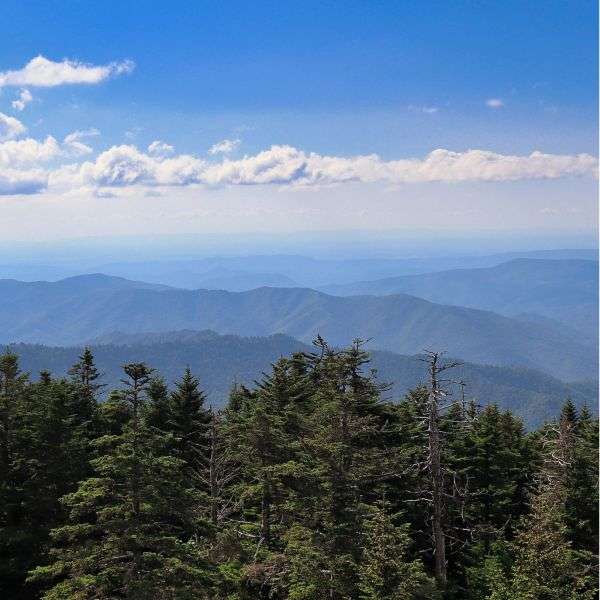
Tennessee and North Carolina
situated on the border, the park captivates visitors with lush forests, diverse wildlife, and iconic mist
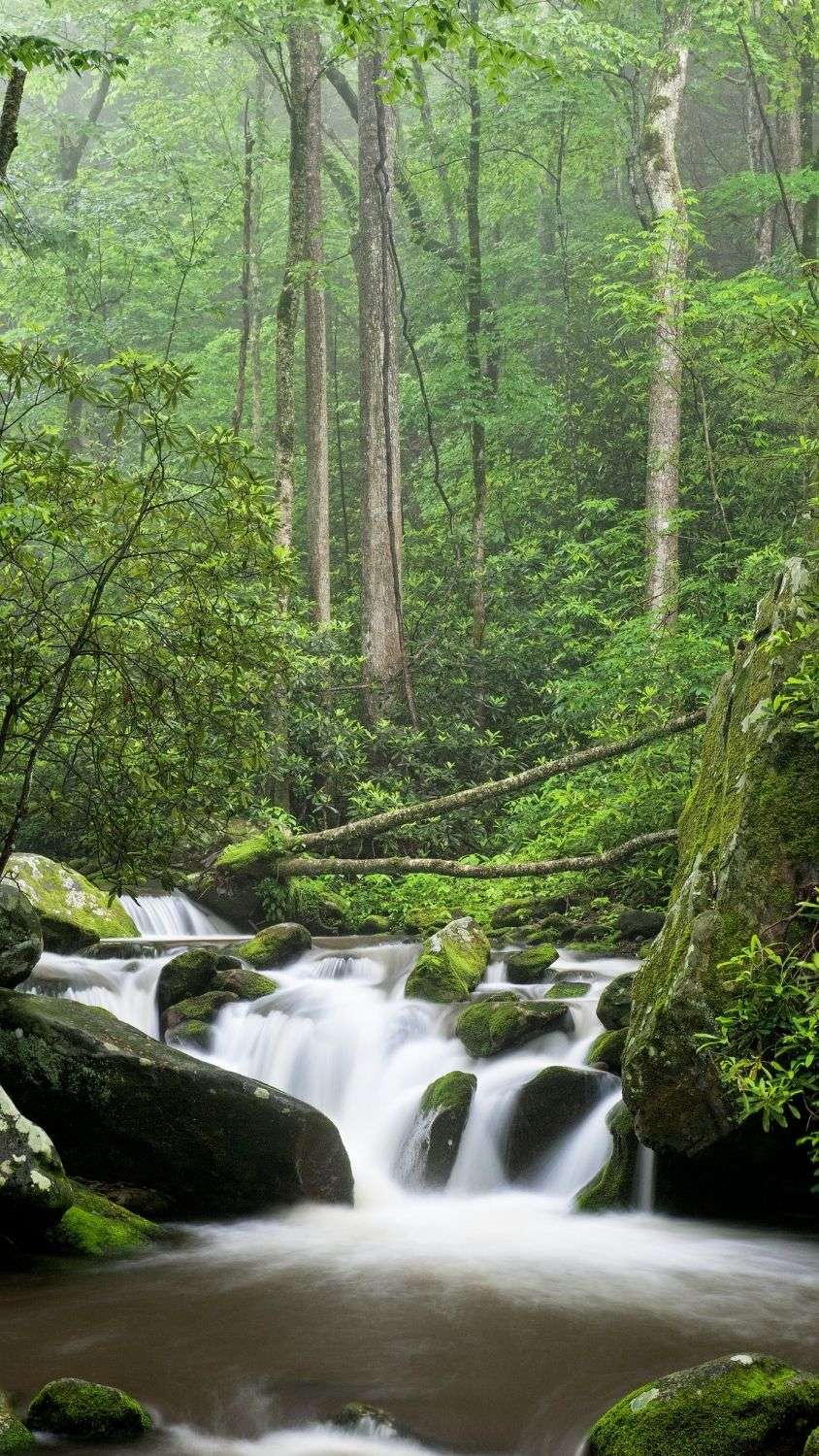
Fast Facts
Location
On the border between North Carolina and Tennessee
Established in
1934
Established by
President Calvin Coolidge
Size
800 sq. miles
Known For
- Known for its stunning landscapes, the park is famous for the mist-covered mountains that give it the "smoky" appearance
- It consistently ranks as the most visited national park in the United States
- The park is home to an estimated 19,000 documented species, with scientists believing there may be even more yet to be discovered
History
Natural History and Formation
The geological history of Great Smoky Mountains National Park spans more than a billion years and reflects ancient mountain building, sedimentation, metamorphism, faulting, and prolonged erosion. These processes produced the park's distinctive ridges, valleys, and exposed rock formations.
Ancient Rock Formation: Some of the oldest rocks in the region formed more than a billion years ago. Later, extensive layers of sediment accumulated in ancient marine environments and were eventually transformed into the sedimentary rocks that form much of the Appalachian landscape.
Appalachian Mountain Building: Between roughly 450 and 250 million years ago, major tectonic collisions associated with the formation of the Appalachian Mountains compressed, folded, faulted, and metamorphosed rocks across the region. These processes produced metamorphic rocks such as gneiss, schist, and slate.
Great Smoky Mountains Uplift: The rocks that make up the Smokies were subsequently uplifted as part of the Appalachian mountain system. Although the mountains were once considerably higher, prolonged erosion has gradually lowered and reshaped them.
Erosion and Weathering: Rivers, streams, frost, and chemical weathering have continuously sculpted the mountains. More resistant rocks tend to form ridges and peaks, while less resistant rocks erode more readily and contribute to the formation of valleys.
Cades Cove: Cades Cove is a broad valley surrounded by mountains and ridges. Its landscape reflects the complex folding and erosion of the underlying rocks, along with the influence of faults and differences in rock resistance.
Appalachian Mountain System: The Great Smoky Mountains form part of the larger Appalachian Mountains, one of the oldest major mountain systems in North America. Their ancient rocks and deeply eroded terrain provide a record of geological events extending hundreds of millions of years.
The combination of ancient rock formations, tectonic deformation, uplift, and long-term erosion has created the rugged landscape of Great Smoky Mountains National Park. These geological processes also helped produce the varied elevations, soils, and habitats that support the park's exceptional biodiversity.
Native History
The Great Smoky Mountains have a rich Native American history, with evidence of human presence in the region dating back thousands of years. The mountains lie within the ancestral homelands of the Cherokee, who have longstanding cultural, spiritual, and historical connections to the area.
Cherokee People: The Cherokee have deep historical ties to the southern Appalachian region, including the mountains that are now part of Great Smoky Mountains National Park. Cherokee communities used the area's forests, valleys, rivers, and trails for hunting, farming, gathering plants, travel, and trade.
Traditional Land Use: Cherokee communities practiced agriculture in suitable valleys and bottomlands while also relying extensively on hunting, fishing, and gathering. Plants from the mountains provided food, medicine, dyes, construction materials, and other resources. An extensive network of trails connected Cherokee settlements and hunting grounds throughout the region.
Cherokee Place Names and Cultural Connections: Cherokee language and traditions are closely associated with the landscape. The English name “Smoky Mountains” reflects the blue-gray haze that commonly appears over the mountains, while Cherokee traditions and place names preserve a deeper cultural understanding of the region.
European-American Settlement and Displacement: During the eighteenth and nineteenth centuries, increasing European-American settlement, land speculation, and government policies placed growing pressure on Cherokee communities. Treaties and land cessions progressively reduced Cherokee territory.
Trail of Tears: In the 1830s, the United States government forcibly removed thousands of Cherokee people from their southeastern homelands. The resulting journeys, particularly the 1838–1839 forced removal commonly known as the Trail of Tears, caused immense suffering and death. Some Cherokee people avoided removal by remaining in remote areas of the mountains and surrounding region.
Eastern Band of Cherokee Indians: The Eastern Band of Cherokee Indians, based in present-day Cherokee, North Carolina, represents Cherokee people whose ancestors remained in or returned to the Southeast during and after the removal era. The Qualla Boundary, the tribe's homeland, lies immediately adjacent to Great Smoky Mountains National Park.
Archaeological and Historic Sites: Archaeological evidence within the park documents thousands of years of human activity. Historic sites, trails, settlement locations, and archaeological resources provide evidence of Cherokee use of the mountains and contribute to understanding the region's long human history.
Oconaluftee and Cherokee Heritage: The Oconaluftee area is particularly important for interpreting Cherokee history. The nearby Oconaluftee Visitor Center and the Mountain Farm Museum help visitors learn about the region's Indigenous and later Appalachian history. The Museum of the Cherokee People and other cultural institutions in Cherokee, North Carolina, provide additional perspectives on Cherokee history and culture.
Continuing Cultural Connection: Cherokee connections to the Great Smoky Mountains continue today. The National Park Service works with the Eastern Band of Cherokee Indians on interpretation, preservation, and stewardship, recognizing that the landscape represents not only a natural resource but also an important cultural homeland.
The Native American history of Great Smoky Mountains National Park is therefore not simply a story of the past. Cherokee communities have maintained their identity, traditions, and connection to the mountains despite displacement and enormous historical pressures, and that continuing relationship remains an important part of the park's cultural heritage.
Preservation
The establishment and preservation history of Great Smoky Mountains National Park reflects a combination of public advocacy, private philanthropy, state and federal action, and efforts to protect the region from extensive logging and development.
Early 20th Century Concerns: By the early 20th century, extensive logging was transforming portions of the Great Smoky Mountains. Timber companies harvested large areas of forest, raising concerns about deforestation, habitat loss, erosion, and the potential loss of the region's scenic character.
Naturalists, writers, photographers, and conservationists increasingly recognized the need to protect the Smokies' forests, wildlife, streams, and mountain landscapes.
Horace Kephart and George Masa: Writer and naturalist Horace Kephart and photographer George Masa became influential advocates for protecting the Smoky Mountains. Through writing, photography, exploration, and public outreach, they helped demonstrate the region's scenic and ecological importance and build support for a national park.
Growing Support for a National Park: The idea of establishing a national park in the Great Smoky Mountains gained momentum during the 1920s. In 1925, North Carolina and Tennessee formally committed to supporting the creation of a national park, and the federal government subsequently became involved in planning and land acquisition.
The Great Smoky Mountains Conservation Association: Established in 1923, the Great Smoky Mountains Conservation Association helped build public support and raise funds for the proposed park. The organization remains an important partner in conservation and education efforts in the region.
Private Philanthropy: John D. Rockefeller Jr. became one of the most important private supporters of the park. Through the Laura Spelman Rockefeller Memorial, he provided substantial financial assistance for land acquisition. His contributions helped secure lands that otherwise might have remained in private ownership or been subject to further development.
Land Acquisition: Creating the park required assembling thousands of privately owned parcels across North Carolina and Tennessee. Many landowners sold their property, while some properties were acquired through condemnation proceedings. The land-acquisition process continued for years and involved thousands of individual tracts.
Formal Establishment: Congress authorized Great Smoky Mountains National Park in 1926. The park was formally established after sufficient lands had been acquired and transferred to the federal government. President Franklin D. Roosevelt officially dedicated the park on September 2, 1940.
National Park Development: During the 1930s, the Civilian Conservation Corps played a major role in developing roads, trails, bridges, campgrounds, and other facilities while also carrying out conservation projects. After World War II, visitation increased substantially, leading to further development and improvements in visitor facilities.
UNESCO World Heritage Designation: In 1983, Great Smoky Mountains National Park was designated a UNESCO World Heritage Site in recognition of its exceptional biodiversity and ecological importance.
Ongoing Stewardship: Today, the National Park Service works with state agencies, conservation organizations, scientists, local communities, and other partners to protect the park's natural and cultural resources. Major concerns include air pollution, invasive species, climate change, forest health, wildlife management, and increasing visitation.
The preservation history of Great Smoky Mountains National Park demonstrates how conservationists, local communities, state governments, the federal government, and private philanthropists worked together to protect one of the most biologically diverse landscapes in the eastern United States. The park's continuing preservation depends on maintaining that cooperative approach while adapting to new environmental and recreational challenges.
Future Preservation
Preserving Great Smoky Mountains National Park for the future presents a range of challenges involving environmental protection, visitor management, infrastructure, and the preservation of cultural resources.
Air Pollution: Air pollution from sources outside the park can reduce visibility and affect forest ecosystems, soils, streams, and sensitive plant species. Protecting the park's air quality requires cooperation with states, federal agencies, and communities throughout the surrounding region.
Invasive Species and Pests: Non-native species can threaten native ecosystems. The hemlock woolly adelgid has caused extensive mortality among eastern hemlock trees, while other invasive insects, diseases, and plants can alter forest composition and wildlife habitat. Monitoring and controlling these threats requires continuing management efforts.
Climate Change: Rising temperatures, changing precipitation patterns, and more frequent extreme weather events can affect the park's forests, streams, wildlife, and high-elevation habitats. Species may shift their ranges as environmental conditions change, making long-term ecosystem management increasingly challenging.
Visitor Use and Congestion: Great Smoky Mountains National Park receives millions of visitors each year. Heavy visitation can contribute to traffic congestion, trail erosion, litter, wildlife disturbance, and pressure on popular destinations. Managing visitor use while maintaining opportunities for recreation is an ongoing challenge.
Infrastructure Maintenance and Funding: Roads, bridges, trails, campgrounds, historic buildings, and visitor facilities require continual maintenance. The park's large size and extensive infrastructure create significant financial and logistical demands, particularly when addressing deferred maintenance.
Water Quality: The park contains an extensive network of streams that support aquatic ecosystems and provide important habitat for fish and other wildlife. Pollution, sedimentation, acid deposition, development outside park boundaries, and changes in precipitation can affect water quality and aquatic habitats.
Wildlife Management: Protecting wildlife requires monitoring populations, maintaining habitat connectivity, reducing human-wildlife conflicts, and addressing threats such as disease, invasive species, and habitat changes. The park must also manage visitor behavior to reduce disturbances to wildlife.
Cultural Resource Preservation: Historic buildings, archaeological sites, cemeteries, landscapes, and other cultural resources are vulnerable to weathering, flooding, vegetation growth, and deterioration. Protecting these resources while allowing visitors to learn about the region's history requires careful management.
Protection of Cherokee Cultural Heritage: The park contains resources associated with the long history of Cherokee use of the Smoky Mountains. Continued consultation and cooperation with the Eastern Band of Cherokee Indians are important for protecting cultural resources and presenting Cherokee history respectfully and accurately.
Cooperation Beyond Park Boundaries: Many threats to the park originate outside its boundaries. Air pollution, development, changing land use, invasive species, and wildlife movement all connect the park to the surrounding landscape. Cooperation with neighboring communities, landowners, government agencies, and conservation organizations is therefore essential.
Addressing these challenges requires long-term scientific research, adaptive management, adequate funding, visitor education, and cooperation among government agencies, tribal partners, local communities, conservation organizations, and the public. These efforts are essential to maintaining Great Smoky Mountains National Park's exceptional natural and cultural resources for future generations.
Geography
Great Smoky Mountains National Park, straddling the border between Tennessee and North Carolina, is renowned for its lush forests, mist-covered peaks, and extraordinary biodiversity. The park's geography is characterized by ancient, forest-covered ridges and valleys of the Great Smoky Mountains, which rise prominently above the surrounding landscape. With its rugged terrain, winding mountain streams, cascading waterfalls, and diverse ecosystems, Great Smoky Mountains National Park offers visitors a remarkable opportunity to explore one of the most scenic and biologically rich landscapes in the eastern United States.
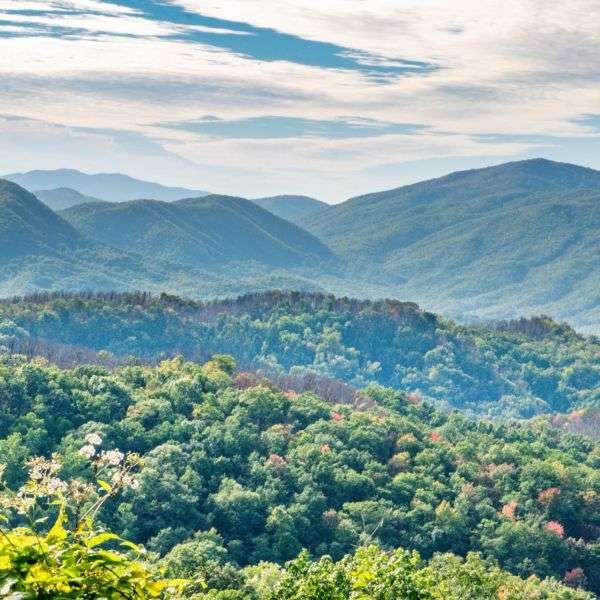
Mountain Ranges
The Great Smoky Mountains, for which the park is named, are a subrange of the Appalachian Mountains. The park also includes other mountain ranges, such as the Chilhowee Mountains and the western extension of the Balsam Mountains.
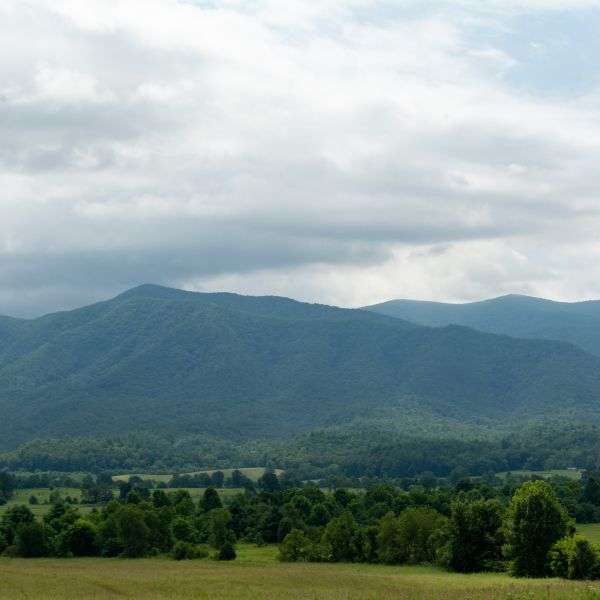
Valleys and Gaps
Cades Cove, a broad valley surrounded by mountains, is one of the prominent features of the park. The park also includes various mountain gaps and passes, such as Newfound Gap, which crosses the main ridge of the Great Smoky Mountains.
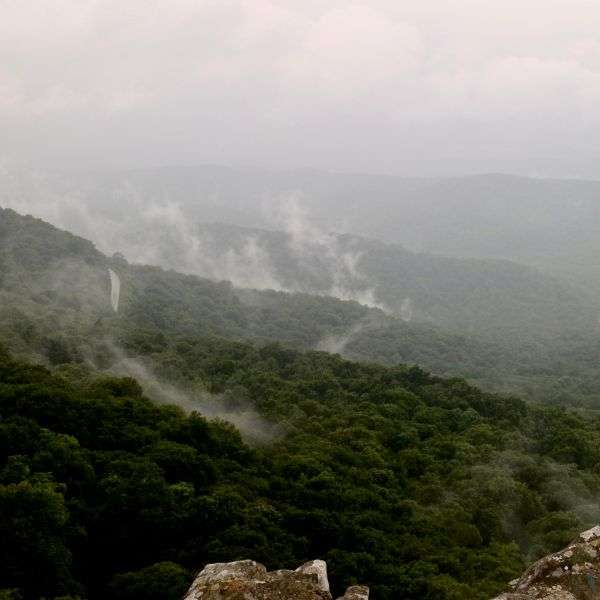
Rainforest-Like Conditions
The park's high levels of precipitation contribute to a lush, rainforest-like environment. The combination of ample rainfall and diverse elevations supports the growth of over 1,600 flowering plant species.

Rivers and Streams
The park is home to numerous rivers and streams, including the Little River, Oconaluftee River, and Cataloochee Creek. The waterways contribute to the park's biodiversity and provide habitat for various aquatic species.
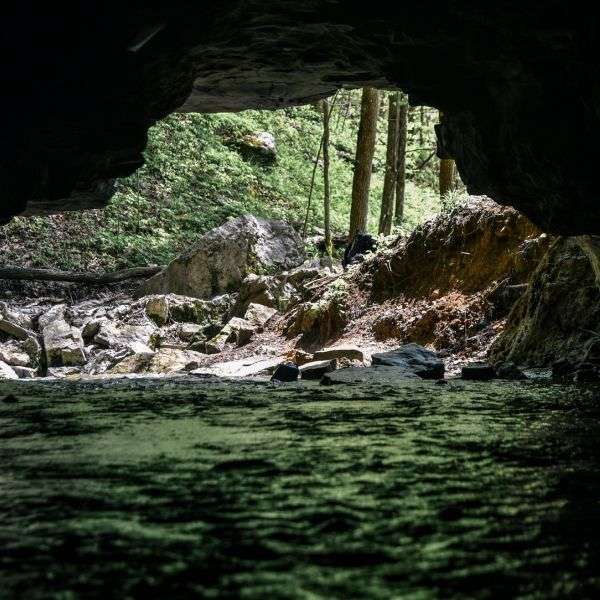
Caves and Karsts
The region contains limestone formations, leading to the development of karst topography. Although not as extensive as in some other areas, the park has caves and sinkholes, contributing to the unique geological features.
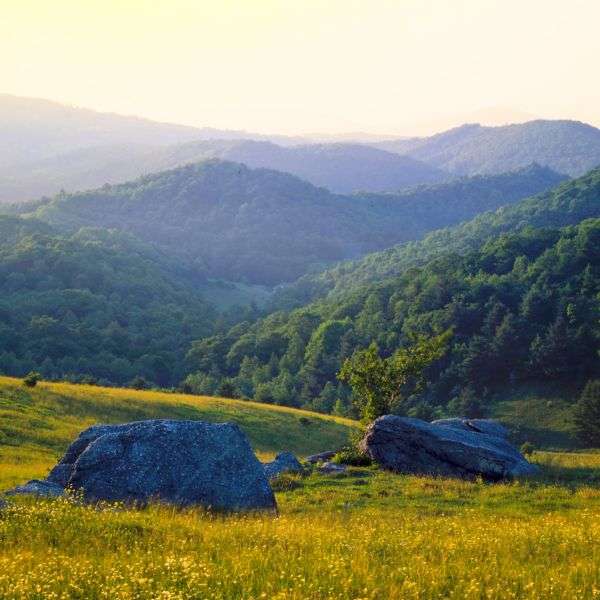
Geological Formations
The park's geology includes a mix of metamorphic rocks, sedimentary rocks, and igneous rocks. The diverse rock types contribute to the varied landscapes and ecosystems found throughout the park.
Plants
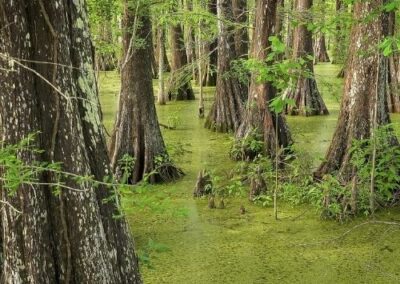
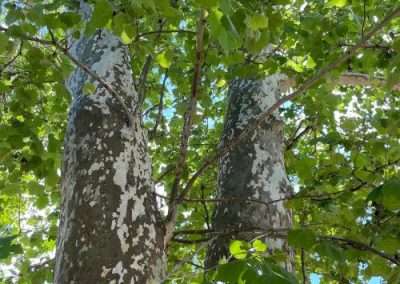
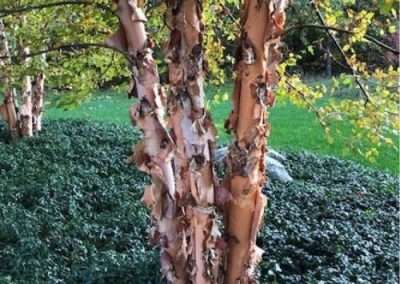
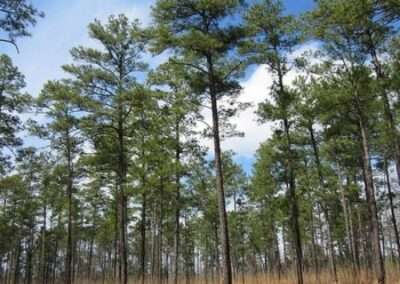
Great Smoky Mountains National Park is home to an extraordinary diversity of plant life, reflecting its varied elevations, habitats, and climate. From extensive forests of oak, maple, hickory, and other deciduous trees covering the mountain slopes to rich displays of wildflowers that brighten valleys, meadows, and forest floors, the park's flora contributes greatly to its ecological richness. Visitors can explore a remarkable variety of plant communities, including high-elevation spruce-fir forests, cove hardwood forests, and streamside vegetation, making Great Smoky Mountains National Park one of the most botanically diverse areas in North America.




Animals
Mammals
Great Smoky Mountains National Park is home to an impressive diversity of mammals, ranging from large animals such as black bears and elk to small mammals such as shrews and chipmunks. The park's forests, meadows, streams, and high-elevation habitats provide food and shelter for numerous species.
American Black Bear (Ursus americanus): Black bears are among the park's most iconic mammals. They inhabit forests, meadows, and other areas throughout the park and feed on a wide variety of foods, including berries, nuts, insects, and other available resources.
White-Tailed Deer (Odocoileus virginianus): White-tailed deer are widespread and commonly observed throughout the park. They occupy forests, meadows, and open areas and feed primarily on vegetation.
Elk (Cervus canadensis): Elk were reintroduced to the Cataloochee Valley area beginning in 2001 after being absent from the southern Appalachian region for more than a century. The population has since expanded, and elk can sometimes be observed in open valleys and meadows.
Wild Boar (Sus scrofa): Feral pigs are an invasive species in the park. They can disturb soil, damage vegetation, compete with native wildlife, and alter habitats while searching for food.
Gray Fox (Urocyon cinereoargenteus): Gray foxes inhabit forested and brushy environments throughout the region. They are particularly notable for their ability to climb trees, an unusual trait among canids.
Red Fox (Vulpes vulpes): Red foxes occur in a variety of habitats, including forests, fields, and open areas. They are opportunistic predators and scavengers that feed on small mammals, birds, insects, and other foods.
Coyote (Canis latrans): Coyotes are adaptable predators that occupy a variety of habitats within and around the park. Their flexible diet allows them to take advantage of numerous food sources.
North American River Otter (Lontra canadensis): River otters inhabit the park's streams and rivers. They are excellent swimmers and feed primarily on fish, crayfish, amphibians, and other aquatic prey.
Bobcat (Lynx rufus): Bobcats are solitary and elusive predators that inhabit forests and other suitable habitats. They primarily hunt small mammals but can also take birds and other prey.
Raccoon (Procyon lotor): Raccoons are common and highly adaptable mammals. They occupy forests and areas near streams and are omnivorous, feeding on fruits, insects, amphibians, and other available foods.
Virginia Opossum (Didelphis virginiana): The Virginia opossum is North America's only native marsupial. It is primarily nocturnal and is an adaptable omnivore that can be found in a variety of habitats.
Eastern Chipmunk (Tamias striatus): Eastern chipmunks are small, striped rodents commonly encountered in wooded areas. Their cheek pouches allow them to carry seeds and other food to storage locations.
Eastern Gray Squirrel (Sciurus carolinensis): Eastern gray squirrels are abundant in the park's forests. They forage for nuts, seeds, fruits, and other foods and play a role in dispersing tree seeds.
Smoky Shrew (Sorex fumeus): Smoky shrews are small insect-eating mammals associated with forested habitats. They feed primarily on insects and other small invertebrates and contribute to the park's diverse forest ecosystem.
Reptiles
Great Smoky Mountains National Park is home to a diverse variety of reptiles, including turtles, snakes, and lizards. The park's range of habitats, from warm lowland valleys and streams to forested mountain slopes, provides suitable conditions for numerous reptile species.
Eastern Box Turtle (Terrapene carolina carolina): Eastern box turtles are terrestrial turtles commonly found in forests, meadows, and other habitats. They are recognizable by their high-domed shells and hinged plastrons, which allow them to close their shells for protection.
Common Snapping Turtle (Chelydra serpentina): Snapping turtles inhabit ponds, wetlands, and slow-moving streams. They have powerful jaws and are primarily aquatic, although they may travel over land between bodies of water.
Northern Watersnake (Nerodia sipedon): Northern watersnakes are nonvenomous snakes associated with streams, rivers, ponds, and other aquatic habitats. They are capable swimmers and feed on fish, amphibians, and other small animals.
Eastern Garter Snake (Thamnophis sirtalis): Eastern garter snakes are widespread and adaptable, occupying forests, meadows, wetlands, and areas near streams. They feed on a variety of small prey, including amphibians, earthworms, and insects.
Timber Rattlesnake (Crotalus horridus): Timber rattlesnakes are venomous pit vipers found in portions of the park. They favor rocky slopes, forest edges, and other suitable habitats and generally avoid people when given the opportunity.
Northern Copperhead (Agkistrodon contortrix): Northern copperheads are venomous snakes associated with wooded areas, rocky slopes, and other habitats. Their patterned coloration provides effective camouflage among leaves and rocks.
Eastern Worm Snake (Carphophis amoenus): Eastern worm snakes are small, nonvenomous snakes that spend much of their time beneath leaf litter, soil, and decaying vegetation. They primarily feed on earthworms and other soft-bodied invertebrates.
Common Five-Lined Skink (Plestiodon fasciatus): Five-lined skinks are widespread lizards that can be found around logs, rocks, forest edges, and other sunny areas. Juveniles are particularly recognizable by their bright blue tails and contrasting stripes.
Eastern Fence Lizard (Sceloporus undulatus): Eastern fence lizards are commonly seen basking on rocks, logs, and tree trunks. They are insectivorous and are especially associated with sunny forest edges and open woodland habitats.
Birds
Great Smoky Mountains National Park is a haven for birdwatchers, with diverse habitats ranging from lowland valleys and forests to high-elevation spruce-fir forests. These environments support a rich variety of resident and migratory birds throughout the year.
Black-Capped Chickadee (Poecile atricapillus): Black-capped chickadees are small, active songbirds recognized by their black caps, white cheeks, and distinctive calls. They can be found in forested habitats throughout the park.
Northern Cardinal (Cardinalis cardinalis): Northern cardinals are year-round residents known for their bright red plumage in males and distinctive songs. They are commonly found in woodland edges, shrubs, and other habitats with dense vegetation.
American Robin (Turdus migratorius): American robins are widespread throughout the park and can be observed in forests, meadows, and open areas. They forage for insects, fruits, and other foods and are recognized by their orange-red breasts.
Eastern Bluebird (Sialia sialis): Eastern bluebirds are cavity-nesting birds associated with open areas, fields, and woodland edges. Nest boxes have been used in some areas to provide additional nesting opportunities.
Red-Tailed Hawk (Buteo jamaicensis): Red-tailed hawks are large raptors that can often be seen soaring above open areas and mountain slopes. They primarily hunt small mammals and other prey.
Pileated Woodpecker (Dryocopus pileatus): One of the largest woodpeckers in North America, the pileated woodpecker is easily recognized by its large size and prominent crest. It uses its powerful bill to excavate trees while searching for insects.
Wild Turkey (Meleagris gallopavo): Wild turkeys are common throughout the park and can often be seen foraging in forests, fields, and open areas. They feed on seeds, nuts, insects, and other foods.
Black-Throated Green Warbler (Setophaga virens): Black-throated green warblers are associated with forest habitats and are especially characteristic of mature coniferous and mixed forests. They feed primarily on insects and other small invertebrates.
Common Raven (Corvus corax): Common ravens inhabit the park's mountains, forests, and open areas. They are highly intelligent birds that can often be observed soaring above ridges and cliffs.
Eastern Towhee (Pipilo erythrophthalmus): Eastern towhees are commonly found in brushy areas and woodland edges. They frequently forage on the ground, scratching through leaf litter in search of insects and seeds.
Northern Saw-Whet Owl (Aegolius acadicus): Northern saw-whet owls are small, nocturnal owls associated with forested habitats. They are secretive and primarily hunt small mammals and other prey at night.
Cerulean Warbler (Setophaga cerulea): Cerulean warblers are migratory songbirds that breed in mature deciduous forests. The species is of conservation interest because of declines across portions of its breeding range.
Chimney Swift (Chaetura pelagica): Chimney swifts spend much of their time in flight, catching insects high above the ground. They are fast, agile fliers and are often seen over forests and open areas during the warmer months.
American Goldfinch (Spinus tristis): American goldfinches are small seed-eating birds recognizable by the bright yellow plumage of breeding males. They can be found in open habitats and areas with abundant seed-producing plants.
Fish
Great Smoky Mountains National Park is home to a diverse freshwater fish community supported by its extensive network of cold mountain streams, rivers, and pools. These aquatic habitats provide important food sources and breeding areas for native fish while also supporting recreational fishing.
Brook Trout (Salvelinus fontinalis): Brook trout are the park's only native trout species. They are especially associated with cold, clear, high-elevation streams and are an important part of the park's native aquatic ecosystems.
Rainbow Trout (Oncorhynchus mykiss): Rainbow trout were introduced to the Smokies and are now widespread in many park streams. They are particularly common in larger and lower-elevation streams and are popular with anglers.
Brown Trout (Salmo trutta): Brown trout are another introduced trout species found in portions of the park. They tend to occupy larger, cooler streams and can compete with native brook trout for habitat and food.
Smallmouth Bass (Micropterus dolomieu): Smallmouth bass occur primarily in larger, warmer streams and rivers. They are popular sport fish and feed on smaller fish, crayfish, and aquatic invertebrates.
Longnose Dace (Rhinichthys cataractae): Longnose dace are small native minnows adapted to flowing water. They are commonly associated with rocky stream bottoms, where they feed on aquatic insects and other small organisms.
Darters (Etheostoma spp.): The park supports several species of darters, including the fantail darter and other members of the genus Etheostoma. These small bottom-dwelling fish are commonly found among rocks and gravel in streams.
Madtoms (Noturus spp.): Madtoms are small catfish that inhabit rocky stream habitats. Some species possess venomous spines in their dorsal and pectoral fins and are generally secretive, bottom-dwelling fish.
White Sucker (Catostomus commersonii): White suckers are native freshwater fish found in streams and rivers. They feed along the bottom and contribute to the cycling of nutrients within aquatic ecosystems.
Redeye Bass (Micropterus coosae): Redeye bass are native to the southeastern United States and occur in suitable streams and rivers. They prefer clear, flowing water and feed on insects, crayfish, and smaller fish.
Creek Chub (Semotilus atromaculatus): Creek chubs are common native minnows found in many freshwater streams. They feed on insects, small aquatic organisms, and plant material and serve as prey for larger fish and other wildlife.
Blacknose Dace (Rhinichthys atratulus): Blacknose dace are small minnows that inhabit shallow, flowing streams. They are recognizable by the dark stripe extending along much of their bodies and are an important component of stream food webs.
Southern Appalachian Brook Trout: Brook trout populations in the Southern Appalachians represent distinctive native populations adapted to the region's cool, clear mountain streams. Protecting these native populations is an important conservation priority within the park.
Amphibians
Great Smoky Mountains National Park is renowned for its exceptional diversity of amphibians, particularly salamanders. The park's cool, moist forests, streams, seeps, and wetlands provide ideal habitats for frogs, toads, and numerous salamander species. In fact, the Smokies are recognized as one of the world's most important areas for salamander diversity.
Southern Appalachian Salamander (Plethodon teyahalee): This terrestrial salamander occurs in the Southern Appalachian region and can be found in forested habitats within the park. It is often associated with moist leaf litter and rocky areas.
Eastern Red-Spotted Newt (Notophthalmus viridescens): Eastern red-spotted newts have a complex life cycle that includes aquatic larvae, terrestrial red efts, and aquatic adults. The red eft stage is especially recognizable by its bright coloration and spots.
American Toad (Anaxyrus americanus): American toads occur in forests, fields, and other habitats throughout the region. They have warty skin and produce distinctive trilling calls during the breeding season.
Southern Leopard Frog (Lithobates sphenocephalus): Southern leopard frogs inhabit wetlands, ponds, and slow-moving streams. Their greenish or brownish bodies are marked with prominent dark spots.
Spring Peeper (Pseudacris crucifer): Spring peepers are tiny tree frogs famous for their high-pitched calls. They breed in temporary pools and other shallow wetlands, particularly during the spring.
Northern Slimy Salamander (Plethodon glutinosus): Northern slimy salamanders are terrestrial salamanders commonly found beneath logs, rocks, and leaf litter in moist forests. Their skin produces a sticky secretion that can help deter predators.
Pickerel Frog (Lithobates palustris): Pickerel frogs are associated with streams, wetlands, and other moist habitats. Their backs typically display distinctive rectangular dark spots arranged in two rows.
Green Salamander (Aneides aeneus): Green salamanders are specialized for life on rock faces, cliffs, and trees. Their flattened bodies and adhesive toe pads help them move through their vertical habitats.
Wood Frog (Lithobates sylvaticus): Wood frogs are adapted to cold environments and can survive partial freezing during winter. They are recognizable by the dark mask-like markings across their eyes.
Mountain Dusky Salamander (Desmognathus ochrophaeus): Mountain dusky salamanders are associated with moist forests, seeps, and stream margins. They are terrestrial or semiaquatic and are particularly well adapted to the cool, damp conditions of the Southern Appalachians.
Eastern Hellbender (Cryptobranchus alleganiensis): The eastern hellbender is a large aquatic salamander that inhabits clean, rocky streams. It requires well-oxygenated water and is an important indicator of healthy aquatic ecosystems.
Northern Two-Lined Salamander (Eurycea bislineata): Northern two-lined salamanders are small stream-associated salamanders recognized by the two dark lines running along their backs. They are commonly found beneath rocks and debris near cool, flowing water.
Blue Ridge Two-Lined Salamander (Eurycea wilderae): Blue Ridge two-lined salamanders are native to the Southern Appalachian region and are strongly associated with cool, clear mountain streams and seeps. They are among the many salamander species that contribute to the Smokies' remarkable amphibian diversity.
"In this park, we shall conserve the pine, the redwood, the dogwood, the azalea, the rhododendron, the trout and the brush for the happiness of the American people."
- Franklin D. Roosevelt
“The richness of the Great Smoky forest has been the wonder and the admiration of every- one who has traversed it."
- Horace Kephart
"Purple and blue and blue again and smoky until you can’t tell the mountains apart from the sky. Lord, it’ll make a man think something, seeing that. It’ll make a man think deep.”
— Lee Smith
"Both the Blue Ridge and the Smoky Mountains owe their names to this tenuous mist. It softens all outlines and lends a mirage-like effect of great distance to objects that are but a few miles off, while those farther removed grow more and more intangible until finally the sky-line blends with the sky itself.”
– Horace Kephart
Explore More With Us
Stay updated on National Parks EDU resources, park news, community updates, and and ways to explore, and protect.

National Parks Edu's mission is to help kids and families understand what makes these places so important. Because when you learn about nature, you start to care about protecting it.
National Parks EDU is an independent educational website and is not affiliated with, endorsed by, sponsored by, or officially connected to the National Park Service (NPS) or the U.S. government. © National Parks EDU. All Rights Reserved. October 17, 2026