Grand Canyon
National Park
Arizona
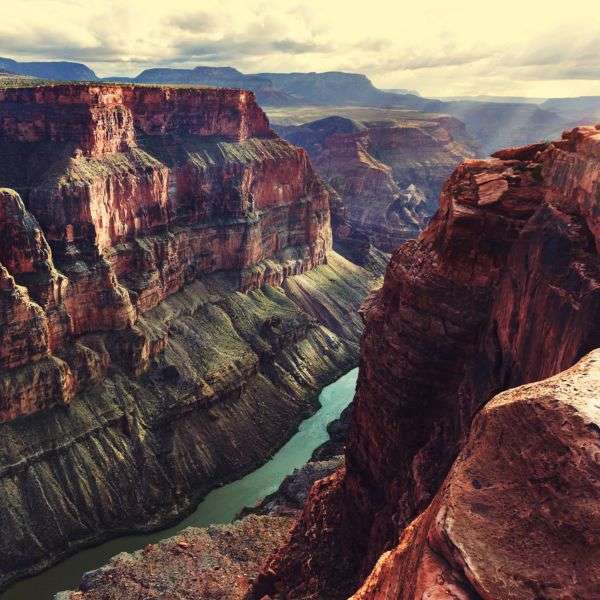
showcases the awe-inspiring beauty intricately layered canyon, carved by the Colorado River over millions of years
Fast Facts
Location
Arizona
Established in
1919
Established by
President Woodrow Wilson
Size
1,902 sq. miles
Known For
- Grand Canyon National Park is renowned for its stunning and massive canyon, carved by the Colorado River over millions of years
- The canyon is a geological marvel, revealing rock layers that tell a story of Earth's history
- The park is traversed by the mighty Colorado River, which flows through the canyon
History
Natural History and Formation
The Grand Canyon has a remarkable natural history shaped by geological processes operating over hundreds of millions of years. Its enormous cliffs, deep valleys, and colorful rock layers record ancient environments ranging from shallow seas and coastal plains to deserts and river systems. The canyon continues to change today as the Colorado River, weathering, erosion, and other natural forces gradually reshape the landscape.
Rock Formation: The rocks exposed in the Grand Canyon represent a long geological history, with some of the oldest rocks dating back nearly 2 billion years. The canyon contains layers of sedimentary rock, including limestone, sandstone, shale, and mudstone, as well as much older metamorphic and igneous rocks deep within the canyon.
Ancient Seas: Much of the sedimentary rock in the Grand Canyon formed when ancient seas repeatedly covered the region. Marine environments deposited layers of sediments that eventually hardened into limestone, sandstone, and shale. Fossils found in some of these rocks provide evidence of the organisms that lived in these ancient environments.
Uplift of the Colorado Plateau: The Colorado Plateau was gradually uplifted over millions of years as tectonic forces raised the region. This uplift created the high elevation of the surrounding landscape and allowed rivers to cut more deeply into the underlying rock.
Formation of the Colorado River: The Colorado River played a major role in carving the modern Grand Canyon. As the Colorado Plateau rose, the river eroded downward through layers of rock, gradually creating the deep canyon seen today.
Erosion: Water is one of the most important forces shaping the Grand Canyon. In addition to the Colorado River, rainwater and runoff flow through side canyons, carrying sediment and wearing away the rock. Wind, temperature changes, and chemical weathering also contribute to erosion.
Ice and Weathering: During colder periods, freezing and thawing caused water to expand inside cracks in the rocks. This process gradually broke apart sections of the canyon walls. Although glaciers did not carve the Grand Canyon itself, periods of colder climate influenced erosion and weathering throughout the region.
Canyon Formation: The Grand Canyon's immense depth and layered cliffs developed through the combined effects of tectonic uplift and erosion over millions of years. The exposed rock layers create the canyon's distinctive bands of red, orange, gray, and brown.
Ongoing Geological Processes: The Grand Canyon is still changing today. The Colorado River continues to transport sediment, while rainfall, landslides, rockfalls, wind, and temperature changes slowly reshape the canyon walls and side canyons.
Understanding the natural history and geological formation of the Grand Canyon provides a remarkable glimpse into Earth's ancient past. Its exposed rock layers and dramatic landscape serve as a geological record, allowing scientists and visitors to observe the powerful forces that have shaped the region over billions of years.
Native History
The Grand Canyon has a rich Native American history, with archaeological evidence suggesting that various Indigenous peoples have inhabited the region for thousands of years. Several Native American tribes have historical and cultural connections to the Grand Canyon, and their presence has left a lasting impact on the area.
Ancestral Puebloans (Basketmaker and Pueblo Periods): Archaeological evidence indicates that the Ancestral Puebloans, also known as the Anasazi, were among the earliest inhabitants of the Grand Canyon area. They lived in the region from approximately 500 BCE to 1200 CE, during the Basketmaker and Pueblo periods. These ancient peoples left behind artifacts, dwellings, and rock art.
Cohonina Culture: The Cohonina people also inhabited the Grand Canyon area, with their presence dating back to around 500 CE. They are known for their distinctive pottery and lived in the region for several centuries.
Cerbat People: The Cerbat people, associated with the broader Southern Paiute cultural region, have historical ties to the Grand Canyon. They inhabited the surrounding areas and were skilled hunters and gatherers. Their descendants and related communities, including the Hualapai and Havasupai, continue to maintain strong cultural connections to the canyon.
Hopi and Navajo Influence: The Hopi and Navajo peoples, whose ancestral lands are located near the Grand Canyon, have longstanding historical, cultural, and spiritual ties to the region. The Hopi consider the canyon and surrounding landscapes sacred, while the Navajo maintain traditions, stories, and cultural connections associated with the area.
Havasupai Tribe: The Havasupai people, whose name is commonly translated as "people of the blue-green water," have lived in the Grand Canyon region for centuries. They have a particularly strong connection to Havasu Canyon and its waterfalls. The Havasupai Tribe continues to maintain its community and cultural traditions in the canyon.
Hualapai Tribe: The Hualapai people have a long history in the Grand Canyon region. The Hualapai Reservation includes lands along the western Grand Canyon, and the tribe operates the Grand Canyon Skywalk, a glass-bottomed walkway offering views of the canyon.
Cultural Significance: The Grand Canyon holds immense cultural and spiritual significance for many Native American tribes in the region. Various locations within and around the canyon are associated with creation stories, religious traditions, ceremonies, ancestral sites, and traditional practices.
Preservation and Collaboration: The National Park Service works with Native American tribes to preserve and interpret the cultural heritage of the Grand Canyon. Tribal perspectives, archaeological research, interpretive programs, exhibits, and partnerships help recognize the enduring connections Indigenous peoples have with the canyon and its surrounding landscapes.
Preservation
The preservation history of Grand Canyon National Park reflects more than a century of efforts to protect its extraordinary geological formations, ecosystems, wildlife, scenic landscapes, and cultural resources.
Early Conservation Efforts: During the late 19th century, explorers, scientists, artists, and conservationists helped bring national attention to the Grand Canyon. John Wesley Powell's expeditions through the canyon provided important scientific observations and increased public awareness of its geological significance.
Grand Canyon Forest Reserve (1893): President Benjamin Harrison established the Grand Canyon Forest Reserve in 1893. This was one of the earliest federal efforts to protect the canyon from uncontrolled development and resource exploitation.
Grand Canyon Game Preserve (1906): President Theodore Roosevelt established the Grand Canyon Game Preserve in 1906 to provide additional protection for wildlife. Roosevelt was also an influential advocate for preserving the canyon's landscapes and natural character.
National Monument Designation (1908): On January 11, 1908, President Roosevelt proclaimed the Grand Canyon a national monument. This designation strengthened federal protection of the canyon's geological and scenic resources and helped limit activities that could damage the landscape.
Establishment as a National Park (1919): Grand Canyon National Park was established on February 26, 1919, when President Woodrow Wilson signed legislation creating the park. National park status provided a stronger framework for protecting the canyon while allowing the public to experience its natural and cultural resources.
Protection of Natural Resources: Over the decades, park management has expanded beyond protecting scenery to include the conservation of wildlife, native vegetation, water resources, geological features, and ecological processes. Management programs address issues such as invasive species, habitat protection, fire, and the effects of human activity.
Cultural Heritage Preservation: Preservation efforts also recognize the Grand Canyon's long history of Native American habitation and cultural significance. Archaeological sites, ancestral landscapes, traditional cultural places, and historic structures are protected through research, monitoring, and cooperation with associated Indigenous communities.
Wilderness Protection: Large portions of Grand Canyon National Park have received wilderness protection, helping preserve remote areas in a relatively undeveloped condition. These protections are important for maintaining natural ecosystems, wildlife habitat, and opportunities for solitude.
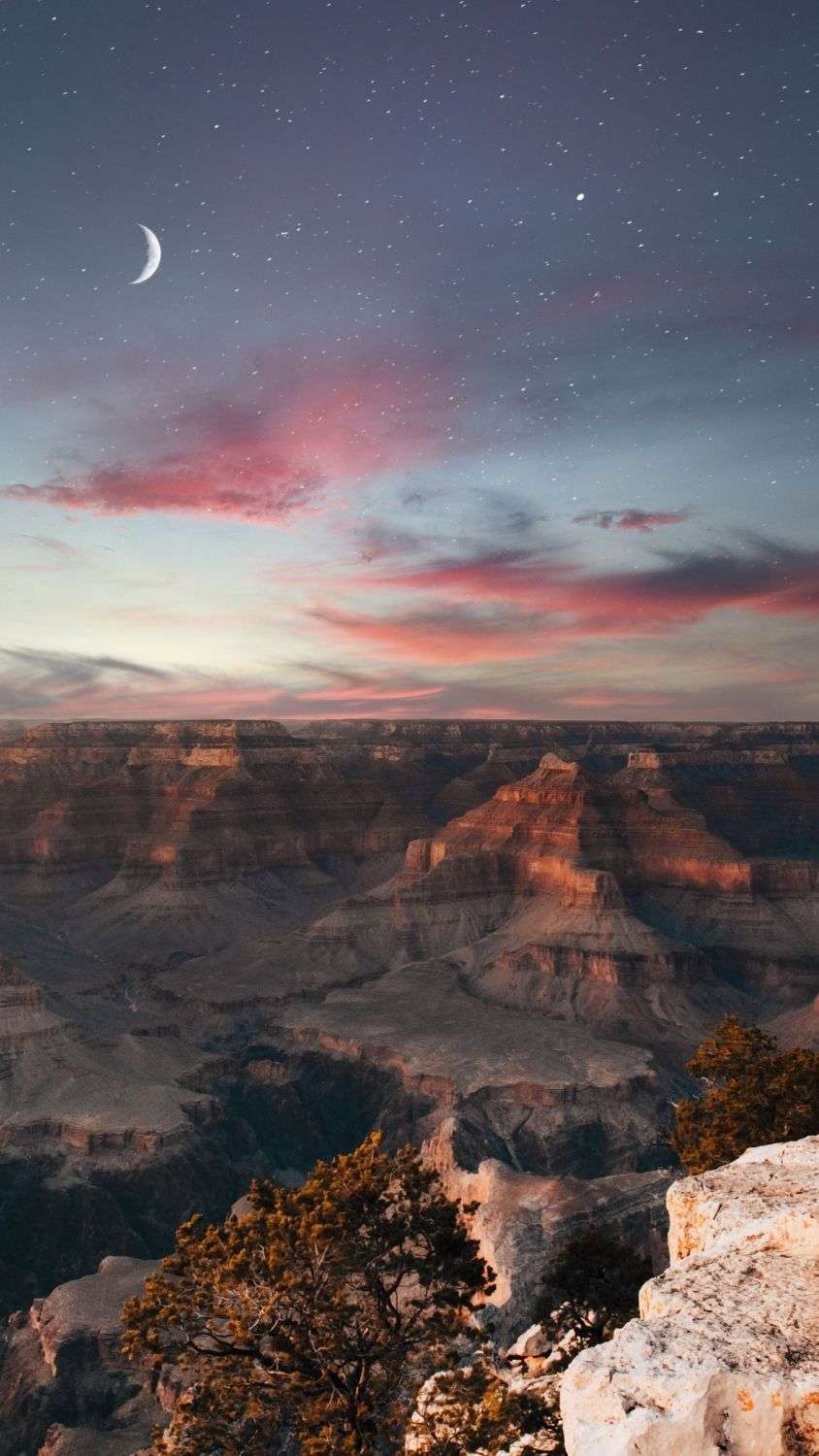
Dark Sky Preservation: In 2019, Grand Canyon National Park received International Dark Sky Park designation in recognition of its exceptionally dark night skies. Efforts to reduce unnecessary artificial lighting help protect the nighttime environment and support astronomy and wildlife.
Ongoing Conservation: Today, preservation at Grand Canyon National Park involves balancing recreation and tourism with long-term conservation. The National Park Service continues to monitor geological processes, wildlife populations, water resources, vegetation, archaeological sites, and visitor impacts to ensure that the canyon's natural and cultural treasures remain protected for future generations.
Future Preservation
Preserving Grand Canyon National Park for future generations presents several challenges, particularly as environmental changes, increasing visitation, and human activities place pressure on its natural and cultural resources.
Climate Change: Rising temperatures and changing weather patterns can affect the park's ecosystems, wildlife, vegetation, and water resources. Increasing temperatures may intensify drought conditions and alter the timing and amount of precipitation throughout the region.
Water Scarcity: Water is a critical resource in the arid Southwest. Changes in precipitation, reduced snowpack, and prolonged drought can affect the Colorado River and the limited water sources available to plants, animals, and people.
Drought and Wildfires: Hotter and drier conditions can increase the risk of drought and wildfire. Wildfires can alter vegetation, wildlife habitat, air quality, and soil conditions while also creating challenges for visitor safety and park management.
Visitor Pressure and Overcrowding: Grand Canyon National Park attracts millions of visitors each year. Heavy visitation can contribute to trail erosion, litter, vegetation damage, traffic congestion, and increased pressure on facilities and infrastructure. Effective visitor-management strategies are necessary to protect sensitive areas while maintaining public access.
Erosion and Geological Hazards: Erosion is a natural process that continues to shape the canyon, but intense storms and changing precipitation patterns can accelerate erosion and contribute to rockfalls and landslides. These processes can threaten trails, roads, archaeological sites, and other infrastructure.
Wildlife and Habitat Changes: Changes in temperature, water availability, vegetation, and fire patterns can alter wildlife habitats and food sources. Some species may adapt or move to different areas, while others may become increasingly vulnerable to environmental changes.
Invasive Species: Non-native plants and animals can compete with native species and disrupt natural ecosystems. Continued monitoring and management are important for protecting the park's native biodiversity.
Cultural Resource Protection: Archaeological sites, artifacts, and other cultural resources can be damaged by erosion, weather, natural deterioration, and human activity. Protecting these resources requires careful monitoring and cooperation with Native American tribes connected to the Grand Canyon.
Light Pollution: Artificial lighting from surrounding communities and development can affect the park's exceptionally dark night skies. Protecting natural darkness is important for astronomy, nocturnal wildlife, and the visitor experience.
Development Outside the Park: Activities on lands surrounding Grand Canyon National Park, including development, mining, transportation projects, and changes in land use, can affect viewsheds, wildlife movement, water resources, and ecosystem connectivity within the park.
Infrastructure Maintenance: Roads, trails, bridges, visitor facilities, water systems, and other infrastructure require continual maintenance. Managing these needs while minimizing impacts on the canyon's natural and cultural resources is an ongoing challenge.
Funding and Resources: Long-term preservation depends on adequate funding, scientific research, trained personnel, and effective management programs. Limited resources can make it difficult to address every conservation and infrastructure need simultaneously.
Collaboration and Tribal Partnerships: Protecting the Grand Canyon requires cooperation among the National Park Service, Native American tribes, scientists, local communities, visitors, and other stakeholders. Incorporating Indigenous knowledge and respecting tribal cultural connections are important components of responsible stewardship.
Addressing these challenges will require adaptive conservation strategies, scientific research, sustainable visitor management, habitat protection, and continued collaboration with Native American communities and surrounding communities. These efforts can help ensure that the Grand Canyon's remarkable geological landscapes, ecosystems, and cultural heritage remain protected for future generations.
Geography
Grand Canyon National Park, located in northern Arizona, is one of the most spectacular natural landscapes in the United States. Shaped over millions of years by the Colorado River and other forces of erosion, the park features immense cliffs, colorful rock layers, deep side canyons, rugged plateaus, and breathtaking vistas. With its extraordinary geological formations, dramatic elevation changes, and diverse ecosystems, the Grand Canyon offers a remarkable glimpse into the Earth's natural history and the powerful forces that continue to shape the landscape.
Grand Canyon
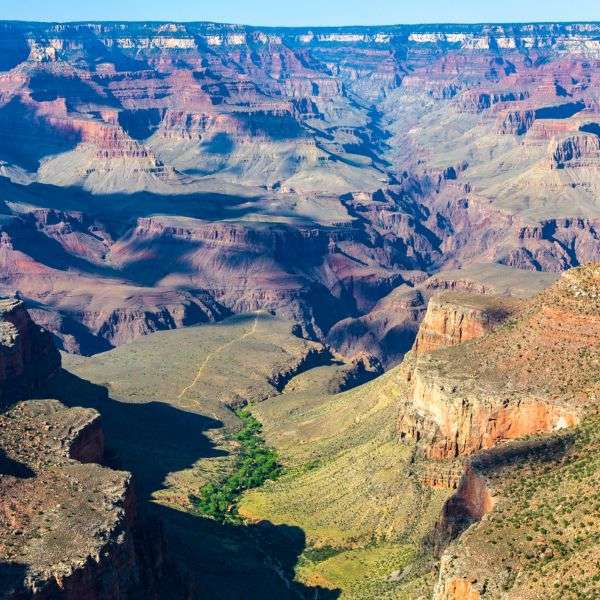
Carved by the Colorado River over millions of years, the canyon is a massive and intricate landscape, showcasing a depth of up to a mile and exposing rock layers that span millions of years of geological history. The canyon is divided into two main rims: the North Rim and the South Rim.
North Rim
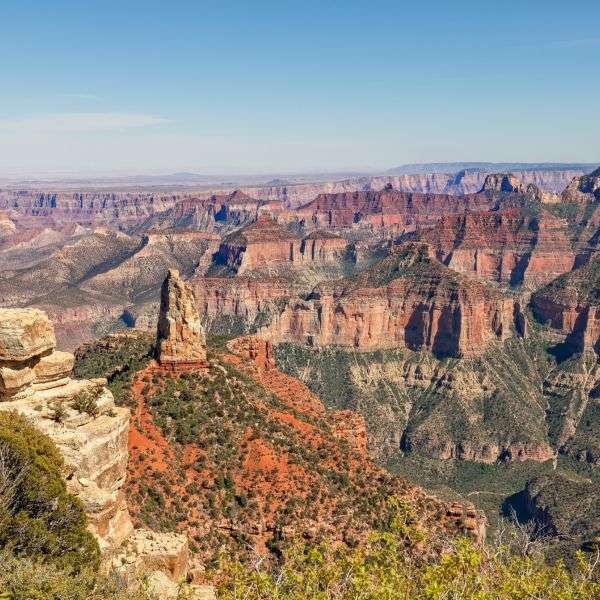
The North Rim of the Grand Canyon is less visited than the South Rim, and it stands at a higher elevation, around 8,000 feet above sea level. The North Rim offers a different perspective of the canyon, with a cooler and more forested environment. The North Rim is only accessible during the warmer months due to heavy snowfall in winter.
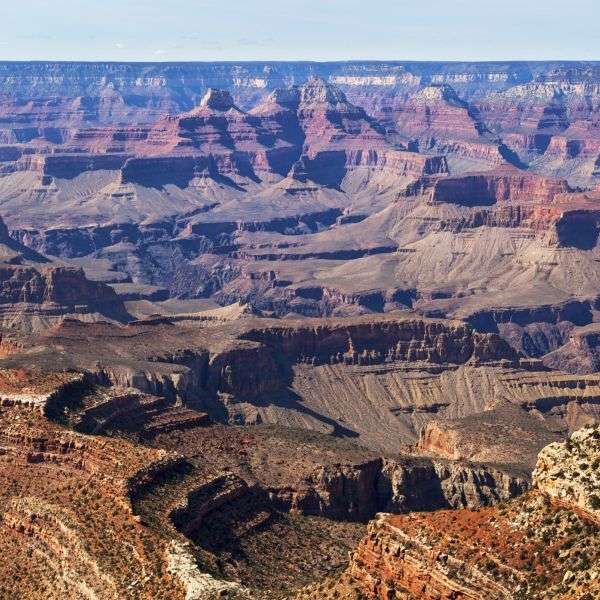
South Rim
The South Rim is the more popular and accessible rim of the Grand Canyon. It attracts the majority of visitors and provides numerous viewpoints, hiking trails, and visitor facilities. The South Rim has a higher elevation than the canyon floor, offering stunning panoramic views of the canyon's depths and geological formations.
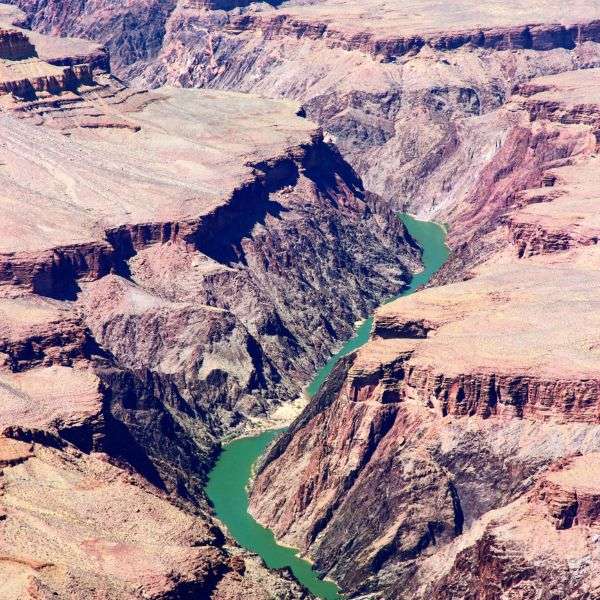
Colorado River
The Colorado River flows through the bottom of the Grand Canyon, playing a crucial role in shaping the canyon's geological features. The river is responsible for the erosion that created the canyon over millions of years. Visitors can explore the river through river rafting trips, but accessing the canyon floor is generally a challenging and strenuous endeavor.
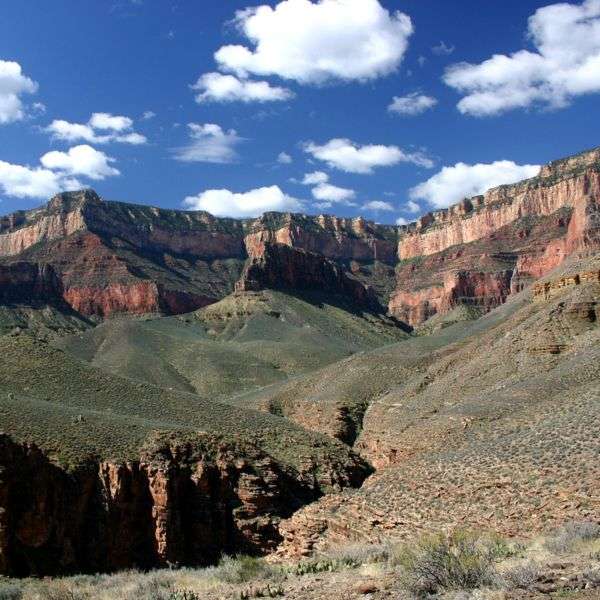
Inner Canyon
The inner canyon refers to the area below the rim and includes the canyon floor. Hiking trails, such as the Bright Angel Trail and the South Kaibab Trail, provide opportunities for visitors to descend into the inner canyon and experience its diverse landscapes, rock formations, and unique ecosystems.
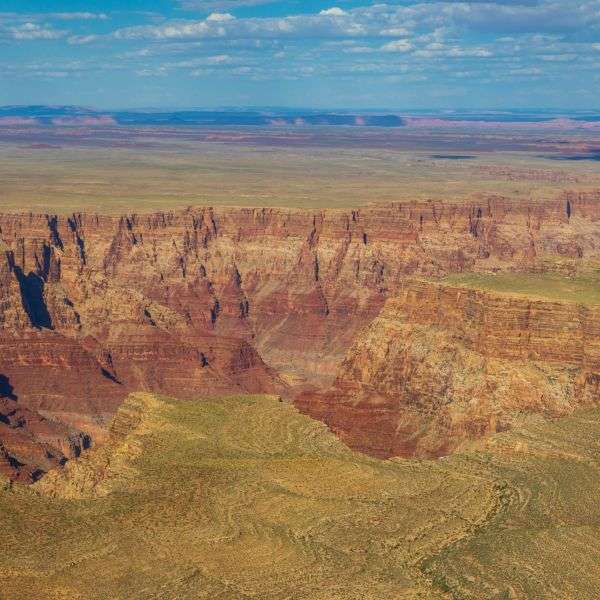
Plateau and Surrounding Landscape
The Grand Canyon is part of the Colorado Plateau, a vast region of elevated terrain characterized by colorful sedimentary rock layers. The plateau extends into portions of Arizona, Utah, Colorado, and New Mexico. The surrounding landscape includes high desert terrain, mesas, buttes, and canyons, contributing to the unique and varied geography of the region.
Plants
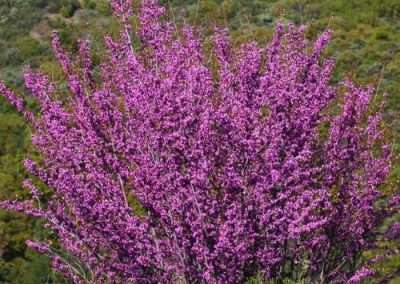
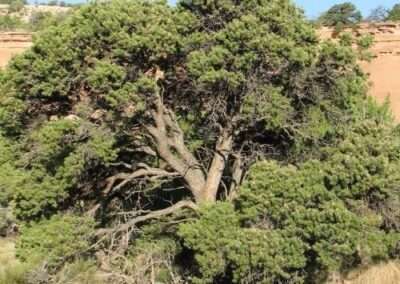
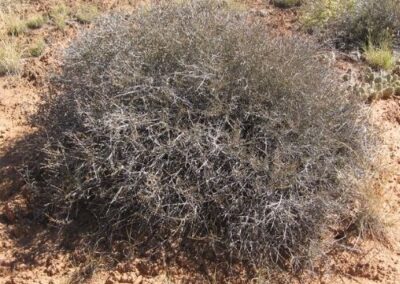
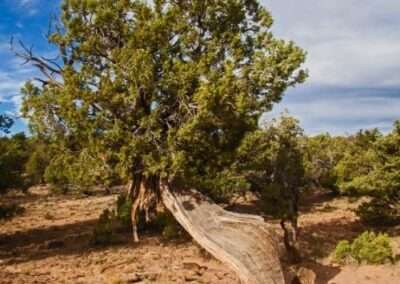
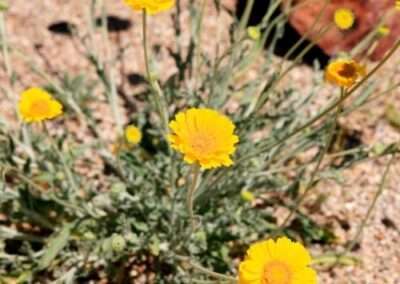
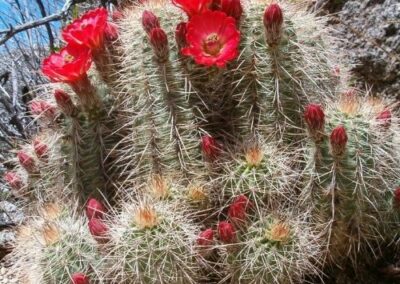
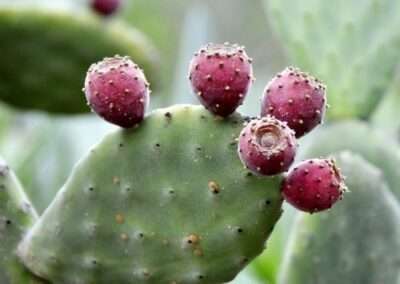
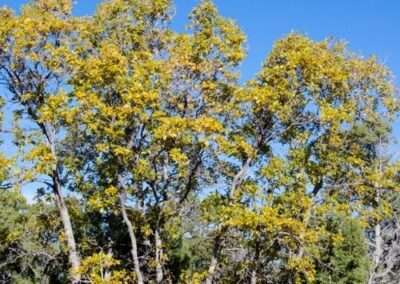
Grand Canyon National Park is home to a diverse array of plant life adapted to its rugged terrain, arid climate, and dramatic changes in elevation. From desert shrubs, cacti, and drought-resistant grasses to ponderosa pine forests and lush vegetation along the Colorado River, the park supports a remarkable variety of plant communities. These plants provide food and shelter for wildlife, stabilize soils, and contribute to the ecological diversity of the Grand Canyon.
Animals
Mammals
Grand Canyon National Park supports a diverse community of mammals across its dramatically varied elevations and habitats, from ponderosa pine forests on the rims to the arid inner canyon. Species such as mule deer, elk, bighorn sheep, and squirrels are commonly associated with the park, while elusive predators such as mountain lions, bobcats, coyotes, and gray foxes also inhabit the landscape. Smaller mammals, including ringtails, skunks, and porcupines, contribute to the park's rich and complex ecosystem.
Mule Deer (Odocoileus hemionus): Mule deer are widespread throughout Grand Canyon National Park and are particularly common around the North and South Rims. They are recognizable by their large ears and distinctive bounding gait.
Kaibab Squirrel (Sciurus aberti kaibabensis): The Kaibab squirrel is a distinctive subspecies of Abert's squirrel found primarily on the Kaibab Plateau and North Rim. Its tufted ears and bushy tail make it easily recognizable.
Elk (Cervus canadensis): Elk are commonly found in the higher-elevation forests and meadows, particularly around the North Rim. During autumn, males produce their characteristic bugling calls during the breeding season.
Mountain Lion (Puma concolor): Mountain lions inhabit the park's forests, canyons, and rugged remote areas. These solitary predators are rarely seen but play an important role in maintaining healthy wildlife populations.
Bobcat (Lynx rufus): Bobcats inhabit a variety of environments throughout the park, including woodland, rocky terrain, and desert scrub. They are solitary and primarily hunt smaller mammals and birds.
Coyote (Canis latrans): Coyotes are adaptable mammals found throughout the park. They occupy habitats ranging from forested rims to desert environments and feed on a wide variety of prey.
Bighorn Sheep (Ovis canadensis): Bighorn sheep are exceptionally well adapted to the steep, rocky terrain of the Grand Canyon. They can navigate narrow ledges and precipitous slopes with remarkable agility.
Gray Fox (Urocyon cinereoargenteus): Gray foxes inhabit forests, canyons, and brushy areas. Unlike many other members of the dog family, they are capable climbers and may climb trees while seeking food or shelter.
Ringtail (Bassariscus astutus): Ringtails are small, nocturnal mammals related to raccoons. They are particularly well adapted to rocky canyon environments and are recognizable by their long, prominently ringed tails.
Striped Skunk (Mephitis mephitis): Striped skunks occur in a variety of habitats throughout the park. They are primarily nocturnal and use their distinctive black-and-white coloration and defensive spray to deter predators.
North American Porcupine (Erethizon dorsatum): Porcupines inhabit forested and rocky areas of the park. Their bodies are covered with sharp quills that provide effective protection from predators.
Abert's Squirrel (Sciurus aberti): Abert's squirrels are closely associated with ponderosa pine forests, particularly around the park's higher-elevation rims. Their tufted ears and long tails are distinctive features.
Reptiles
Grand Canyon National Park supports a diverse variety of reptiles and amphibians adapted to its hot, dry climate and dramatic range of elevations. Lizards, snakes, and turtles occupy habitats ranging from desert scrub and rocky canyon walls to forests and riparian areas. These reptiles play important ecological roles as predators, prey, and insect and rodent controllers throughout the canyon.
Grand Canyon Rattlesnake (Crotalus abyssus): The Grand Canyon rattlesnake is a distinctive rattlesnake associated with the Grand Canyon region. It is adapted to rocky canyon habitats and is recognized by its patterned body and rattle.
Western Diamondback Rattlesnake (Crotalus atrox): This venomous rattlesnake inhabits warmer, lower-elevation areas, including rocky terrain and desert scrub. Its diamond-shaped markings and rattle make it readily identifiable.
Collared Lizard (Crotaphytus collaris): Collared lizards are colorful, active reptiles commonly seen basking on rocks. They are named for the dark bands around their necks and are well adapted to rocky desert environments.
Plateau Striped Whiptail (Aspidoscelis velox): This fast-moving lizard can be found in open and rocky habitats, particularly around the South Rim. Its striped body helps distinguish it from other whiptail species.
Common Side-blotched Lizard (Uta stansburiana): Side-blotched lizards are small, widespread reptiles found in many of the park's warmer habitats. They are recognizable by the dark spot on their sides and their variable coloration.
Western Fence Lizard (Sceloporus occidentalis): Western fence lizards are commonly observed basking on rocks, logs, and other elevated surfaces. Males often have a noticeable blue coloration on the throat and belly.
Plateau Spotted Whiptail (Aspidoscelis tigris septentrionalis): This whiptail lizard inhabits dry, open environments and is known for its quick movements. Its spotted and striped pattern provides camouflage in desert surroundings.
Gila Monster (Heloderma suspectum): Gila monsters are large, venomous lizards associated with the warmer, lower elevations of the region. Their distinctive bead-like scales and orange, pink, and black markings make them one of the most recognizable reptiles of the Southwest.
Greater Short-horned Lizard (Phrynosoma hernandesi): This horned lizard is adapted to a range of habitats and is recognized by its flattened body, short horns, and spiny appearance. It feeds primarily on insects, especially ants.
Regal Horned Lizard (Phrynosoma solare): Regal horned lizards are adapted to arid desert environments. Their horns and body spines provide protection from predators, while their coloration helps them blend into the surrounding landscape.
Canyon Treefrog (Dryophytes arenicolor): Canyon treefrogs are adapted to the arid Southwest and are typically associated with rocky areas near water. Their mottled coloration provides excellent camouflage against canyon rocks.
Sonoran Desert Toad (Incilius alvarius): This large toad occurs in suitable lower-elevation habitats and is associated with water sources, particularly during its breeding season. It is well adapted to the hot desert environment.
Birds
Grand Canyon National Park supports a remarkable variety of birdlife, reflecting the dramatic differences in elevation, vegetation, and habitat throughout the canyon. Birds can be found in ponderosa pine forests, desert scrub, rocky cliffs, riparian areas, and along the Colorado River. The park is also an important habitat for resident species and migratory birds, including several impressive raptors.
California Condor (Gymnogyps californianus): The California condor is one of the most iconic birds associated with the Grand Canyon. Once nearly extinct, the species has been reintroduced to the region and can sometimes be seen soaring above the canyon on its enormous wings.
Peregrine Falcon (Falco peregrinus): Peregrine falcons inhabit the steep canyon walls and cliffs, where they may nest on rocky ledges. They are renowned for their extraordinary speed and ability to capture prey during aerial dives.
Common Raven (Corvus corax): Common ravens are widespread throughout the park and are frequently seen soaring over the canyon or perched on rocky outcrops. They are highly intelligent and adaptable omnivores.
Golden Eagle (Aquila chrysaetos): Golden eagles inhabit remote areas of the canyon and surrounding highlands. These powerful raptors hunt mammals and birds and use the canyon's cliffs and updrafts to soar efficiently.
Turkey Vulture (Cathartes aura): Turkey vultures are common soaring birds that feed primarily on carrion. Their ability to locate and consume dead animals makes them an important part of the canyon's ecosystem.
Steller's Jay (Cyanocitta stelleri): Steller's jays are especially common around the forested rims, where their blue-and-black plumage and prominent crests make them easy to recognize.
Canyon Wren (Catherpes mexicanus): Canyon wrens are closely associated with rocky cliffs and canyon walls. Their distinctive, descending songs can often be heard echoing through the canyon.
Rock Wren (Salpinctes obsoletus): Rock wrens are well adapted to the park's rugged terrain. They forage among rocks and cliffs for insects and other small invertebrates.
Western Bluebird (Sialia mexicana): Western bluebirds occur in open woodlands and forested areas, particularly around the rims. Their bright blue coloration makes them a striking sight.
Violet-green Swallow (Tachycineta thalassina): These agile aerial insectivores are often seen during the warmer months. They may nest in cavities in cliffs, rock formations, and trees.
Mallard (Anas platyrhynchos): Mallards can be found near suitable water sources, including portions of the Colorado River and other riparian habitats. They feed on aquatic vegetation, invertebrates, and other available foods.
American Dipper (Cinclus mexicanus): American dippers are closely associated with fast-moving water. They forage along streams and riverbanks and are known for repeatedly bobbing their bodies while standing on rocks.
Fish
The fish of Grand Canyon National Park are closely associated with the Colorado River and its tributaries. The river supports a distinctive community of native desert fish, several of which are specially adapted to the canyon's strong currents, fluctuating water levels, and warm temperatures. Introduced species are also present and can affect native fish populations and aquatic ecosystems.
Humpback Chub (Gila cypha): The humpback chub is a native and federally endangered fish of the Colorado River. Its distinctive body shape, including a pronounced hump behind the head, helps it navigate the river's powerful currents and turbulent waters.
Razorback Sucker (Xyrauchen texanus): The razorback sucker is a native Colorado River fish and one of the region's most important conservation species. It is recognizable by the sharp ridge behind its head and is adapted to the river's variable flow conditions.
Flannelmouth Sucker (Catostomus latipinnis): This native sucker is found in the Colorado River and its tributaries. Its fleshy lower lip helps it feed on algae and small organisms along rocky river bottoms.
Bluehead Sucker (Catostomus discobolus): Bluehead suckers are native to the Colorado River system and are commonly associated with rocky streambeds. Adults may develop a bluish coloration on the head during the breeding season.
Roundtail Chub (Gila robusta): The roundtail chub is a native fish adapted to the flowing waters of the Colorado River system. It is an important predator and part of the native aquatic food web.
Speckled Dace (Rhinichthys osculus): Speckled dace are small native minnows that occupy a variety of habitats, including shallow streams and rocky river margins. They feed on aquatic insects and other small organisms.
Mountain Sucker (Catostomus platyrhynchus): Mountain suckers are native to parts of the Colorado River system and are adapted to cool, flowing waters. They generally feed along the bottom of streams and rivers.
Rainbow Trout (Oncorhynchus mykiss): Rainbow trout are non-native to the Colorado River in the Grand Canyon and have been introduced primarily for recreational fishing. They are particularly associated with colder waters and can compete with native fish.
Brown Trout (Salmo trutta): Brown trout are another introduced species found in portions of the Colorado River system. They are predatory fish and are popular among anglers, but their presence can create additional pressures on native fish.
Channel Catfish (Ictalurus punctatus): Channel catfish are non-native fish that have become established in parts of the Colorado River. They are opportunistic feeders and can prey on smaller fish and aquatic organisms.
Common Carp (Cyprinus carpio): Common carp are an introduced species found in the Colorado River system. Their feeding behavior can disturb river sediments and affect aquatic habitats and native species.
Amphibians
Grand Canyon National Park's arid climate limits amphibian diversity, but several species occur in suitable habitats, particularly near springs, streams, ponds, and the Colorado River. These amphibians are adapted to the canyon's dry conditions and often depend on water sources for breeding and survival.
Canyon Treefrog (Hyla arenicolor): Canyon treefrogs are well adapted to the rocky and arid environments of the Grand Canyon. Their variable coloration provides effective camouflage against rocks and vegetation, and they are commonly associated with streams, springs, and other moist habitats.
Red-spotted Toad (Anaxyrus punctatus): The red-spotted toad is a small amphibian recognized by the reddish spots scattered across its body. It can survive in dry desert environments and typically becomes active around temporary pools and other sources of water following rainfall.
Woodhouse's Toad (Anaxyrus woodhousii): Woodhouse's toads are adaptable amphibians that may occur in desert, grassland, and riparian habitats. They generally remain hidden during dry periods and become more active when moisture is available.
Great Plains Toad (Anaxyrus cognatus): Great Plains toads may occur in suitable lower-elevation habitats and are particularly associated with temporary pools and other seasonal water sources. Their burrowing behavior helps them survive the region's hot and dry conditions.
Arizona Toad (Anaxyrus microscaphus): The Arizona toad is associated with streams, springs, and other permanent or seasonal waterways in the Southwest. It can occur along suitable riparian habitats within the Grand Canyon region.
American Bullfrog (Lithobates catesbeianus): American bullfrogs are non-native amphibians that have been introduced to portions of the Southwest. Where present, they can compete with native amphibians and prey on native wildlife, making their management an important conservation concern.
“I don’t believe that anyone can see the Grand Canyon area for themselves and not know that we have to do everything we can to protect it for future generations.”
– Nolan Gould
"The wonders of the Grand Canyon cannot be adequately represented in symbols of speech, nor by speech itself."
- John Wesley Powell
"The Grand Canyon is carven deep by the master hand; it is the gulf of silence, widened in the desert; it is all time inscribing the naked rock; it is the book of earth."
- Donald Culross Peattie
"The Grand Canyon fills me with awe. It is beyond comparison—beyond description; absolutely unparalleled throughout the wide world... Let this great wonder of nature remain as it now is. Do nothing to mar its grandeur, sublimity, and loveliness. You cannot improve on it. But what you can do is to keep it for your children, your children's children, and all who come after you, as the one great sight which every American should see."
- Theodore Roosevelt
Explore More With Us
Stay updated on National Parks EDU resources, park news, community updates, and and ways to explore, and protect.

National Parks Edu's mission is to help kids and families understand what makes these places so important. Because when you learn about nature, you start to care about protecting it.
National Parks EDU is an independent educational website and is not affiliated with, endorsed by, sponsored by, or officially connected to the National Park Service (NPS) or the U.S. government. © National Parks EDU. All Rights Reserved. October 18, 2026