Glacier Bay
National Park
Alaska
showcases the beauty of towering glaciers, pristine fjords, and diverse wildlife
Fast Facts
Location
southeastern Alaska
Established in
1980
Established by
President Jimmy Carter
Size
5,037 sq. miles
Known For
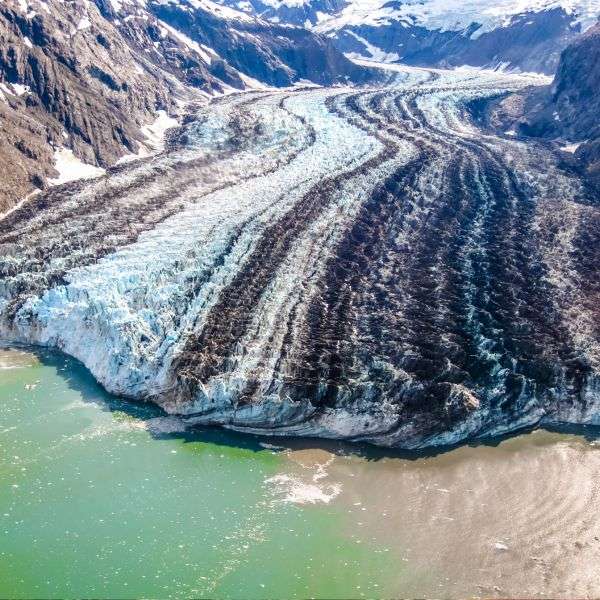
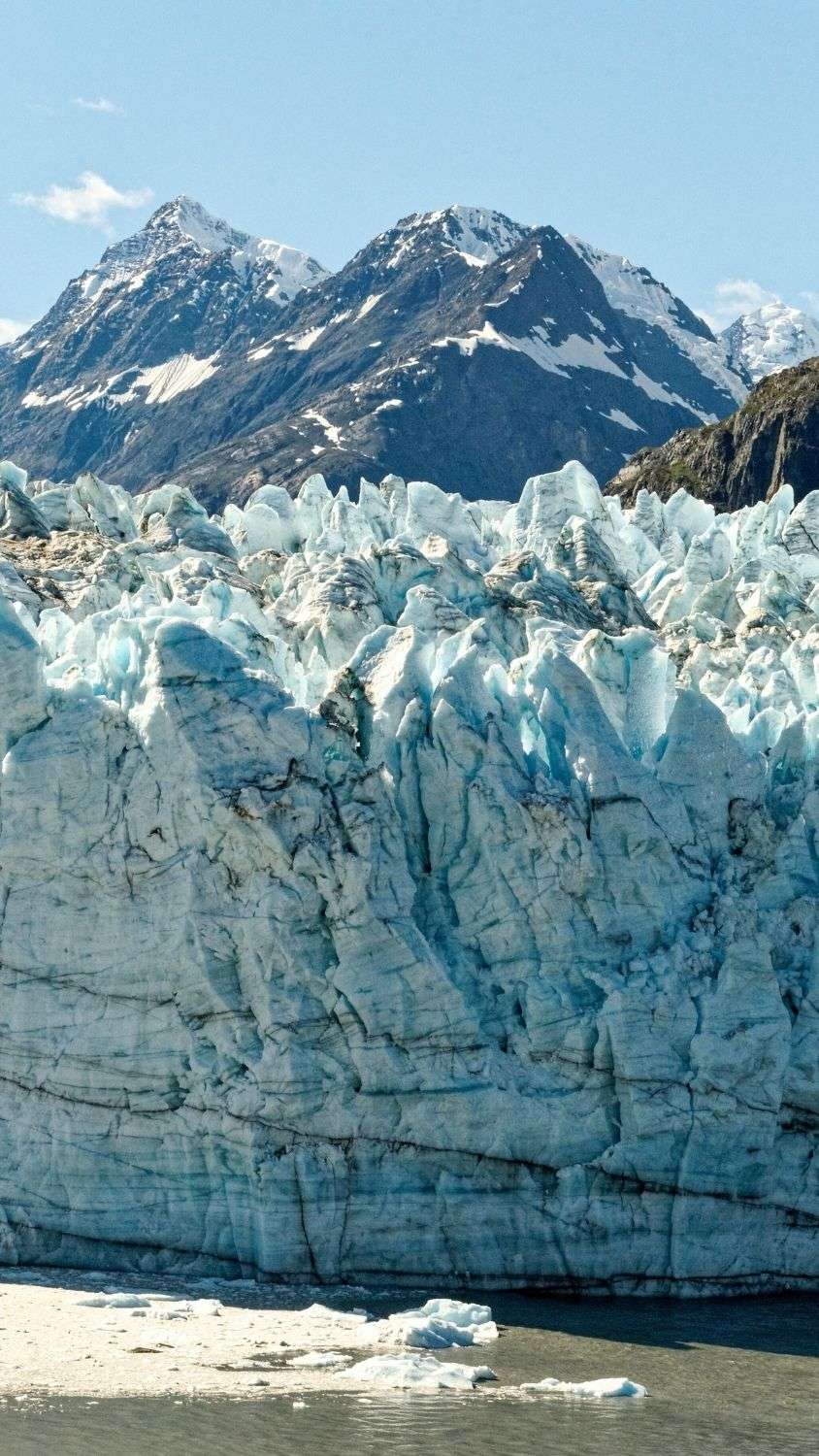
- Renowned for its impressive glaciers, including the massive Margerie Glacier and Grand Pacific Glacier. Visitors can witness the dynamic process of calving, where chunks of ice break off and fall into the water
- Glacier Bay features stunning fjords carved by glaciers over centuries, creating dramatic landscapes with towering cliffs and deep, narrow inlets
- Glacier Bay National Park has experienced one of the most rapid glacier retreats in recorded history.
History
Natural History and Formation
Glacier Bay National Park's geological history is shaped by powerful forces of glaciation, tectonic activity, erosion, and ongoing landscape change. The park's dramatic mountains, deep fjords, and massive glaciers reflect thousands of years of geological processes that continue to transform the region.
Glacial Formation: During repeated ice ages, massive glaciers covered much of the Glacier Bay region. As these glaciers advanced and retreated, they carved deep valleys and rugged mountain landscapes, creating many of the park's distinctive geological features.
Little Ice Age: During the Little Ice Age, which lasted from roughly the 14th through the mid-19th century, glaciers expanded significantly throughout the region. Glacier Bay was largely covered by ice, and advancing glaciers reshaped the surrounding valleys and mountains.
Rapid Glacier Retreat: Beginning in the 18th century, glaciers in Glacier Bay experienced dramatic retreat. As the massive ice sheets withdrew, they exposed newly uncovered valleys, rocks, and sediments, creating the extensive fjord system that characterizes the bay today.
Fjord Formation: Moving glaciers carved deep, U-shaped valleys into the landscape. After the glaciers retreated, seawater flooded many of these valleys, forming spectacular fjords such as Muir Inlet and Tarr Inlet, surrounded by steep mountains and cliffs.
Post-Glacial Rebound: The removal of enormous amounts of glacial ice allowed the Earth's crust to gradually rise in a process known as isostatic rebound. This process continues today and contributes to ongoing changes in the park's coastal landscape.
Tectonic Activity: Glacier Bay lies within an active tectonic region where the Pacific and North American plates interact. Faulting, earthquakes, and the movement of tectonic plates have helped shape the mountains and valleys of southeastern Alaska over millions of years.
Erosion and Sedimentation: Glaciers, rivers, waves, wind, and weathering continue to erode the landscape. Meltwater carries sediments away from retreating glaciers and deposits them in valleys, rivers, and coastal areas, continually modifying the park's terrain.
Ecological Succession: As glaciers retreat, they expose barren rock and sediment that gradually become colonized by pioneering plants. Over time, soils develop and increasingly complex forests and ecosystems establish themselves, creating a remarkable record of ecological succession alongside the geological changes.
Glacier Bay National Park remains a living example of Earth's changing landscape. Its retreating glaciers, growing forests, rising land, and evolving fjords allow scientists to observe geological and ecological processes that continue to shape the region today.
Native History
The native people associated with Glacier Bay National Park are primarily the Tlingit, whose cultural traditions and history are deeply connected to the land and waters of Glacier Bay. For generations, the Tlingit have relied on the region's abundant marine and terrestrial resources and have passed down stories that describe the origins and changing landscapes of the area.
Tlingit Homeland: The Glacier Bay region is part of the traditional homeland of the Tlingit people. They established seasonal settlements and camps throughout Southeast Alaska, making use of the area's rivers, forests, coastline, and abundant marine resources.
Traditional Lifeways: Tlingit communities relied on fishing, hunting, gathering, and trade. Salmon, halibut, shellfish, berries, plants, and game animals provided important sources of food and materials. Travel by canoe allowed the Tlingit to move efficiently between coastal settlements and resource areas.
Oral Traditions: Tlingit history and cultural knowledge have traditionally been preserved through oral traditions. Stories passed from generation to generation describe ancestors, spiritual beings, important places, and events that shaped the landscape. These traditions provide an important cultural perspective on Glacier Bay's natural history.
Glacier Bay Creation Stories: Tlingit oral traditions include stories connected to the movement of glaciers and the changing landscape of Glacier Bay. These accounts demonstrate the Tlingit's longstanding understanding of the region as a dynamic and spiritually significant place.
Clan and Cultural Traditions: Tlingit society is organized around clans and moieties, with family histories, relationships, and responsibilities closely connected to particular places and resources. Art, ceremonial objects, carvings, and regalia preserve stories and identities that have been passed down through generations.
European Contact: European exploration of the Glacier Bay region began in the late 18th century, bringing increasing contact between the Tlingit and outside explorers, traders, and settlers. The fur trade and other forms of commerce introduced new goods and economic opportunities while also bringing diseases and social disruptions that had serious consequences for Indigenous communities.
Displacement and Changing Access: As glaciers advanced and later retreated, and as outside settlement and government policies expanded, Tlingit access to traditional lands changed. The establishment of Glacier Bay as a protected area also affected traditional use of the landscape, making the history of conservation closely connected to the history of Tlingit homeland and cultural rights.
Cultural Persistence: Despite centuries of outside pressures, Tlingit communities have maintained and revitalized their language, traditions, art, ceremonies, and connections to ancestral lands. Tlingit cultural knowledge continues to provide an important perspective for understanding Glacier Bay.
Continuing Connection: Today, the Tlingit's relationship with Glacier Bay remains an important part of the park's cultural history. Collaboration between the National Park Service and Tlingit communities helps incorporate Indigenous knowledge, protect cultural resources, and recognize the continuing presence of the Tlingit people in the region.
The history of the Tlingit people at Glacier Bay demonstrates that the region is more than a landscape shaped by glaciers. It is also a cultural homeland with deep spiritual, historical, and familial connections. Understanding this Indigenous history provides a fuller appreciation of Glacier Bay and the people who have known and cared for this landscape for generations.
Preservation
The preservation history of Glacier Bay National Park reflects more than a century of efforts to protect its glaciers, mountains, forests, marine ecosystems, and cultural heritage. From its early protection as a forest reserve to its present status as a vast national park and wilderness area, Glacier Bay has become an important example of large-scale conservation in Alaska.
Established as a Forest Reserve: Glacier Bay was first protected in 1899 when President William McKinley established the area as part of the Tongass National Forest Reserve. This early designation recognized the scenic and natural importance of the region.
Glacier Bay National Monument: In 1925, President Calvin Coolidge designated Glacier Bay as a national monument. The designation protected the area's remarkable glaciers, fjords, mountains, and surrounding ecosystems while recognizing its exceptional scientific and scenic value.
Expansion of the Monument: Glacier Bay National Monument was substantially expanded in 1939 by President Franklin D. Roosevelt. The larger boundaries protected additional portions of the bay, surrounding mountains, forests, and coastal environments, creating a more comprehensive conservation area.
Designation as a National Park and Preserve: The Alaska National Interest Lands Conservation Act (ANILCA), signed by President Jimmy Carter in 1980, transformed Glacier Bay National Monument into Glacier Bay National Park and Preserve and greatly expanded its boundaries. The legislation established extensive protections for the region's wilderness, wildlife, glaciers, and marine environments.
Wilderness Protection: Large portions of Glacier Bay National Park were designated as wilderness under ANILCA. These protections help preserve the park's undeveloped character and limit activities that could significantly alter its natural landscapes.
UNESCO World Heritage Recognition: Glacier Bay is part of the Kluane/Wrangell-St. Elias/Glacier Bay/Tatshenshini-Alsek UNESCO World Heritage Site, recognized for its exceptional glacial landscapes, ecosystems, and ongoing geological processes. This international designation emphasizes the global importance of protecting the interconnected wilderness of Alaska, British Columbia, and Yukon.
Protection of Cultural Heritage: Preservation efforts also recognize the long-standing connection of the Tlingit people to Glacier Bay. Protecting archaeological sites, cultural resources, traditional knowledge, and historic connections to the landscape is an important part of modern park management.
Scientific Research and Monitoring: Glacier Bay has become an important natural laboratory for studying glaciers, climate change, marine ecosystems, wildlife, and ecological succession. Scientists monitor the continuing retreat and advance of glaciers and the ecological changes that follow the exposure of newly ice-free landscapes.
Ongoing Conservation: Today, the National Park Service works to protect Glacier Bay's wilderness, wildlife, marine environments, glaciers, and cultural resources while allowing carefully managed public access. Conservation efforts increasingly focus on climate change, ecosystem monitoring, sustainable visitation, and cooperation with Indigenous communities.
The preservation history of Glacier Bay National Park demonstrates how conservation protections have expanded over time from protecting individual landscapes to safeguarding entire interconnected ecosystems. These efforts help ensure that Glacier Bay's glaciers, wildlife, wilderness, and cultural heritage remain protected for future generations.
Future Preservation
Preserving Glacier Bay National Park presents several challenges as the park's glaciers, ecosystems, wildlife, and cultural resources continue to respond to environmental and human pressures. Because Glacier Bay is a remote and rapidly changing landscape, protecting its natural and cultural resources requires careful planning, scientific research, and cooperation among many groups.
Climate Change: Climate change is one of the greatest challenges facing Glacier Bay. Rising temperatures are contributing to changes in glaciers, precipitation, vegetation, wildlife habitats, and marine ecosystems. These changes can alter the natural processes that have shaped the park for thousands of years.
Glacier Retreat: Many glaciers in Glacier Bay have experienced significant changes as the climate has warmed. Continued retreat can transform valleys, coastlines, and waterways while affecting species that depend on cold glacial environments. Monitoring these changes is essential for understanding the park's future.
Changing Ecosystems: As glaciers retreat, newly exposed land is gradually colonized by plants and animals. While this natural succession creates new habitats, rapid environmental change can also disrupt established ecosystems and alter the distribution of wildlife and vegetation.
Sea Level and Coastal Changes: Glacier Bay contains extensive coastal and marine environments that may be affected by changes in sea level, ocean temperatures, and coastal erosion. These changes can threaten sensitive habitats and archaeological sites along the shoreline.
Tourism and Visitor Impact: Glacier Bay attracts visitors who come to experience its glaciers, wildlife, and spectacular scenery. Increasing visitation and vessel traffic require careful management to reduce disturbance to wildlife, protect sensitive areas, and preserve the wilderness character of the park.
Marine Wildlife Protection: The park's waters provide habitat for species such as humpback whales, sea otters, seals, sea lions, and numerous seabirds. Managing boat traffic and other human activities is important for minimizing disturbance to these animals and protecting their habitats.
Invasive Species: Invasive plants and animals can threaten native ecosystems by competing with native species and changing ecological relationships. Preventing the introduction and spread of invasive species is an important part of maintaining the park's natural biodiversity.
Cultural Heritage Preservation: Archaeological sites and other cultural resources connected to the Tlingit people are vulnerable to erosion, changing environmental conditions, weathering, and accidental disturbance. Protecting these resources requires cooperation with Tlingit communities and careful management by the National Park Service.
Remote Location: Glacier Bay's remote location creates logistical challenges for conservation, scientific research, infrastructure maintenance, and emergency response. Harsh weather and limited transportation options can make even routine management activities difficult and expensive.
Scientific Research and Monitoring: Because Glacier Bay is changing rapidly, continued research is necessary to monitor glaciers, wildlife populations, vegetation, ocean conditions, and other ecological processes. Long-term scientific observations help managers make informed decisions about conservation strategies.
Balancing Conservation and Access: One of the park's ongoing challenges is providing opportunities for visitors to experience Glacier Bay while protecting its wilderness and fragile ecosystems. Careful regulations, visitor education, and sustainable tourism practices help maintain this balance.
Collaboration and Management: Protecting Glacier Bay requires cooperation among the National Park Service, Tlingit communities, scientists, local communities, and other stakeholders. Collaboration helps incorporate Indigenous knowledge, scientific research, and conservation priorities into long-term management.
Preserving Glacier Bay National Park for future generations will require an adaptive approach that responds to climate change while protecting its glaciers, wildlife, marine ecosystems, wilderness, and cultural heritage. Continued research, responsible tourism, Indigenous collaboration, and broader efforts to address climate change will all play important roles in protecting this remarkable landscape.
Geography
Glacier Bay National Park, located in southeastern Alaska, is a spectacular wilderness shaped by glaciers, mountains, and the sea. The park's geography features towering snow-covered peaks, massive tidewater glaciers, deep fjords, and pristine coastal forests. From vast fields of ice to lush shorelines and rich marine waters, Glacier Bay's diverse landscapes showcase the powerful forces of nature that continue to shape this remote and breathtaking Alaskan wilderness.
Glacial Landscapes
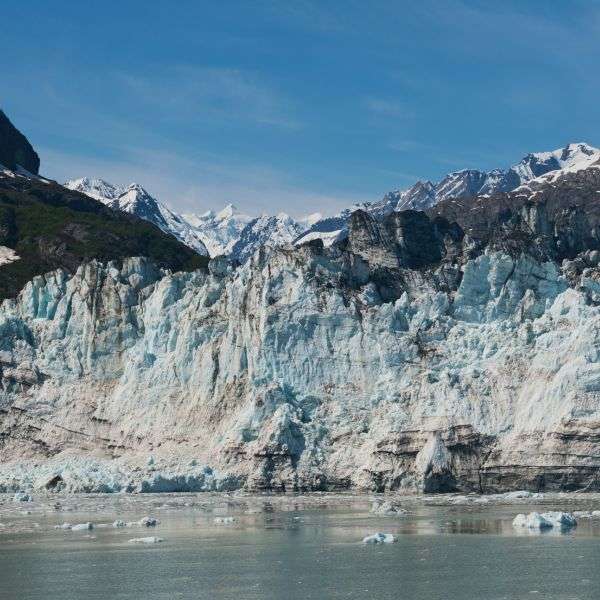
The park is characterized by its dramatic glacial landscapes. During the last Ice Age and the more recent Little Ice Age, glaciers carved deep, U-shaped valleys, creating the intricate fjords that define the park's coastline. Notable glaciers include the Margerie Glacier, Grand Pacific Glacier, and Johns Hopkins Glacier.
Fjords
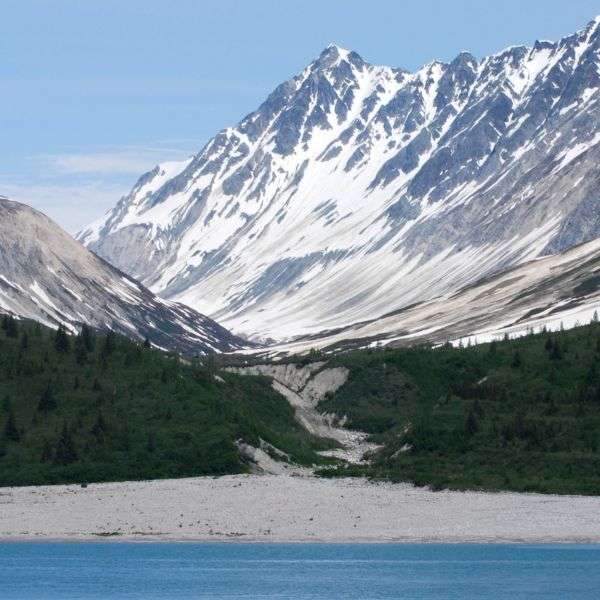
Glacier Bay is renowned for its numerous fjords, which are long, narrow inlets with steep cliffs carved by glacial activity. The park's fjords, such as Muir Inlet and Tarr Inlet, provide breathtaking views and opportunities for exploration.
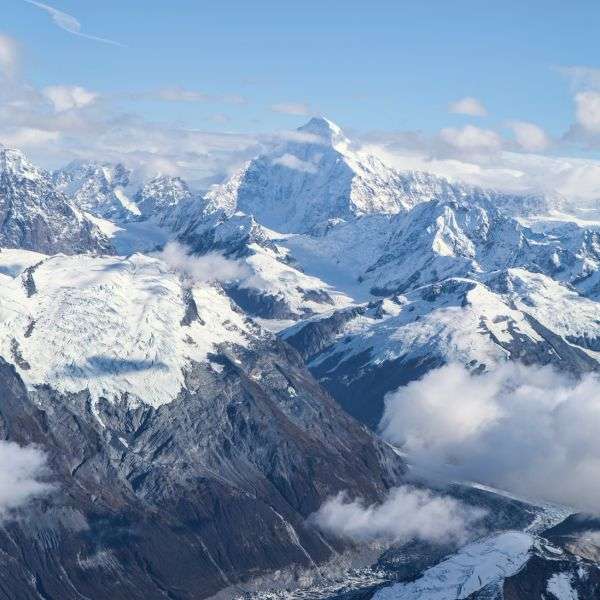
Mountains and Peaks
The Fairweather Range, a subrange of the Saint Elias Mountains, dominates the eastern boundary of the park. Mount Fairweather, which stands at 15,325 feet, is the highest peak within the park and is a prominent feature of the surrounding landscape.
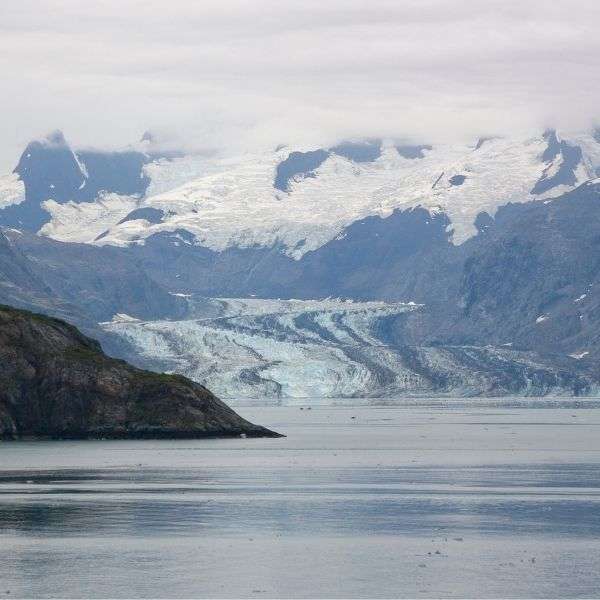
Coastal Areas
The park encompasses a significant stretch of the Alaskan coastline along the Gulf of Alaska. Coastal areas within the park feature a mix of rugged shorelines, beaches, and tidal zones.
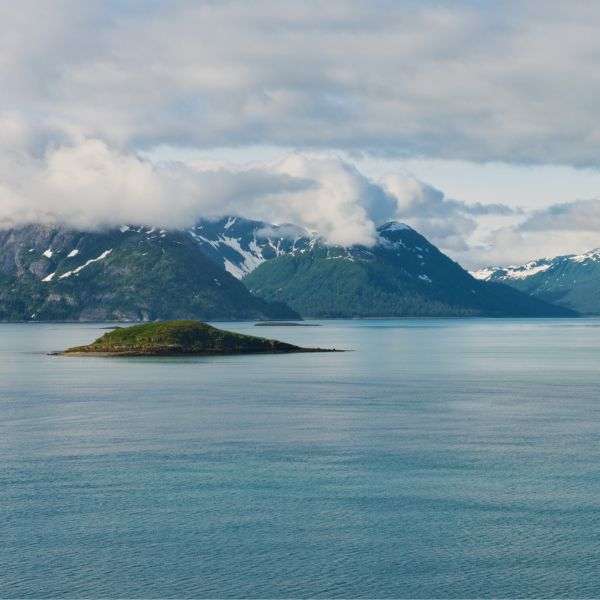
Islands
Numerous islands are scattered throughout Glacier Bay, adding to the diversity of the park's geography. Some notable islands include Strawberry Island, Reid Inlet Islands, and Marble Islands.
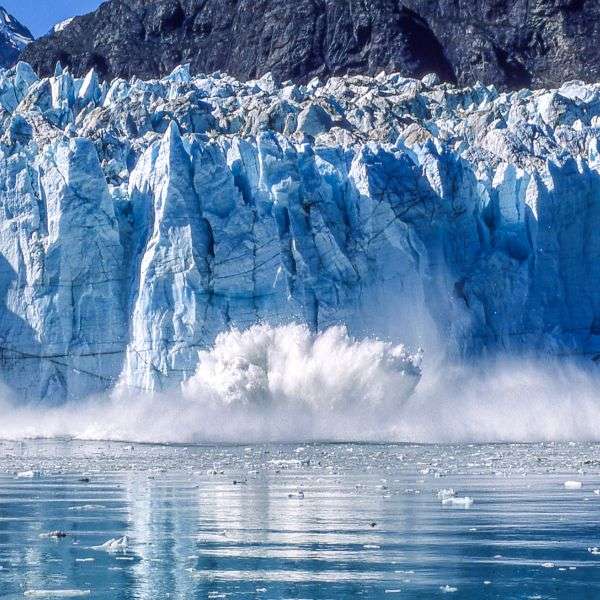
Dynamic Glacial Activity
Glacier Bay is characterized by ongoing glacial dynamics, including the retreat and advance of glaciers. This dynamic activity shapes the park's landscapes, creating a dynamic and ever-changing environment.
Plants
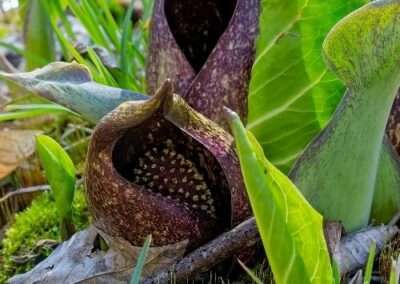
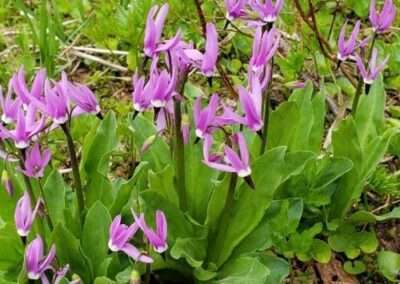
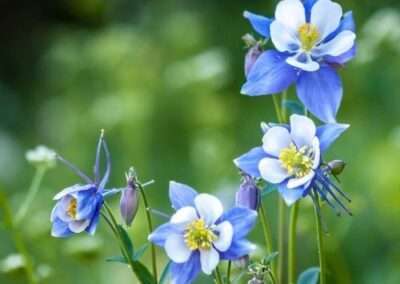
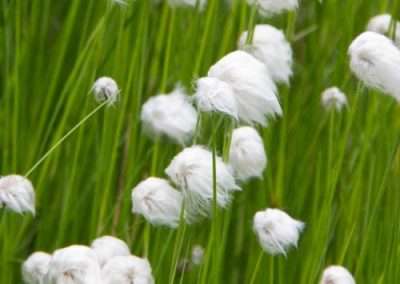
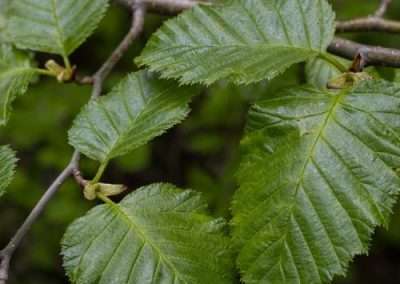
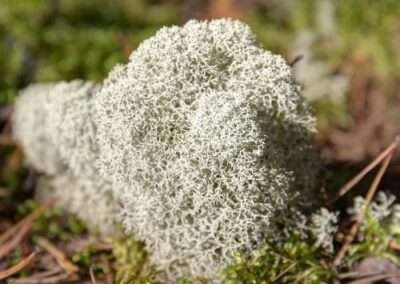
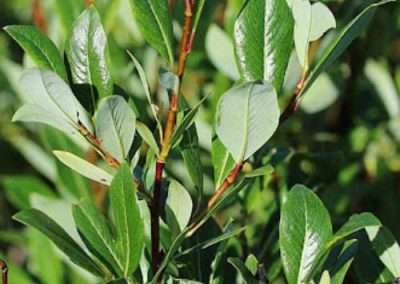
Glacier Bay National Park is home to a remarkable diversity of plant life adapted to its changing glacial, coastal, and alpine environments. From towering Sitka spruce and western hemlock forests along the coast to hardy shrubs, mosses, lichens, and colorful wildflowers in meadows and newly exposed glacial landscapes, the park's vegetation reflects the gradual process of ecological succession. During the brief summer season, blooming plants add vibrant color to the rugged terrain, while the forests and tundra provide essential habitat and food for the park's diverse wildlife.

Animals
Mammals
Glacier Bay National Park is home to a diverse range of mammals, with species adapted to its coastal waters, temperate rainforests, alpine meadows, and rugged mountain landscapes. From powerful brown bears and agile mountain goats to harbor seals, sea otters, and whales, these mammals play important roles in the park's terrestrial and marine ecosystems.
Brown Bear (Ursus arctos): Brown bears are among the most iconic mammals in Glacier Bay. They are commonly found near coastal areas, meadows, rivers, and salmon streams, where they feed on fish, vegetation, berries, and other foods.
Black Bear (Ursus americanus): Black bears inhabit the park's forests, coastal areas, and meadows. They are adaptable omnivores that feed on berries, plants, insects, fish, and other available food sources.
Mountain Goat (Oreamnos americanus): Mountain goats are well adapted to the steep, rocky terrain of Glacier Bay. Their strong hooves allow them to navigate cliffs and alpine slopes in search of grasses, shrubs, and other vegetation.
Moose (Alces alces): Moose can be found in wetlands, meadows, forests, and areas near rivers and lakes. They feed primarily on shrubs, aquatic plants, and other vegetation.
Harbor Seal (Phoca vitulina): Harbor seals are commonly seen in the waters of Glacier Bay, particularly around tidewater glaciers. They often rest on floating ice and feed on fish and other marine organisms.
Sea Otter (Enhydra lutris): Sea otters inhabit Glacier Bay's coastal waters and play an important role in the marine ecosystem. By feeding on sea urchins and other invertebrates, they help maintain healthy kelp communities.
Humpback Whale (Megaptera novaeangliae): Humpback whales migrate to Glacier Bay during the summer to feed in its productive waters. They are known for spectacular behaviors such as breaching, tail slapping, and bubble-net feeding.
Orca (Orcinus orca): Orcas occasionally travel through Glacier Bay's coastal waters. These powerful marine predators feed on fish and, depending on the population, may also prey on marine mammals.
Dall's Porpoise (Phocoenoides dalli): Dall's porpoises are fast-swimming marine mammals found in the cold waters of the region. Their distinctive black-and-white coloration and energetic movements make them recognizable among Glacier Bay's marine wildlife.
Red Fox (Vulpes vulpes): Red foxes inhabit a variety of environments, including forests, meadows, and coastal areas. They are opportunistic predators and scavengers that feed on small mammals, birds, insects, and other foods.
River Otter (Lontra canadensis): River otters are found around freshwater streams, rivers, lakes, and coastal environments. Excellent swimmers, they hunt fish, amphibians, and aquatic invertebrates.
Snowshoe Hare (Lepus americanus): Snowshoe hares inhabit the park's forests and brushy areas. Their fur changes from brown in summer to white in winter, providing camouflage against the changing seasonal landscape.
Reptiles
Glacier Bay National Park has very few reptiles due to its cool, moist climate and long periods of cold weather. The park's temperate rainforests, rugged mountains, glaciers, and coastal habitats are better suited to mammals, birds, amphibians, and marine life. As a result, reptiles are not a significant part of Glacier Bay's wildlife and are rarely encountered.
Birds
Glacier Bay National Park is home to a diverse variety of resident and migratory birds. Its coastal waters, forests, mountains, rivers, and alpine meadows provide important habitats for many species.
Bald Eagle: Commonly seen near coastal areas, forests, and rivers.
Peregrine Falcon: A fast-flying predator that nests on cliffs and rocky areas.
Marbled Murrelet: A seabird that nests in mature forests and feeds in coastal waters.
Tufted Puffin: A colorful seabird that nests on cliffs and rocky islands.
Common Murre: A diving seabird that breeds in large coastal colonies.
Arctic Tern: A remarkable migratory bird that travels between the Arctic and Antarctic.
Black Oystercatcher: A coastal bird that feeds on shellfish along rocky shorelines.
Belted Kingfisher: A fish-eating bird commonly found near rivers, lakes, and shorelines.
Glaucous-winged Gull: A common coastal gull found around beaches and rocky shores.
Harlequin Duck: A colorful duck often found in fast-moving rivers and streams.
Songbirds: Warblers, sparrows, thrushes, and other songbirds inhabit the park's forests and meadows.
Raptors: Other birds of prey include red-tailed hawks, northern goshawks, and rough-legged hawks.
Fish
Glacier Bay National Park's waters support a diverse community of freshwater, estuarine, and marine fish. The park's rivers, streams, fjords, and coastal waters provide habitat for both resident species and anadromous fish that migrate between freshwater and saltwater.
Chinook Salmon (Oncorhynchus tshawytscha): The largest Pacific salmon species, using freshwater streams for spawning and spending much of their lives in the ocean.
Sockeye Salmon (Oncorhynchus nerka): An important salmon species that migrates between freshwater and the marine environment.
Coho Salmon (Oncorhynchus kisutch): Coho salmon use the park's freshwater streams and rivers for spawning and rearing.
Chum Salmon (Oncorhynchus keta): Chum salmon migrate into freshwater to reproduce and are an important food source for wildlife.
Pink Salmon (Oncorhynchus gorbuscha): The smallest and most abundant Pacific salmon, returning to coastal streams in large numbers during spawning runs.
Coastal Cutthroat Trout (Oncorhynchus clarkii): Found in freshwater streams and rivers, these trout are recognized by the reddish markings beneath their jaws.
Dolly Varden (Salvelinus malma): A char that can occupy both freshwater and marine environments and is often associated with salmon-bearing streams.
Rainbow Trout (Oncorhynchus mykiss): Found in freshwater and estuarine environments within the region.
Pacific Halibut (Hippoglossus stenolepis): Large flatfish that inhabit the deep, cold marine waters of Glacier Bay.
Rockfish (Sebastes spp.): Several species inhabit coastal waters, including black rockfish and yelloweye rockfish.
Lingcod (Ophiodon elongatus): A large predatory fish associated with rocky coastal habitats.
Sticklebacks (Gasterosteidae): Small fish that inhabit freshwater, estuarine, and coastal environments.
Amphibians
Amphibians are relatively limited in Glacier Bay National Park compared with warmer and more temperate ecosystems. The park's cool climate, extensive glaciers, rugged terrain, and abundance of marine and alpine habitats restrict the availability of suitable breeding and overwintering sites. However, some amphibians may occur in suitable wetlands, ponds, streams, and forested areas, particularly in lower-elevation habitats.
Western Toad (Anaxyrus boreas): A cold-tolerant amphibian associated with wetlands, ponds, lakes, and moist terrestrial habitats.
Wood Frog (Lithobates sylvaticus): A highly cold-adapted frog capable of surviving in northern environments and using temporary ponds and wetlands for breeding.
Long-toed Salamander (Ambystoma macrodactylum): A terrestrial salamander that can inhabit moist forests and wetlands and uses ponds and other water bodies for reproduction.
Overall, amphibians are a relatively minor component of Glacier Bay's wildlife compared with its abundant marine mammals, birds, fish, and terrestrial mammals. Their distribution is closely tied to the availability of suitable freshwater and moist terrestrial habitats.
"To the lover of pure wildness Alaska is one of the most wonderful countries in the world."
John Muir
"Dramatic change and the ebb and flow of nature occur at every scale: within centuries, seasons, and hours. The tides swell and recede dramatically twice a day... long days in the summer become markedly brief in the winter, as the earth’s axis slants away from the sun and many species follow this pattern, disappearing from Glacier Bay during the winter, only to return or re-emerge in the spring."
- National Parks Services
Explore More With Us
Stay updated on National Parks EDU resources, park news, community updates, and and ways to explore, and protect.

National Parks Edu's mission is to help kids and families understand what makes these places so important. Because when you learn about nature, you start to care about protecting it.
National Parks EDU is an independent educational website and is not affiliated with, endorsed by, sponsored by, or officially connected to the National Park Service (NPS) or the U.S. government. © National Parks EDU. All Rights Reserved. October 18, 2026