Denali
National Park
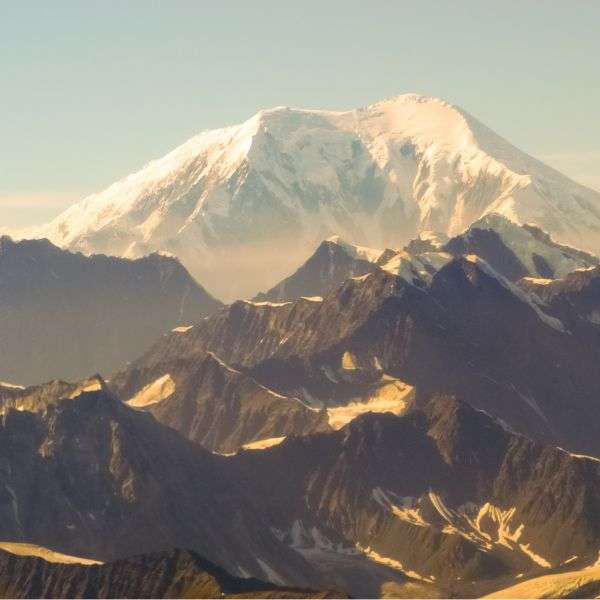
Alaska
home to the tallest peak in North America and offers stunning landscapes, diverse wildlife, and a unique wilderness
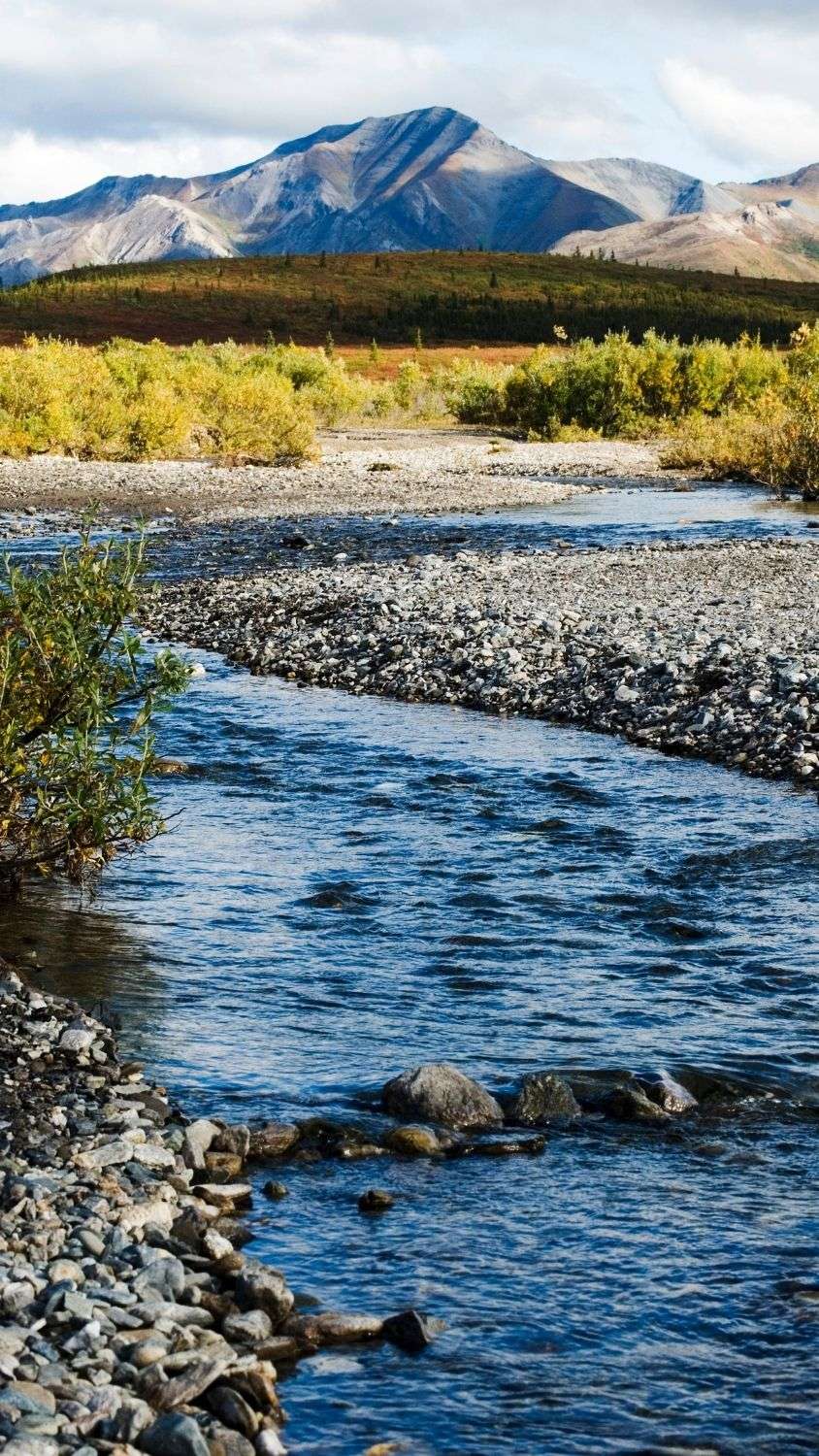
Fast Facts
Location
central Alaska
Established in
1917
Established by
President Jimmy Carter
Size
7,408 sq. miles

Known For
- Renowned for being the location of Denali, the highest peak in North America, towering at 20,310 feet
- Stunning and diverse landscapes, including vast tundra, rugged mountains, pristine lakes, and sweeping valleys
- A prime location for viewing the northern lights (aurora borealis) during the winter months
History
Natural History and Formation
Denali National Park and Preserve has a complex geological history shaped by millions of years of tectonic activity, uplift, erosion, and glacial processes. These forces have created the dramatic mountains, valleys, and rugged landscapes that characterize the Alaska Range.
Tectonic Activity: The geological history of Denali is closely connected to the movement and collision of tectonic plates. The interaction between the Pacific and North American plates has produced intense deformation, uplift, faulting, and earthquakes throughout Alaska, contributing to the formation of the Alaska Range.
Alaska Range Formation: The Alaska Range developed through prolonged tectonic activity that uplifted and deformed rocks over millions of years. Continued movement along major faults has helped create the region's steep mountains and dramatic relief.
Denali's Formation: Denali is part of a complex assemblage of rocks that formed in different environments and were later uplifted and assembled through tectonic processes. The mountain's great elevation is the result of continued uplift combined with erosion that has sculpted its distinctive shape.
Glacial Activity: Glaciers have played a major role in shaping Denali's modern landscape. Moving ice has carved deep valleys, sharpened ridges, transported enormous amounts of sediment, and created features such as moraines and broad U-shaped valleys.
Modern Landscape: Denali National Park contains a remarkable variety of geological features, including massive peaks, rugged ridges, deep valleys, glacial moraines, and extensive areas of exposed bedrock. These features reflect the interaction of tectonic uplift, erosion, weathering, and glaciation.
Ongoing Geological Processes: The geology of Denali continues to change today. Earthquakes, landslides, rockfalls, glacial movement, erosion, and permafrost processes continue to reshape the park's terrain.
Overall, the geological history of Denali National Park demonstrates the powerful forces that have shaped Alaska's landscape over millions of years. The continuing interaction of tectonic activity, glaciers, erosion, and weathering ensures that the park remains a dynamic geological environment.
Native History
Denali National Park and Preserve has a rich Native history that stretches back thousands of years, with Indigenous peoples maintaining deep cultural, spiritual, and subsistence connections to the land.
Athabascan People: The Athabascan peoples are the primary Indigenous groups historically associated with the Denali region. They developed a deep relationship with the land, relying on its wildlife, plants, rivers, and other natural resources for food, materials, and cultural practices.
Traditional Land Use: Athabascan communities traditionally practiced hunting, fishing, trapping, and gathering. Important resources included caribou, moose, Dall sheep, fish, berries, and edible plants. Their knowledge of seasonal cycles and animal movements was essential for thriving in the Alaskan interior.
Seasonal Movement: Many Athabascan groups moved seasonally throughout their traditional territories to follow wildlife and access different resources. This mobility allowed communities to adapt to changing weather, river conditions, and seasonal availability of food.
Cultural Traditions: Athabascan cultures include rich traditions of storytelling, songs, dances, ceremonies, and traditional crafts. Knowledge about the landscape, animals, and cultural values has been passed from generation to generation.
Denali's Significance: The mountain now known as Denali has long held cultural significance for Alaska Native peoples. The name Denali, meaning "the tall one" in Koyukon Athabascan, reflects the mountain's importance and prominence within the cultural landscape.
European and American Contact: Contact with outsiders, including Russian traders and later American explorers, miners, and settlers, brought major changes to Indigenous communities. Introduced diseases, changing economic systems, and increasing outside settlement affected traditional ways of life and access to resources.
Alaska Native Claims Settlement Act: The Alaska Native Claims Settlement Act of 1971 was a major development in the history of Alaska Native land rights. The legislation established regional and village corporations and provided land and financial settlements to Alaska Native peoples.
Contemporary Indigenous Presence: Indigenous peoples continue to maintain strong cultural connections to the Denali region. The National Park Service works to incorporate Indigenous knowledge and perspectives into interpretation, education, and resource management while recognizing the enduring relationship between Native communities and the landscape.
Preservation
The preservation history of Denali National Park and Preserve reflects a long-standing commitment to protecting its vast wilderness, wildlife, landscapes, and cultural resources.
Establishment of Mount McKinley National Park: Denali's preservation history began in 1917, when President Woodrow Wilson signed legislation establishing Mount McKinley National Park. The original park was created largely to protect Dall sheep and other wildlife from excessive hunting and other threats.
Expansion of the Park: Over the following decades, the protected area expanded significantly. Major additions under the Alaska National Interest Lands Conservation Act (ANILCA) of 1980 brought millions of acres of surrounding lands into the park and preserve, creating the enormous protected landscape that exists today.
Denali National Monument: In 1978, President Jimmy Carter designated additional lands surrounding the existing park as national monuments. These areas protected important wildlife habitat, scenic landscapes, and portions of the Alaska Range while contributing to the eventual expansion of the national park.
Renaming and ANILCA: In 1980, ANILCA expanded the park substantially and changed its name to Denali National Park and Preserve. The legislation also established extensive wilderness areas, providing some of the highest levels of protection for the park's undeveloped landscapes.
Wilderness Protection: Much of Denali is managed as wilderness, emphasizing natural processes and limiting development and mechanized access. This approach helps preserve the park's expansive ecosystems, wildlife populations, rivers, glaciers, and mountain landscapes.
Natural Resource Management: The National Park Service works to maintain Denali's ecological integrity by monitoring wildlife, vegetation, glaciers, permafrost, and other natural systems. Management generally emphasizes allowing natural processes to continue with minimal human interference.
Visitor Management: Visitor access is carefully controlled to reduce impacts on the wilderness. The park's limited road system, shuttle transportation, and restrictions on private vehicle use help reduce traffic, protect wildlife habitat, and preserve the remote character of the landscape.
Collaboration with Native Communities: The park recognizes the longstanding relationship between Indigenous peoples and the Denali region. Collaboration with Alaska Native communities and the incorporation of Indigenous knowledge help strengthen cultural interpretation, resource management, and protection of cultural heritage.
Overall, Denali's preservation history reflects an ongoing effort to balance wilderness protection, wildlife conservation, cultural stewardship, and opportunities for visitors to experience one of Alaska's most remarkable landscapes.
Future Preservation
Preserving Denali National Park and Preserve for future generations presents several complex and interconnected challenges.
Climate Change: Rising temperatures, changing precipitation patterns, glacier retreat, and permafrost thaw are transforming Denali's ecosystems and landscape. These changes can affect wildlife habitats, vegetation, water systems, and the stability of park infrastructure.
Visitor Impact: Managing increasing visitation while protecting the park's wilderness character is an ongoing challenge. Recreation can contribute to habitat disturbance, trail erosion, wildlife disruption, and pressure on facilities. Responsible visitor practices and carefully managed access are essential.
Invasive Species: Invasive plants, animals, and pathogens can threaten Denali's native ecosystems by competing with native species and altering natural ecological processes. Preventing new introductions and controlling established invasive species require continued monitoring and management.
Wildlife Conservation: Denali supports important populations of caribou, Dall sheep, moose, grizzly bears, wolves, and other wildlife. Climate change, habitat changes, disease, and interactions with human activities can affect these populations, making long-term monitoring and conservation essential.
Natural Resource Development: Mining, oil and gas development, and other resource-extraction activities outside the park can potentially affect wildlife, water quality, and ecological processes within the park. Protecting Denali therefore requires consideration of activities beyond its boundaries.
Cultural Preservation: Protecting the cultural heritage and traditional knowledge of Alaska Native peoples remains an important responsibility. Continued collaboration with Athabascan communities can help preserve cultural resources and incorporate Indigenous perspectives into park management.
Infrastructure Maintenance: Roads, bridges, trails, buildings, and other facilities face significant challenges from harsh weather, extreme temperatures, erosion, and permafrost thaw. Maintaining essential infrastructure while minimizing development in wilderness areas requires careful planning and substantial resources.
Remote Location and Visitor Safety: Denali's enormous size and rugged terrain make transportation, emergency response, and search-and-rescue operations difficult. Park managers must balance opportunities for wilderness exploration with visitor safety and responsible access.
Limited Funding and Resources: Managing millions of acres of wilderness requires substantial funding, staffing, research, and monitoring. Budget constraints can make it difficult to address infrastructure needs, conservation projects, scientific research, and visitor services simultaneously.
Addressing these challenges requires a collaborative and adaptive approach involving the National Park Service, scientists, Alaska Native communities, local communities, and visitors. Climate research, wildlife monitoring, sustainable visitor management, cultural stewardship, and long-term planning will be essential for protecting Denali's natural and cultural heritage for future generations.
Geography
Denali National Park and Preserve, located in central Alaska, encompasses a vast and diverse landscape shaped by towering mountains, expansive tundra, glaciers, and winding rivers. The park is dominated by the Alaska Range and Denali, the highest peak in North America, while its valleys and alpine environments support a wide variety of wildlife. From rugged mountain slopes and glacial valleys to broad tundra plains and river systems, Denali's geography showcases the dynamic natural forces that continue to shape the Alaskan wilderness.
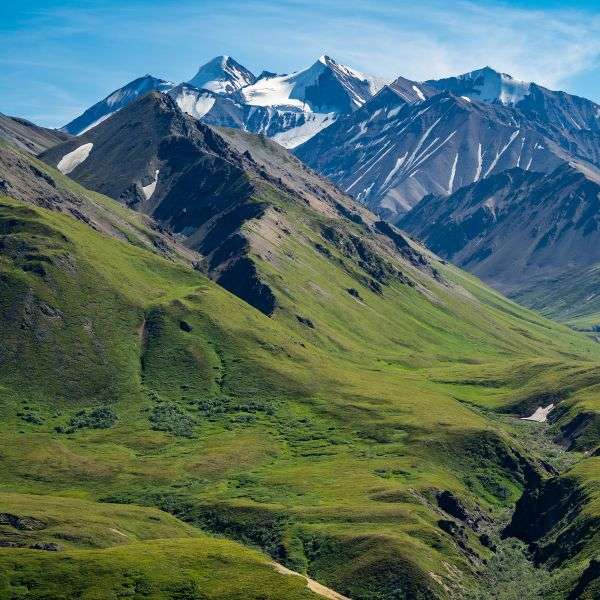
Alaska Range
Denali National Park is dominated by the Alaska Range, a massive mountain range that stretches across the state. The park's landscape is characterized by rugged peaks, deep valleys, and vast expanses of wilderness. The Alaska Range includes numerous other notable peaks besides Denali itself.
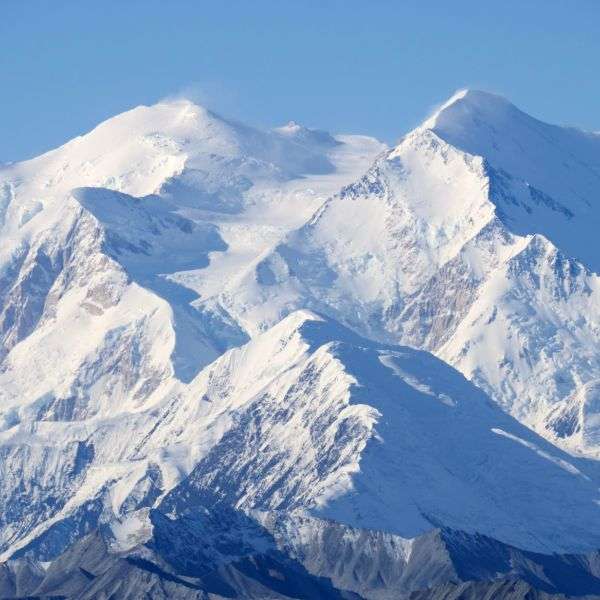
Mount Denali
The park is home to the highest peak in North America, Denali, formerly known as Mount McKinley. Denali stands at an impressive 20,310 feet above sea level. The mountain is a focal point of the park's geography and is visible from many areas within the park.
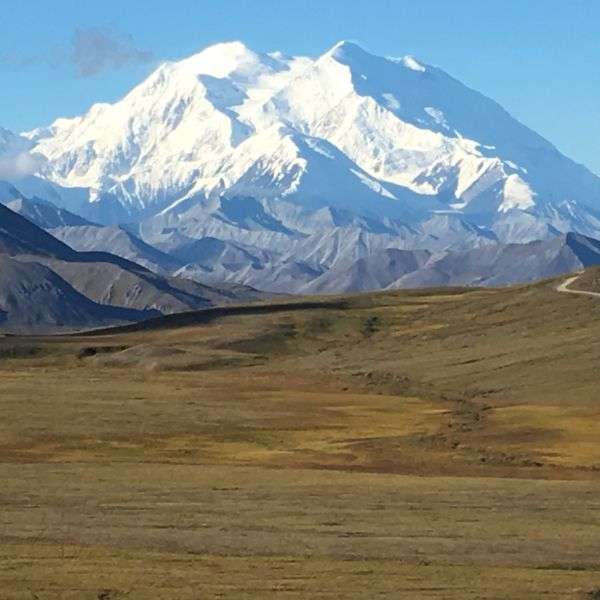
Tundra
Much of Denali National Park is covered by tundra, a biome characterized by low-growing vegetation, including mosses, lichens, and hardy plants. The harsh Arctic and subarctic climates limit the growth of trees, and the tundra provides a habitat for a variety of wildlife.
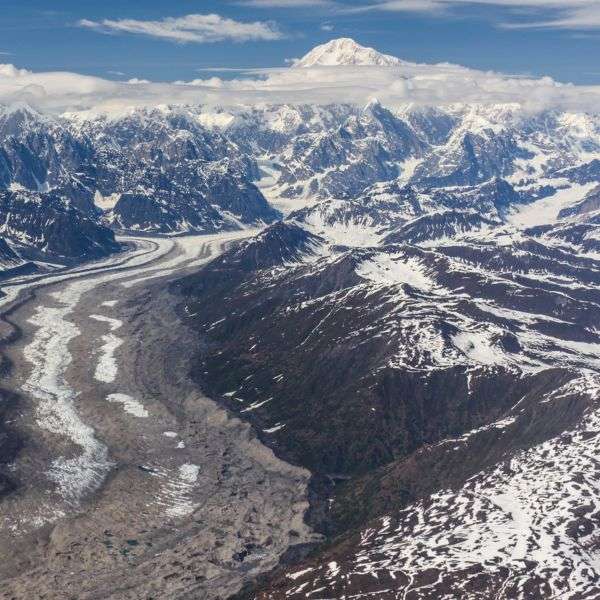
Glaciers
Glaciers are a prominent feature of the park's geography, shaped by the dynamic forces of ice and snow. The park contains several glaciers, and their movement has carved out valleys and left behind moraines, adding to the park's diverse topography.
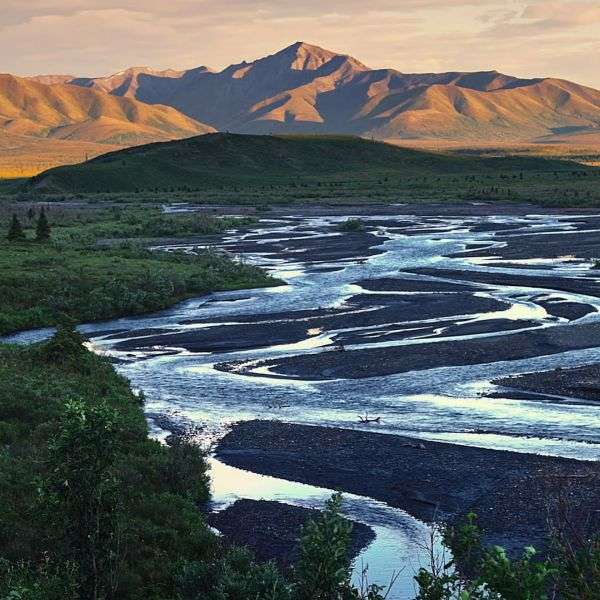
Rivers and Streams
The park is crisscrossed by numerous rivers and streams, fed by glacial meltwater and precipitation. These waterways play a vital role in shaping the landscape and providing habitat for fish and other wildlife.
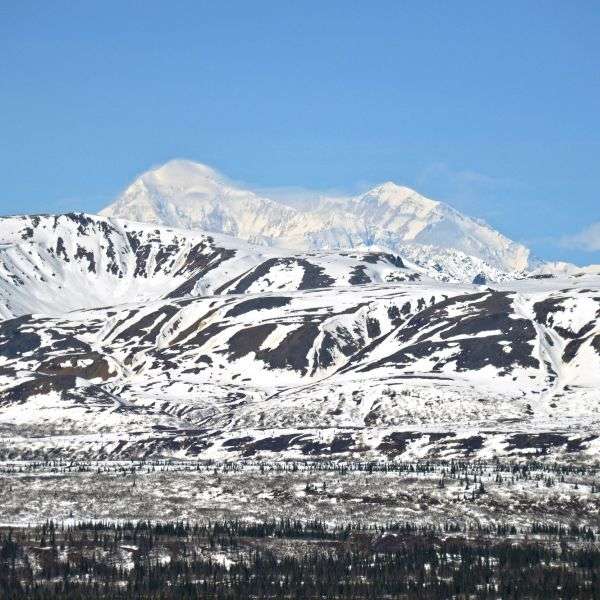
Permafrost
Permafrost, or permanently frozen ground, is prevalent in Denali National Park. This frozen layer impacts the stability of the terrain and influences the hydrology of the region.
Plants
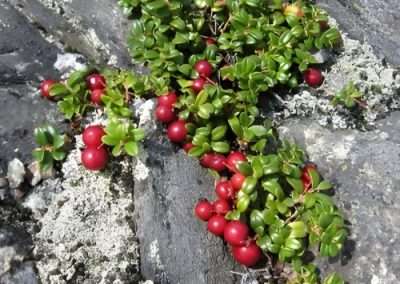
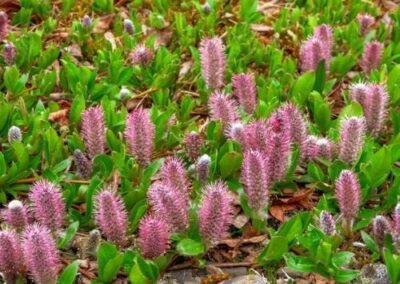
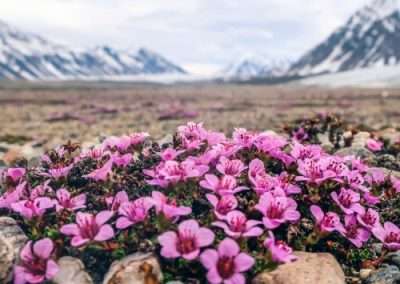
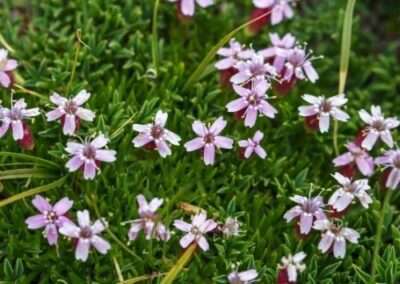
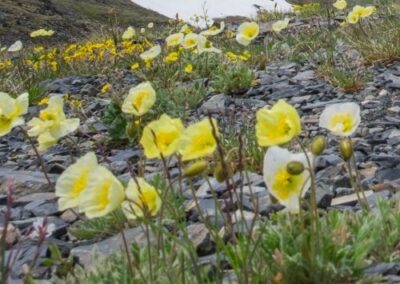
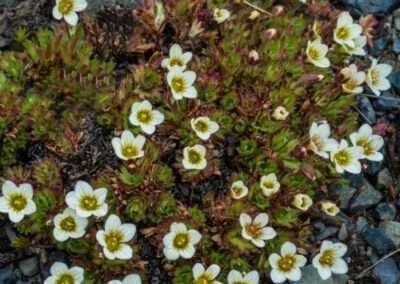
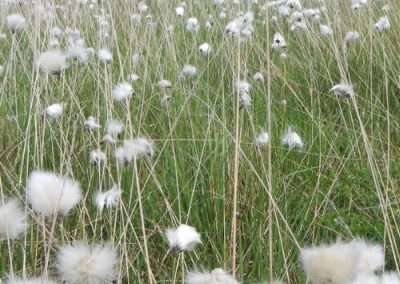
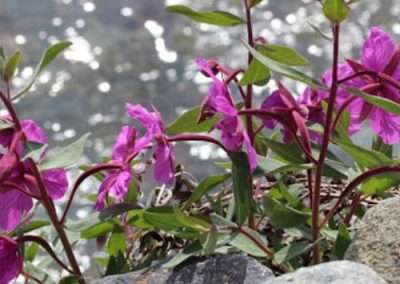
Denali National Park and Preserve, located in the heart of Alaska's interior, is renowned for its vast wilderness and towering peaks, including the iconic Denali, North America's tallest mountain. Within this rugged landscape, a variety of plant life thrives, adapted to the extreme conditions of the subarctic environment. From hardy shrubs and colorful wildflowers that blanket the tundra during summer to resilient trees such as spruce, birch, and aspen growing on lower slopes, Denali's flora demonstrates remarkable adaptability. These plant communities contribute to the park's ecological diversity while providing food and habitat for the many wildlife species that inhabit the Alaskan wilderness.
Animals
Mammals
Denali National Park and Preserve is home to a diverse array of mammal species adapted to the challenging subarctic environment. Visitors to the park may encounter a variety of wildlife, from large herbivores and powerful predators to small mammals that have evolved specialized adaptations for surviving Alaska's harsh winters.
Grizzly Bear (Ursus arctos horribilis): Denali is home to a healthy population of grizzly bears, also known as brown bears. These powerful omnivores inhabit a variety of landscapes throughout the park, feeding on berries, roots, vegetation, insects, and small mammals.
Moose (Alces alces): Moose are common in Denali and are often found near lakes, rivers, wetlands, and areas of dense vegetation. These large herbivores browse on willows, shrubs, aquatic plants, and other vegetation.
Caribou (Rangifer tarandus): The Denali caribou herd inhabits the park and surrounding region. Caribou are well adapted to the tundra and taiga and undertake seasonal movements in search of food and suitable habitat.
Dall Sheep (Ovis dalli): Dall sheep are iconic residents of the Alaska Range and can often be found on steep cliffs, rocky slopes, and alpine terrain. Their specialized hooves allow them to navigate rugged mountain environments.
Gray Wolf (Canis lupus): Gray wolves inhabit Denali and play an important role as apex predators in the park's ecosystems. They prey primarily on large and medium-sized mammals and can travel considerable distances across the wilderness.
Red Fox (Vulpes vulpes): Red foxes are adaptable predators found across a range of habitats in Denali. They feed on small mammals, birds, insects, berries, and carrion and are well suited to the park's changing seasonal conditions.
Arctic Ground Squirrel (Urocitellus parryii): Arctic ground squirrels are common in Denali's tundra and open areas. They are active during the short summer season and spend much of the winter in underground burrows while hibernating.
Wolverine (Gulo gulo): Wolverines are elusive and solitary members of the weasel family. They inhabit remote areas of Denali and are known for their strength, large territories, and ability to survive in harsh environments.
North American River Otter (Lontra canadensis): River otters inhabit Denali's rivers, lakes, and other aquatic environments. They are excellent swimmers and feed on fish, amphibians, crustaceans, and other aquatic prey.
Snowshoe Hare (Lepus americanus): Snowshoe hares are well adapted to Denali's cold climate and forested and tundra habitats. Their coats change color seasonally, becoming white in winter to provide camouflage against snow.
Reptiles
Reptiles are essentially absent from Denali National Park and Preserve because of its subarctic climate and long, extremely cold winters. The park's low temperatures, short summers, and limited opportunities for basking make it unsuitable for most reptiles, which depend on external sources of heat to regulate their body temperature.
Limited Reptile Diversity: Unlike warmer regions of North America, Denali does not support established populations of native snakes, lizards, or turtles. The park's wildlife is instead dominated by species adapted to cold conditions, including mammals, birds, amphibians, and fish.
Cold-Adapted Ecosystems: Denali's tundra, taiga, alpine environments, and extensive areas of permafrost favor animals capable of surviving prolonged periods of freezing temperatures. These environmental conditions make reptiles uncommon or absent from the park's ecosystems.
Although reptiles are not a significant component of Denali's wildlife, their absence highlights the strong influence that climate and temperature have on the distribution of animal species. The park's remarkable biodiversity is instead characterized by cold-adapted mammals and birds that thrive in its challenging subarctic environment.
Birds
Denali National Park and Preserve is a haven for bird enthusiasts, boasting a diverse avian population adapted to its subarctic and alpine environments. The park is home to numerous bird species, ranging from resident birds that stay year-round to migratory species that travel thousands of miles to breed in the summer.
Golden Eagle (Aquila chrysaetos): These majestic raptors are often seen soaring above the park's mountainous terrain. They nest on cliffs and prey on small mammals.
Peregrine Falcon (Falco peregrinus): Known for their incredible speed and aerial hunting prowess, peregrine falcons may be spotted in the park. They nest on cliffs and use their speed to catch birds mid-flight.
Common Raven (Corvus corax): Common ravens are highly adaptable and can be found throughout the park. They are known for their intelligence and are often seen scavenging for food.
Common Loon (Gavia immer): These striking waterbirds are found on some of Denali's lakes. They are known for their haunting calls and are excellent divers.
American Pipit (Anthus rubescens): This small bird can be found in the alpine and tundra regions of Denali. It is often seen walking or running on the ground, foraging for insects.
Ptarmigan (Lagopus spp.): Both willow ptarmigan and rock ptarmigan can be found in Denali. These grouse species are well-adapted to the tundra environment and change their plumage color with the seasons.
Northern Hawk Owl (Surnia ulula): This diurnal owl species can be found in the boreal forests of Denali. It is known for its keen hunting abilities and distinctive appearance.
Spruce Grouse (Falcipennis canadensis): These birds are often found in the spruce forests of Denali. Males have striking red combs above their eyes, and both males and females are well-camouflaged.
Arctic Warbler (Phylloscopus borealis): This migratory bird breeds in the park's boreal forests during the summer months, adding to the diversity of songbirds in the area.
Snow Bunting (Plectrophenax nivalis): These small, white-plumaged birds can be seen in the park's open tundra areas. They are well-adapted to the harsh conditions of the subarctic.
Gyrfalcon (Falco rusticolus): Gyrfalcons, the largest falcons in the world, can be found in Denali. They are often seen hunting birds and mammals in the park's open spaces.
Swans and Ducks: Various waterfowl species, including trumpeter swans, common mergansers, and northern pintails, can be found in the park's lakes and rivers.
Fish
Denali National Park and Preserve contains a variety of cold-water aquatic habitats, including rivers, streams, and lakes that support several fish species. These fish are adapted to Alaska's cold climate and play important roles in the park's aquatic ecosystems.
Arctic Grayling (Thymallus arcticus): Arctic grayling are native to Alaska and are among the most characteristic fish of Denali's clear, cold rivers and streams. They are recognizable by their large, colorful dorsal fins and primarily feed on aquatic and terrestrial insects.
Rainbow Trout (Oncorhynchus mykiss): Rainbow trout occur in some waters in and around Denali. They inhabit cold streams and lakes and are popular with anglers because of their strong fighting ability and distinctive coloration.
Dolly Varden (Salvelinus malma): Dolly Varden are cold-water char associated with clear streams, rivers, and lakes. They are recognizable by their spotted bodies and can tolerate the cold conditions characteristic of Denali's aquatic environments.
Lake Trout (Salvelinus namaycush): Lake trout inhabit some of the larger, deeper lakes in the region. They are adapted to cold water and are important predators within lake ecosystems, feeding on smaller fish and aquatic organisms.
Burbot (Lota lota): Burbot are freshwater relatives of cod that inhabit cold lakes and rivers. They have elongated, eel-like bodies and are primarily active at night, feeding on fish and other aquatic organisms.
Whitefish (Coregonus spp.): Several species of whitefish may occur in the region's cold northern waters. These silvery fish are well adapted to freshwater environments and serve as an important food source for larger fish and wildlife.
Amphibians
Denali National Park and Preserve has a limited diversity of amphibians because of its subarctic climate, long winters, and short growing season. The amphibian species that occur in the region are highly adapted to cold temperatures and make use of wetlands, ponds, and other seasonal water sources for breeding.
Wood Frog (Rana sylvatica): Wood frogs are among the most cold-tolerant amphibians in Denali. They can survive extremely low temperatures by entering a state of partial freezing during winter. In spring, they emerge from hibernation and quickly breed in temporary ponds and wetlands, allowing their tadpoles to develop during the short summer season.
Boreal Chorus Frog (Pseudacris maculata): Boreal chorus frogs may occur in suitable wetland habitats within the Denali region. These small frogs are well adapted to northern climates and are known for their distinctive calls, particularly during the breeding season.
Although amphibians are not abundant in Denali, these cold-adapted species are an important part of the park's biodiversity. Their dependence on wetlands and seasonal water sources also makes them useful indicators of changes in the park's climate and aquatic ecosystems.
“Tectonic power and glacial force push and pull the geology, spreading it to its absolute limit, yet layered and rich with hues of darkness, immortality, and mysteries not meant for men.”
―
"Denali is one of the places where the heart of the world can beat undisturbed. That is what makes it so important."
- Betsey Crawford
“To the lover of wilderness, Alaska is one of the most wonderful countries in the world.”
– John Muir
"Here in Denali, a place that has been set aside to connect people to America’s past, a place that protects present wildlife and amazing landscapes for your enjoyment and that of future generations, and a place that celebrates the individual’s opportunity to experience inspiration, reflection, awe, and wonder."
- Don Striker
Explore More With Us
Stay updated on National Parks EDU resources, park news, community updates, and and ways to explore, and protect.

National Parks Edu's mission is to help kids and families understand what makes these places so important. Because when you learn about nature, you start to care about protecting it.
National Parks EDU is an independent educational website and is not affiliated with, endorsed by, sponsored by, or officially connected to the National Park Service (NPS) or the U.S. government. © National Parks EDU. All Rights Reserved. October 17, 2026