Death Valley
National Park
California
renowned for its extreme desert landscapes and the lowest point in North America
Fast Facts
Location
eastern California
Established in
1994
Established by
President Bill Clinton
Size
5,270 sq. miles
Known For
- Home to Badwater Basin, which sits 282 feet below sea level, making it the lowest point in North America
- Record for the highest reliably recorded air temperature on Earth, reaching 134°F in July 1913
- The Racetrack Playa, a dry lakebed in Death Valley, is famous for its mysterious "sailing stones"
History
Natural History and Formation
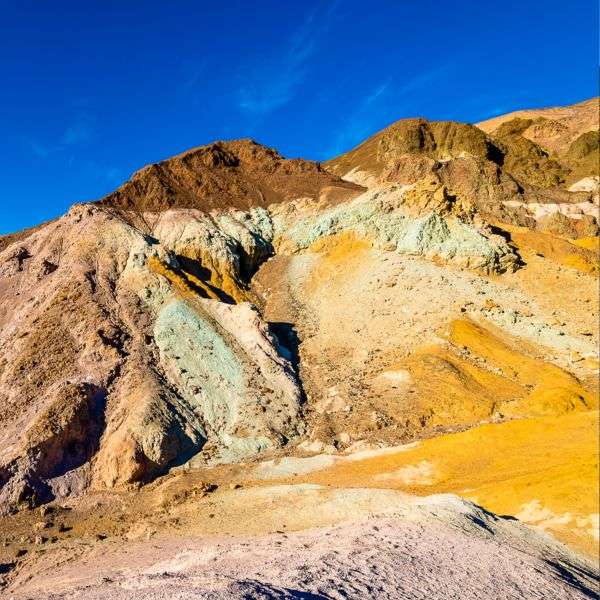
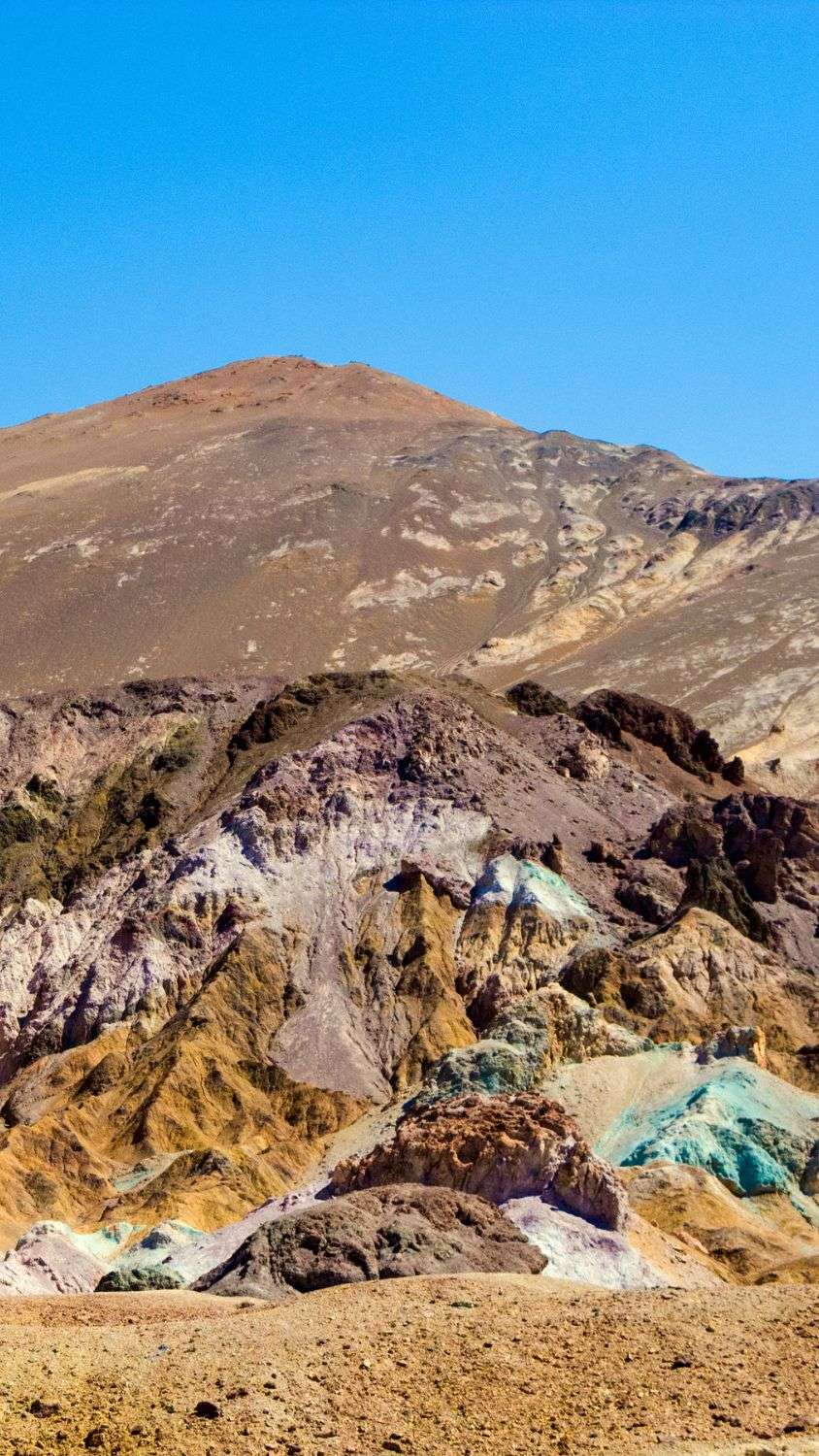
Death Valley National Park boasts a rich geological history shaped by millions of years of tectonic activity, erosion, sedimentation, volcanic activity, and climatic changes. These processes have created the park's dramatic mountains, valleys, salt flats, canyons, and desert landforms.
Tectonic Activity: The landscape of Death Valley began to form around 30 million years ago as tectonic forces stretched and pulled apart the Earth's crust. This extension created a series of fault blocks, with the valley gradually sinking between the surrounding mountain ranges.
Basin and Range: Death Valley is part of the Basin and Range Province, a vast region characterized by alternating mountain ranges and elongated valleys. Ongoing tectonic activity continues to influence the landscape, with the valley floor sinking while surrounding mountain ranges are uplifted.
Sedimentary Deposition: Over millions of years, sediments eroded from the surrounding mountains accumulated in the valley. These deposits formed layers of sedimentary material that preserve evidence of ancient lakes, rivers, and other environments that once existed in the region.
Uplift and Erosion: As the surrounding mountains were uplifted, rocks were exposed to erosion by wind and water. Although rainfall is scarce today, occasional intense storms can produce powerful floods that rapidly erode the landscape. These processes have helped create canyons, badlands, alluvial fans, and other distinctive landforms.
Volcanic Activity: Volcanic activity has also contributed to the geological development of Death Valley. The region contains volcanic features such as cinder cones, lava flows, and volcanic craters, which provide evidence of past eruptions and add to the park's geological diversity.
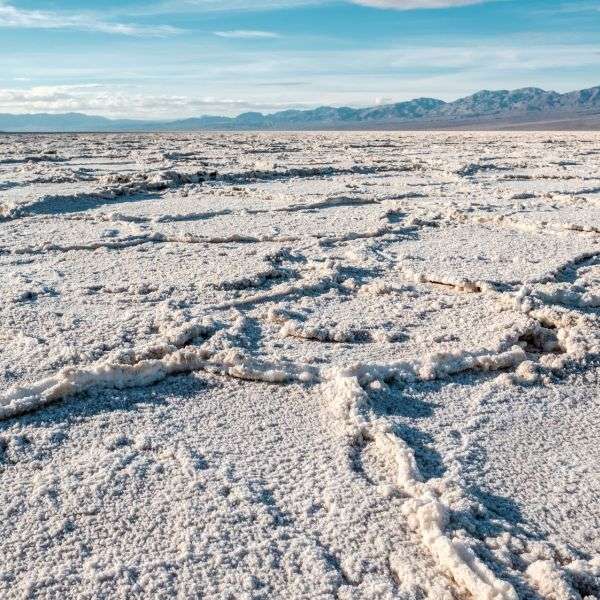
Salt Flats and Evaporation: Death Valley's extremely dry climate has played an important role in shaping its modern landscape. Water that collects in low-lying areas eventually evaporates, leaving behind concentrated minerals and salts. This process helped form features such as Badwater Basin's expansive salt flats and other evaporative deposits.
Climate Influence: The park's extreme arid climate continues to influence erosion and deposition. High temperatures, limited rainfall, strong winds, and occasional flash floods work together to reshape the valley's dunes, salt flats, alluvial fans, and desert mountains.
Overall, Death Valley National Park showcases a dynamic geological history in which tectonic forces, erosion, sedimentation, volcanism, and climate have interacted over millions of years to create one of the most dramatic landscapes in North America.
Native History
The Native American history of Death Valley National Park stretches back thousands of years, with Indigenous peoples developing deep cultural and spiritual connections to the region's desert landscapes and natural resources.
Timbisha Shoshone: The Timbisha Shoshone are the Indigenous people most closely associated with Death Valley. Their traditional homeland includes areas within and around what is now Death Valley National Park, and they maintain a deep cultural connection to the land.
Traditional Lifeways: The Timbisha Shoshone and other Indigenous groups relied on hunting, gathering, and seasonal movement to survive in the challenging desert environment. They hunted animals such as bighorn sheep and rabbits and gathered resources including mesquite beans, pinyon nuts, and other native plants. Their detailed knowledge of water sources, plants, animals, and seasonal conditions was essential to their way of life.
Cultural Sites: Throughout Death Valley, archaeological and cultural sites provide evidence of long-term Indigenous presence. These include rock art, temporary shelters, trails, tool-making areas, and other archaeological remains. Such sites offer valuable insight into the traditions, lifeways, and relationships that Indigenous peoples developed with the desert environment.
European Contact: The arrival of Euro-American explorers, miners, and settlers during the 19th century brought significant changes to Indigenous communities. Competition for resources, displacement from traditional lands, disease, and government policies profoundly affected the Timbisha Shoshone and other Native peoples of the region.
Contemporary Presence: Despite the challenges caused by colonization, the Timbisha Shoshone continue to maintain their cultural identity and connection to their ancestral homeland. The Timbisha Shoshone Tribe has a reservation within the Death Valley region and remains an important partner in preserving and interpreting the area's Indigenous heritage.
Cultural Heritage Preservation: Death Valley National Park works to protect archaeological and cultural resources and to incorporate Indigenous perspectives into the understanding of the park's history. Collaboration with the Timbisha Shoshone helps preserve important cultural sites and promotes greater recognition of the tribe's enduring relationship with the landscape.
Overall, the Native American history of Death Valley National Park is an essential part of the region's heritage, reflecting thousands of years of Indigenous knowledge, cultural traditions, and enduring connections to the desert landscape.
Preservation
The preservation history of Death Valley National Park reflects decades of efforts to protect its extraordinary desert landscapes, geological features, wildlife, and cultural resources for future generations.
Early Recognition: During the late 19th and early 20th centuries, explorers, scientists, conservationists, and outdoor enthusiasts increasingly recognized the unique geological and ecological significance of Death Valley. Its extreme environment, dramatic landscapes, and unusual natural features attracted growing interest in protecting the region.
National Monument Designation: In 1933, President Herbert Hoover established Death Valley National Monument to protect the area's distinctive desert landscapes, geological formations, wildlife, and cultural resources. The designation provided federal protection for a vast portion of the region.
Expansion and Protection: Protection of Death Valley expanded over the following decades as additional lands and resources received greater recognition. Conservation efforts focused on preserving the area's fragile desert ecosystems while allowing opportunities for scientific research, recreation, and education.
National Park Designation: In 1994, the California Desert Protection Act redesignated Death Valley National Monument as Death Valley National Park and expanded its boundaries. The new designation strengthened federal protection and recognized the area's exceptional national significance.
Wilderness Protection: The 1994 legislation also designated extensive portions of Death Valley as wilderness, providing additional protection for undeveloped desert landscapes and helping preserve the area's natural character.
Ongoing Conservation: Death Valley National Park continues to face conservation challenges, including invasive species, climate change, habitat degradation, water-resource concerns, and the effects of increasing visitation. Park managers work to address these issues through scientific research, monitoring, restoration projects, resource management, and public education.
Overall, the preservation history of Death Valley National Park reflects a long-term commitment to protecting one of America's most distinctive desert landscapes while preserving its ecological, geological, and cultural heritage for future generations.
Future Preservation
Preserving Death Valley National Park for the future presents several significant challenges, many of which are intensified by the park's extreme desert environment and a changing climate.
Climate Change: Death Valley is already one of the hottest and driest places on Earth, and climate change may intensify these conditions. Rising temperatures, changing precipitation patterns, prolonged droughts, and more frequent extreme weather events can affect the park's ecosystems, wildlife, vegetation, and cultural resources.
Water Scarcity: Water is an extremely limited resource in Death Valley. Changes in precipitation, groundwater availability, and drought conditions can place additional stress on natural ecosystems and visitor facilities. Protecting springs, seeps, and other water sources is essential for maintaining wildlife habitat and ecological health.
Invasive Species: Non-native plants such as tamarisk and cheatgrass can threaten native desert vegetation and alter habitat conditions. Managing invasive species requires continued monitoring, removal efforts, and restoration of native plant communities.
Visitor Pressure: Increasing visitation can place stress on the park's fragile desert environment and infrastructure. Off-road driving, improper disposal of waste, damage to vegetation, and disturbance of wildlife or cultural sites can have long-lasting effects. Balancing public access with resource protection remains an important management challenge.
Cultural Resource Protection: Death Valley contains numerous archaeological sites, historic structures, artifacts, and places of importance to Indigenous peoples. Protecting these resources from vandalism, looting, unauthorized collection, and natural deterioration requires careful management and cooperation with tribal communities.
Extreme Weather: Intense rainstorms can produce flash floods that damage roads, trails, bridges, and other infrastructure. At the same time, extreme heat can create dangerous conditions for visitors and increase the difficulty of maintaining facilities and conducting fieldwork.
Resource Extraction: Mineral resources in and around the region can create potential conflicts between development interests and conservation goals. Protecting the park's ecosystems and scenic landscapes requires careful evaluation of activities that could affect air, water, wildlife, or surrounding habitats.
Addressing these challenges requires adaptive management and cooperation among the National Park Service, tribal nations, scientists, local communities, conservation organizations, and visitors. Climate resilience, ecosystem restoration, responsible recreation, cultural resource stewardship, and continued scientific monitoring will be essential to preserving Death Valley National Park's unique natural and cultural heritage for future generations.
Geography
Death Valley National Park, located in eastern California and extending into Nevada, is a vast desert landscape shaped by extreme elevations, rugged mountains, and arid conditions. Its geography features expansive salt flats, towering sand dunes, colorful badlands, deep canyons, and dramatic mountain ranges, creating a remarkable variety of landforms. From Badwater Basin, one of the lowest points in North America, to the high peaks of the Panamint Range, Death Valley offers visitors an extraordinary view of the geological forces and climatic conditions that have shaped this unique desert environment.
Valleys and Basins
Death Valley is perhaps most famous for its namesake valley, which is the lowest, driest, and hottest area in North America. Badwater Basin, located within Death Valley, holds the record for the lowest elevation in the Western Hemisphere at 282 feet below sea level. The valley is part of the larger Basin and Range Province, characterized by alternating mountain ranges and valleys.
Mountain Ranges
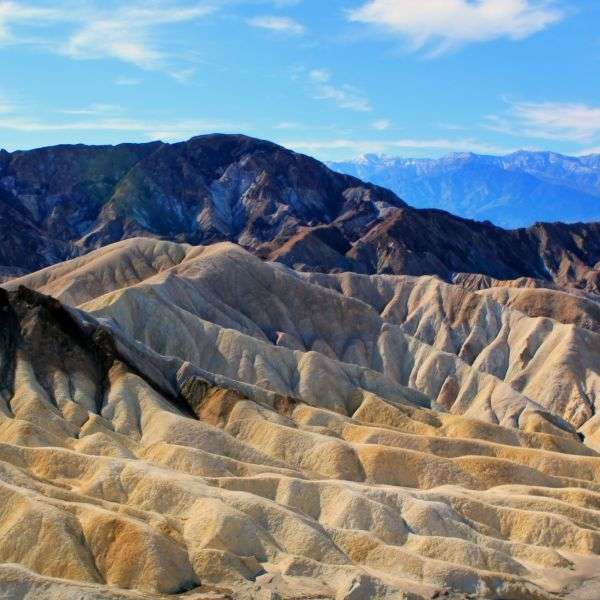
Surrounding Death Valley are several mountain ranges, including the Panamint Range to the west and the Amargosa Range to the east. These rugged mountain ranges provide a dramatic backdrop to the valley and contain peaks rising over 11,000 feet in elevation.
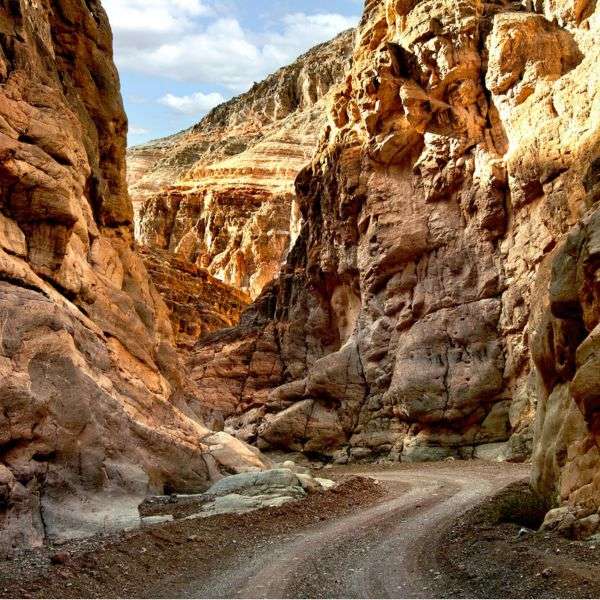
Geological Formations
Death Valley boasts a variety of unique geological formations, including colorful badlands, towering sand dunes, rugged canyons, and salt flats. These features are the result of millions of years of tectonic activity, erosion, and climatic changes.
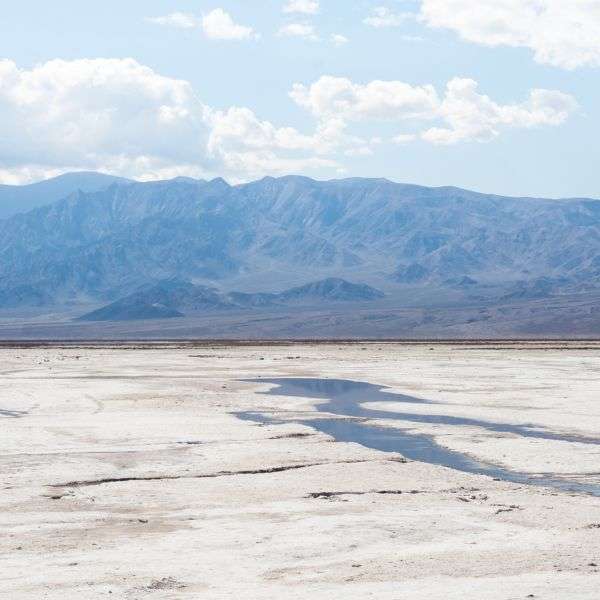
Playas and Salt Flats
The valley floor of Death Valley is dotted with expansive playas and salt flats, such as the Racetrack Playa and the Devil's Golf Course. These salt-encrusted landscapes form when shallow lakes evaporate, leaving behind mineral deposits and intricate salt polygons.
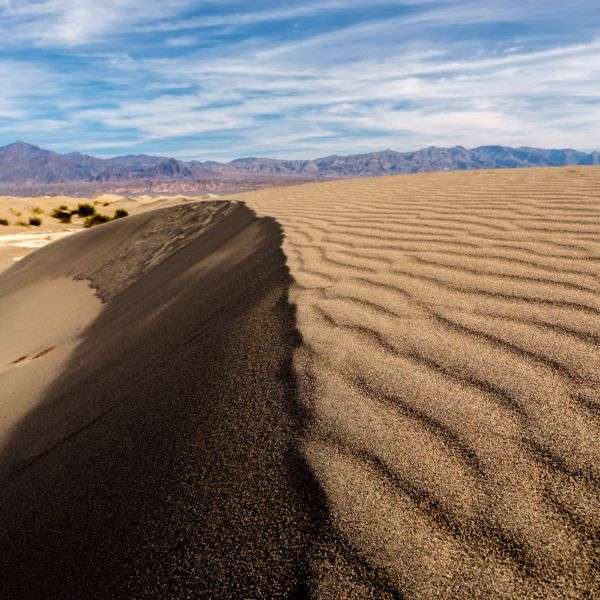
Sand Dunes
The Mesquite Flat Sand Dunes and other dune fields within the park are iconic features of Death Valley's landscape. These towering sand dunes, sculpted by wind and erosion, create a mesmerizing desert tableau and provide a habitat for specialized plant and animal species.
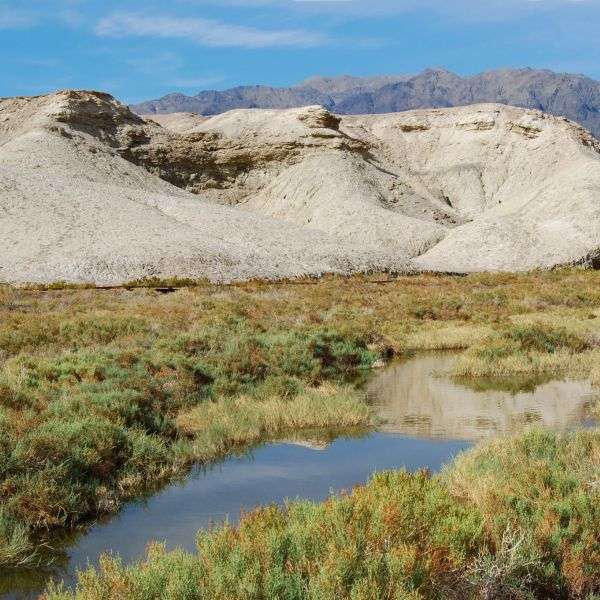
Oases and Springs
Despite its arid reputation, Death Valley contains several oases and natural springs that support diverse ecosystems. Places like Furnace Creek and Scotty's Castle feature lush vegetation and provide vital water sources for wildlife in the desert.
Plants
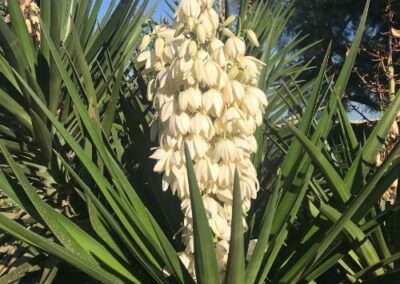
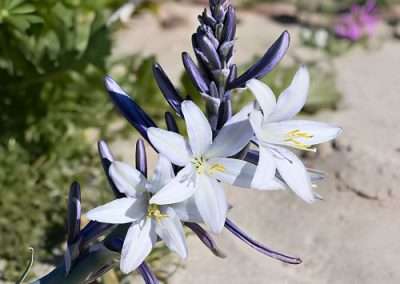
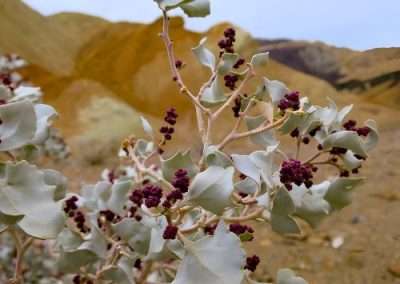
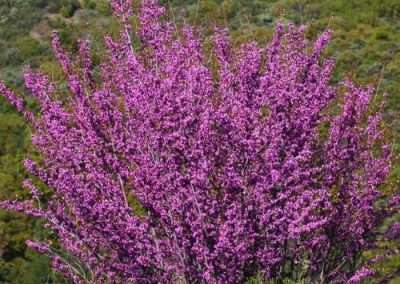
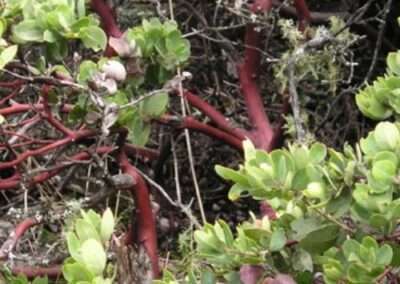
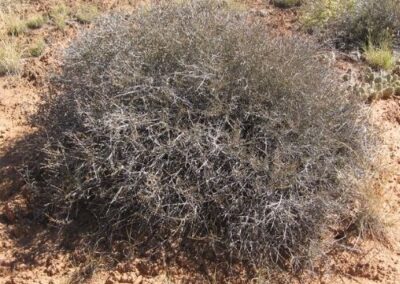
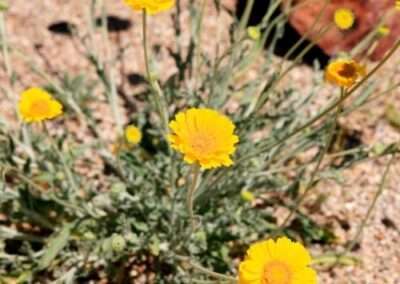
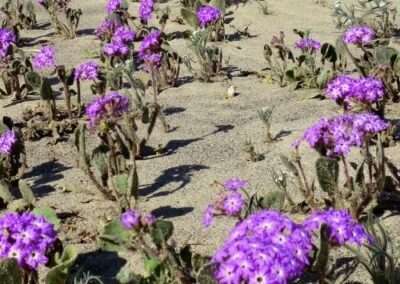
Death Valley National Park is home to a remarkable variety of plant life adapted to its harsh desert environment, where extreme temperatures, limited rainfall, and scarce water create challenging conditions for survival. Creosote bushes, desert holly, and mesquite grow across the lower elevations, while Joshua trees and pinyon-juniper woodlands occur in higher, cooler areas. Following periods of sufficient rainfall, colorful wildflowers can briefly transform portions of the desert landscape. These resilient plant communities provide food and shelter for wildlife while demonstrating the remarkable adaptations that allow life to thrive in one of the most extreme environments in North America.
Animals
Mammals
Death Valley National Park is home to a variety of mammal species, adapted to survive in the park's diverse desert landscapes.
Desert Bighorn Sheep (Ovis canadensis nelsoni): One of the most iconic mammals of Death Valley, desert bighorn sheep are well-adapted to rocky desert terrain. They can often be seen scaling steep cliffs and rugged mountainsides in search of food and water.
Coyote (Canis latrans): These highly adaptable predators are common throughout Death Valley National Park. Coyotes primarily feed on small mammals, birds, and insects, and they are often heard howling at night.
Kit Fox (Vulpes macrotis): The kit fox is a small, nocturnal fox species found in desert habitats. They are skilled hunters, preying on rodents, insects, and reptiles, and are known for their large ears, which help dissipate heat.
Kangaroo Rat (Dipodomys spp.): Several species of kangaroo rats inhabit Death Valley, including the Desert Kangaroo Rat and the Merriam's Kangaroo Rat. These small rodents are well-adapted to desert life, obtaining most of their water from their food and burrowing underground to escape the heat.
Desert Cottontail (Sylvilagus audubonii): This species of rabbit is commonly found throughout the desert Southwest, including Death Valley National Park. Desert cottontails feed on a variety of vegetation and are an important prey species for many predators in the park.
Mule Deer (Odocoileus hemionus): Mule deer are the largest native deer species in Death Valley and can often be seen grazing in grassy meadows and riparian areas. They are herbivores, feeding on a variety of plants and shrubs.
Bobcat (Lynx rufus): Bobcats are elusive predators found in a variety of habitats, including desert scrub and woodland areas within Death Valley National Park. They primarily hunt small mammals and birds and are well-camouflaged with their spotted fur.
Mountain Lion (Puma concolor): Also known as cougars or pumas, mountain lions are top predators in the park's ecosystem. Although rarely seen by visitors due to their elusive nature, they play a crucial role in controlling prey populations and maintaining ecosystem balance.
Reptiles
Death Valley National Park is home to a variety of reptile species adapted to the extreme desert environment.
Sidewinder Rattlesnake (Crotalus cerastes): Sidewinders are venomous rattlesnakes named for their distinctive sideways movement across loose sand. Their specialized locomotion helps them navigate the sandy habitats of the desert.
Western Diamondback Rattlesnake (Crotalus atrox): Western diamondbacks are venomous snakes recognized by their diamond-shaped markings and banded tails. They inhabit rocky slopes, washes, and other desert environments.
Chuckwalla (Sauromalus spp.): Chuckwallas are large, herbivorous lizards that inhabit rocky desert areas. They can wedge themselves into rock crevices and inflate their bodies, making it difficult for predators to dislodge them.
Zebra-tailed Lizard (Callisaurus draconoides): Zebra-tailed lizards are fast-moving reptiles commonly found in sandy and open desert habitats. Their black-and-white banded tails give them their distinctive name.
Desert Tortoise (Gopherus agassizii): Desert tortoises are important members of the Mojave Desert ecosystem. They spend much of their time in burrows, which help protect them from extreme heat and conserve moisture.
Gila Monster (Heloderma suspectum): Gila monsters are rare and secretive venomous lizards found in parts of the southwestern United States. They have distinctive orange-and-black coloration and are most active during cooler periods.
Western Whiptail (Aspidoscelis tigris): Western whiptails are slender, agile lizards that are commonly found in desert habitats. They move quickly across open ground while searching for insects and other small prey.
Long-nosed Leopard Lizard (Gambelia wislizenii): These relatively large predatory lizards inhabit open desert landscapes. They are fast-moving hunters that feed on insects, smaller lizards, and other small animals.
Birds
Death Valley National Park is home to a diverse array of bird species, ranging from desert specialists to migratory birds passing through the region.
Greater Roadrunner (Geococcyx californianus): The iconic Greater Roadrunner is a common sight in Death Valley, known for its distinctive appearance and ground-dwelling habits. These birds are opportunistic predators, feeding on insects, reptiles, and small mammals.
American Kestrel (Falco sparverius): The American kestrel is the smallest falcon species in North America and can be found hunting for prey in open desert habitats within Death Valley National Park. They feed primarily on small birds, insects, and rodents.
Golden Eagle (Aquila chrysaetos): Golden eagles are powerful raptors known for their impressive size and strength. They inhabit the rugged mountainous areas surrounding Death Valley and are skilled hunters, preying on a variety of mammals and birds.
Red-tailed Hawk (Buteo jamaicensis): Red-tailed hawks are one of the most common raptor species in North America and can be found soaring over open desert landscapes within Death Valley National Park. They are opportunistic hunters, feeding on a variety of prey including rodents, reptiles, and birds.
Cactus Wren (Campylorhynchus brunneicapillus): The cactus wren is a large, distinctive songbird known for its bold white eyebrow stripe and habit of nesting in cactus plants. It is well-adapted to desert environments and can be found in scrubby vegetation throughout Death Valley.
Brewer's Sparrow (Spizella breweri): Brewer's sparrows are small, inconspicuous songbirds found in sagebrush and scrub habitats within Death Valley National Park. They have a melodious song and feed primarily on seeds and insects.
Common Raven (Corvus corax): Common ravens are highly intelligent and adaptable birds found throughout Death Valley. They are known for their deep, croaking calls and can often be seen scavenging for food in campgrounds and picnic areas.
Phainopepla (Phainopepla nitens): Phainopeplas are striking black birds with distinctive red eyes and white wing patches. They are often found in desert washes and riparian areas within Death Valley, where they feed on insects and berries.
Migratory Birds: Death Valley serves as an important stopover for migratory birds traveling along the Pacific Flyway. During spring and fall, the park provides critical habitat and resources for a wide variety of migrating species, including waterfowl, shorebirds, and songbirds.
Fish
Death Valley National Park has a limited diversity of fish because of its extremely arid climate and scarcity of permanent water. However, several highly specialized pupfish species have adapted to the park's isolated springs, streams, and other aquatic habitats.
Devil's Hole Pupfish (Cyprinodon diabolis): The Devil's Hole pupfish is one of the most iconic and endangered fish species associated with Death Valley National Park. It is found exclusively in Devil's Hole, a deep limestone cavern containing a small pool of warm water supplied by an underground aquifer. The species has adapted to this extreme environment and is the focus of intensive conservation efforts.
Amargosa Pupfish (Cyprinodon nevadensis amargosae): Amargosa pupfish inhabit isolated springs and streams within the Amargosa River drainage. They are adapted to warm, sometimes saline waters and can tolerate the challenging conditions of the desert environment. Habitat loss and fragmentation have contributed to conservation concerns for this species.
Salt Creek Pupfish (Cyprinodon salinus): Salt Creek pupfish are found in Salt Creek, a seasonal waterway within Death Valley. They are highly adapted to saline conditions and extreme fluctuations in water temperature and availability. Their specialized adaptations allow them to survive in one of the park's harshest aquatic environments.
Amphibians
Death Valley National Park is home to a small number of amphibian species, despite its extremely arid climate. These amphibians are adapted to survive in the desert through specialized breeding behaviors, burrowing, and periods of dormancy during hot and dry conditions.
Red-spotted Toad (Anaxyrus punctatus): Red-spotted toads are small amphibians found in desert habitats across the southwestern United States. They are associated with temporary pools, washes, and other areas where water accumulates after rainfall.
California Treefrog (Pseudacris cadaverina): California treefrogs are small amphibians associated with rocky streams, springs, and other moist habitats in the park. They are most active near water during the breeding season.
Western Toad (Anaxyrus boreas): Western toads can occur in suitable wetland and riparian habitats. They breed in shallow pools and other water sources and can survive periods of unfavorable conditions by seeking shelter.
Amargosa Toad (Anaxyrus nelsoni): The Amargosa toad is an endangered species associated with the Amargosa River drainage. It depends on desert riparian habitats, including springs, wetlands, and pools, making habitat protection especially important for its conservation.
Spadefoot Toads (Scaphiopodidae family): Spadefoot toads are highly adapted to arid environments and may emerge after substantial rainfall. They spend much of their lives underground and take advantage of temporary pools to reproduce before the water disappears.
Although amphibians are relatively uncommon in Death Valley National Park, they are an important part of the park's biodiversity. Their dependence on scarce water sources makes them particularly sensitive to changes in precipitation, water availability, and desert riparian habitats.
"There are places so great they have the power to transform us, and Death Valley is one of those places."
- Michael Lanza
"Death Valley is the most extreme place I've ever visited. It's a place of stunning beauty, but it's also a place of incredible hardship."
- Cheryl Strayed
How could rocks and sand and silence make us afraid and yet be so wonderful?
— Edna Brush Perkins
"Death Valley is a land of contrasts—extremes of climate, geography, and human endeavor. Its vast and varied landscapes offer endless opportunities for exploration and discovery."
- National Park Service
Explore More With Us
Stay updated on National Parks EDU resources, park news, community updates, and and ways to explore, and protect.

National Parks Edu's mission is to help kids and families understand what makes these places so important. Because when you learn about nature, you start to care about protecting it.
National Parks EDU is an independent educational website and is not affiliated with, endorsed by, sponsored by, or officially connected to the National Park Service (NPS) or the U.S. government. © National Parks EDU. All Rights Reserved. October 17, 2026