Carlsbad Caverns
National Park
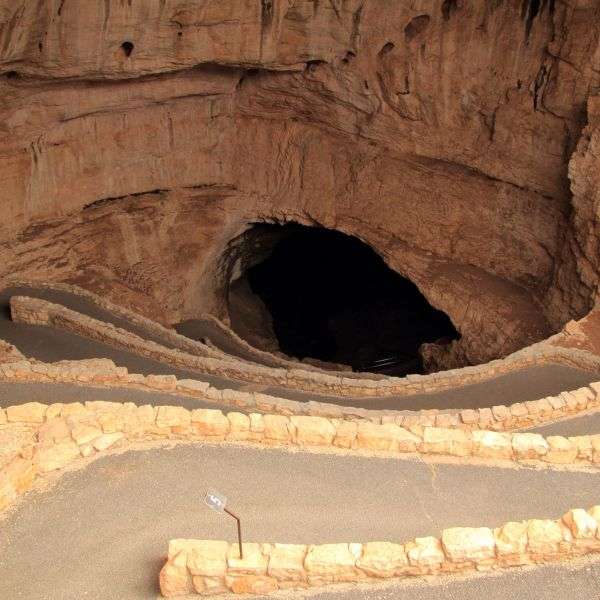
New Mexico
renowned for its stunning underground caverns, featuring intricate limestone formations
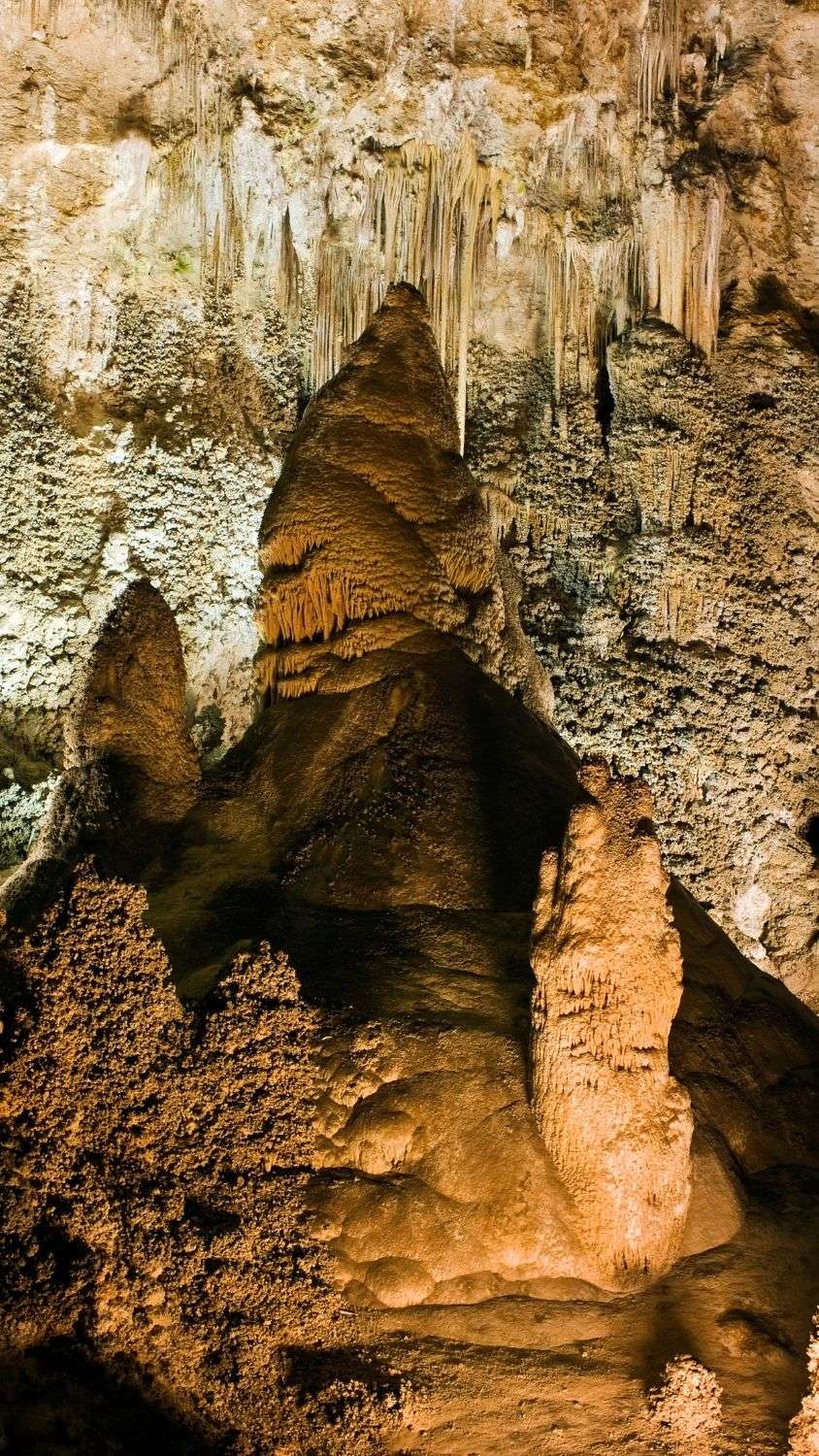
Fast Facts
Location
southern New Mexico
Established in
1930
Established by
President Calvin Coolidge
Size
74 sq. miles
Known For
- Carlsbad Caverns National Park is renowned for its extensive and intricate underground cave system, featuring remarkable limestone formations.
- home to the Big Room, one of the largest cave chambers in North America
- A spectacular bat flight during certain times of the year when thousands of bats exit the cave in the evening in search of food
History
Natural History and Formation
Carlsbad Caverns National Park has a fascinating geological history shaped by ancient marine environments, limestone deposition, groundwater dissolution, and the formation of spectacular underground chambers and mineral formations.
Limestone Formation: The bedrock surrounding Carlsbad Caverns is primarily limestone deposited during the Permian Period, roughly 280 million years ago. At that time, the region was part of a shallow marine environment surrounding the ancient Capitan Reef. Marine organisms contributed calcium carbonate that accumulated and eventually became limestone.
Formation of the Caves: The cave system developed primarily through the action of groundwater moving through fractures and weaknesses in the limestone. Water absorbed carbon dioxide from the atmosphere and soil, forming a weak carbonic acid that gradually dissolved the limestone and enlarged underground passages.
Karst Topography: The dissolution of limestone created a karst landscape characterized by caves, sinkholes, fractures, underground drainage systems, and other features associated with soluble bedrock. Carlsbad Caverns is one of the most spectacular examples of this type of geology.
Formation of Speleothems: Once groundwater entered the cave, changes in pressure, temperature, and carbon dioxide levels caused dissolved minerals to precipitate. Over long periods, these minerals formed speleothems such as stalactites, stalagmites, columns, draperies, flowstone, and other intricate cave formations.
The Big Room: The Big Room is the largest chamber in Carlsbad Caverns and is famous for its enormous size and variety of cave formations. Its development involved the enlargement of underground passages and chambers through dissolution and other geological processes.
Hydrogen Sulfide and Sulfuric Acid: An important feature of Carlsbad Caverns' geological history is the role of sulfuric acid. Hydrogen sulfide rising from deeper petroleum-bearing rocks interacted with oxygen and groundwater, producing sulfuric acid that helped dissolve the limestone and create much of the cave system. This process distinguishes Carlsbad Caverns from many caves formed primarily by carbonic acid.
Ongoing Geological Processes: Cave formation and mineral deposition continue today, although these processes generally occur very slowly. Groundwater continues to influence the cave environment, while evaporation and mineral precipitation gradually modify existing formations.
Carlsbad Caverns National Park is therefore a remarkable record of ancient marine geology and millions of years of chemical weathering, groundwater movement, and mineral deposition, creating one of the world's most spectacular underground landscapes.
Native History
The area surrounding Carlsbad Caverns National Park has a long and diverse Native American history, with Indigenous peoples living in and traveling through the Chihuahuan Desert for thousands of years. Although specific information about traditional use of the caves themselves is limited, archaeological evidence provides important insight into Indigenous connections with the broader landscape.
Prehistoric Occupation: Archaeological evidence indicates that Indigenous peoples occupied the region for thousands of years. Groups adapted to the challenging desert environment by hunting, gathering wild plants, and using seasonal water sources. Artifacts found in the broader region provide evidence of long-term human activity.
Traditional Land Use: The region around Carlsbad Caverns has historical connections to Indigenous peoples, including the Mescalero Apache. Other Native American groups also traveled through or used portions of the wider southeastern New Mexico and West Texas region.
Cultural Significance: Caves, springs, mountains, and other prominent landscape features could hold cultural and spiritual importance for Indigenous communities. However, specific traditional beliefs or ceremonial practices associated with Carlsbad Caverns are not extensively documented, so interpretations should be made with care.
Rock Art and Archaeological Sites: Rock shelters, artifacts, and examples of rock art occur in the broader Chihuahuan Desert region. These archaeological resources provide evidence of Indigenous activity and offer valuable information about how people interacted with the landscape.
Resource Use: Indigenous peoples relied on the desert's plants and animals for food, medicine, tools, clothing, and other materials. Knowledge of seasonal resources and water availability was essential for surviving in the region's challenging environment.
European and American Contact: The arrival of Spanish explorers, settlers, and later American expansion dramatically changed Indigenous lifeways. Conflict, displacement, changing land use, and the establishment of settlements affected Native American communities throughout the region.
Mescalero Apache Connections: The Mescalero Apache have longstanding cultural and historical connections to the broader region of southeastern New Mexico. Their history remains an important part of understanding the cultural landscape surrounding Carlsbad Caverns.
Modern Connections: Native American communities continue to maintain cultural connections to the lands of the Southwest. The National Park Service works to protect archaeological resources and incorporate Indigenous perspectives into the interpretation and stewardship of park resources where appropriate.
The Native American history of the Carlsbad Caverns region is an important part of the area's heritage. Archaeological evidence, Indigenous knowledge, and continuing cultural connections help demonstrate that the landscape has been meaningful to people long before the establishment of the national park.
Preservation
Carlsbad Caverns National Park has a remarkable preservation history that helped protect one of the world's most famous cave systems. From its early exploration to its protection as a national park, conservation efforts have preserved both its underground wonders and its desert landscape.
Early Exploration: In the late 1800s, local cowboy Jim White became one of the first people to fully explore Carlsbad Caverns. As a teenager, he used homemade equipment to climb into the cave and mapped many of its chambers. He also helped introduce visitors to the caverns and shared their beauty with the public.
National Monument: On October 25, 1923, President Calvin Coolidge established Carlsbad Cave National Monument. This protected the cave's extraordinary limestone formations, underground chambers, and important geological features from damage and development.
National Park: On May 14, 1930, Congress created Carlsbad Caverns National Park. The new designation expanded protection beyond the cave itself and recognized the importance of the surrounding Chihuahuan Desert ecosystem.
Wilderness Protection: In 1978, Congress designated most of the park as wilderness. This protected the park's natural landscapes, wildlife habitats, and backcountry from future development while preserving their wild character.
UNESCO World Heritage Site: In 1995, Carlsbad Caverns National Park became a UNESCO World Heritage Site. This international recognition honored the park's outstanding geological features and its importance as one of the world's greatest cave systems.
Dark Sky Protection: In 2013, Carlsbad Caverns was recognized as an International Dark Sky Park. The park works to reduce light pollution, helping protect nighttime wildlife and providing excellent opportunities for stargazing.
Conservation Today: The National Park Service continues to protect Carlsbad Caverns through scientific research, cave monitoring, wildlife conservation, and visitor education. Careful management helps preserve the park's fragile cave formations, bat populations, archaeological resources, and desert ecosystems for future generations.
Future Preservation
Preserving Carlsbad Caverns National Park for the future presents several challenges that require careful management and conservation efforts.
Visitor Impact: Managing visitor use is essential because the cave environment is extremely delicate. Touching formations, introducing contaminants, and changes in temperature, humidity, and carbon dioxide levels can affect the cave ecosystem and its formations.
Infrastructure Maintenance: Trails, elevators, lighting systems, roads, and visitor facilities require regular maintenance. The challenge is to provide safe and accessible facilities while minimizing impacts on the cave and surrounding desert environment.
Climate Change: Changes in temperature, precipitation, drought patterns, and extreme weather can affect the Chihuahuan Desert ecosystem and the conditions inside the caves. Long-term monitoring is important for understanding and responding to these changes.
Light Pollution: Protecting the park's naturally dark skies is important for astronomy and nocturnal wildlife. Artificial lighting must be carefully managed to reduce impacts on bats, insects, and other nighttime species.
Water Resources: Water is limited in the Chihuahuan Desert, and changes in precipitation or groundwater conditions could affect both surface ecosystems and the underground cave environment. Protecting water quality and understanding groundwater movement are important conservation priorities.
Invasive Species: Non-native plants and animals can compete with native species and alter natural ecosystems. Monitoring and controlling invasive species helps protect the park's native biodiversity.
Cave Resource Protection: Stalactites, stalagmites, columns, and other speleothems form extremely slowly and can be damaged permanently by physical contact or environmental changes. Protecting these formations requires careful monitoring and visitor management.
Wildlife Conservation: The park supports bats, birds, mammals, reptiles, and many other species. Protecting wildlife habitat while accommodating visitors requires careful management, particularly for species that depend on caves or other sensitive environments.
Cultural Resource Protection: Archaeological sites and resources associated with Indigenous peoples and later human history require protection from vandalism, unauthorized collection, and natural deterioration. Respecting Indigenous connections to the landscape is also an important part of resource management.
Funding and Staffing: Adequate funding and trained staff are necessary for scientific research, cave monitoring, infrastructure maintenance, visitor education, wildlife protection, and emergency response. Limited resources can make it difficult to address all conservation needs.
Balancing Conservation and Recreation: Carlsbad Caverns must balance public access and tourism with the need to protect its fragile underground and desert environments. Sustainable visitor practices, education, scientific research, and adaptive management are essential for preserving the park's geological, biological, and cultural resources for future generations.
Geography
Carlsbad Caverns National Park, located in southeastern New Mexico, is renowned for its spectacular underground limestone caves, but its surface landscape is equally remarkable. The park lies within the rugged Guadalupe Mountains and the Chihuahuan Desert, featuring limestone cliffs, rocky canyons, desert plains, and elevated plateaus. Beneath the surface, more than 100 known caves, including the famous Carlsbad Cavern, extend through the limestone bedrock. Together, the park's surface and underground landscapes reveal the powerful effects of water, erosion, dissolution, and geological change over millions of years, creating a unique environment where desert ecosystems and remarkable subterranean formations exist side by side.
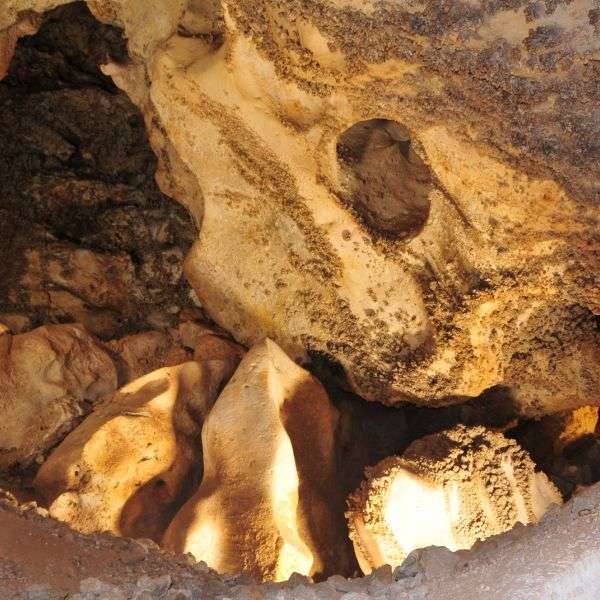
Limestone Composition
The limestone in the area is primarily composed of the remains of marine organisms such as algae, sponges, and other calcareous creatures. Over time, these accumulated remains formed the thick layers of limestone seen in the park.
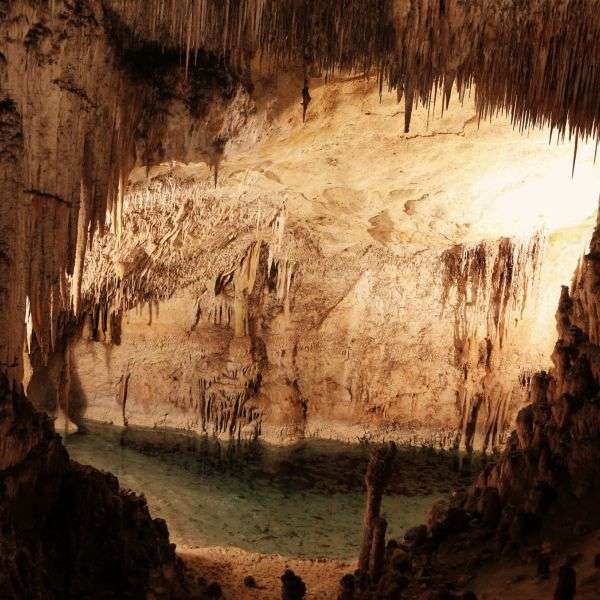
Speleogenesis
Carlsbad Caverns is a classic example of a limestone cave system formed through a process known as speleogenesis. Rainwater, slightly acidic due to the absorption of carbon dioxide, percolates through the limestone, dissolving it and creating underground cavities.
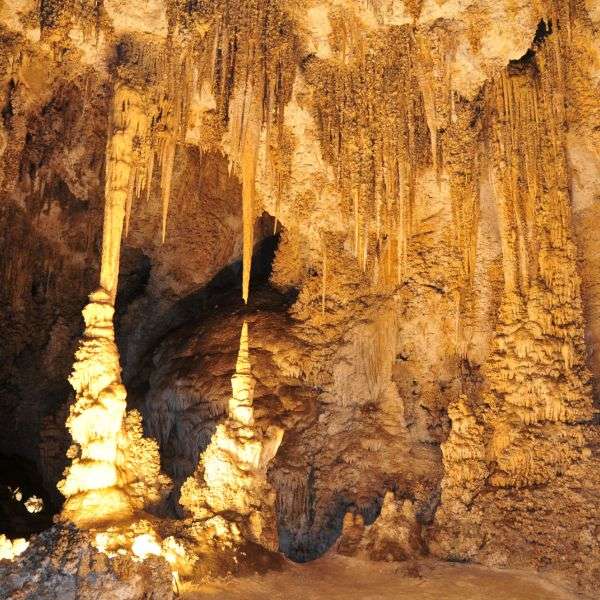
Formation of Speleothems
Speleothems, which are mineral deposits formed in caves, include stalactites, stalagmites, columns, draperies, and other intricate formations. These formations result from the precipitation of minerals, primarily calcite, as the dissolved limestone-rich water drips and evaporates within the cave chambers.
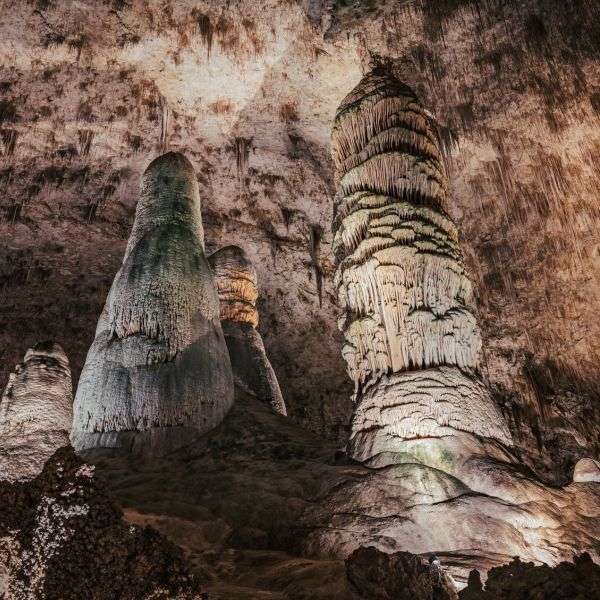
The Big Room
The Big Room, one of the largest cave chambers in the world, was formed through the collapse of a massive underground chamber. This collapse exposed a vast open space, creating the impressive room that visitors can explore today.
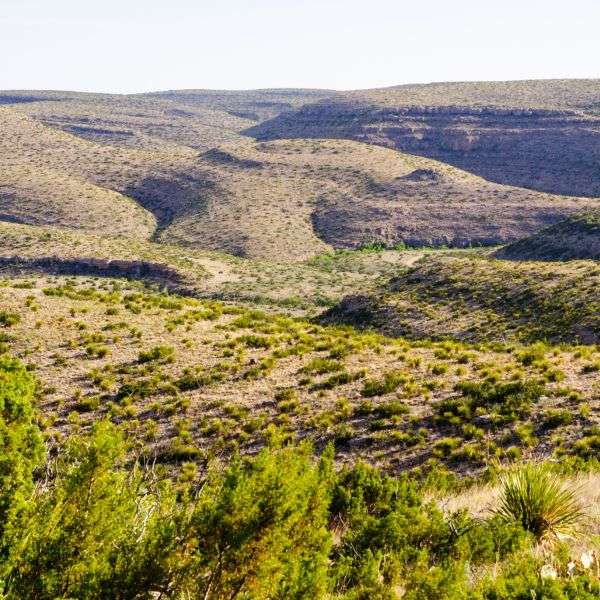
Faulting and Uplift
Tectonic forces and faulting played a role in the uplift of the Guadalupe Mountains, where Carlsbad Caverns is located. The geological forces led to the exposure of the limestone layers and the formation of the rugged landscape above the cave system.
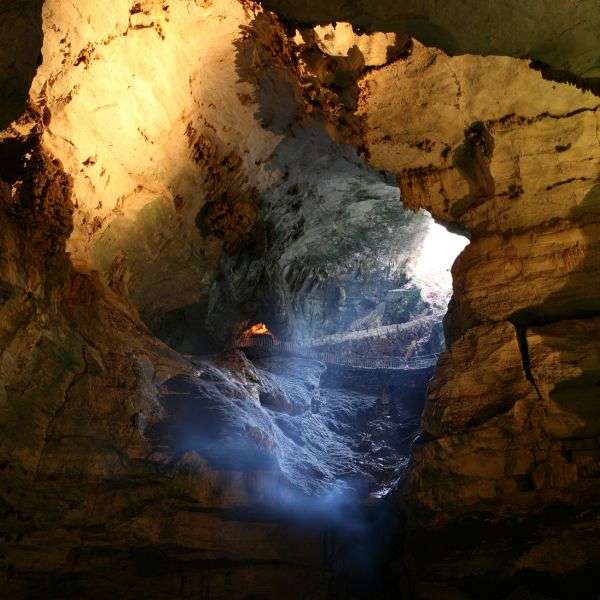
Karst Topography
The overall landscape of Carlsbad Caverns National Park exhibits karst topography, characterized by sinkholes, disappearing streams, and underground drainage systems. This type of terrain is typical in regions with soluble bedrock like limestone.
Plants
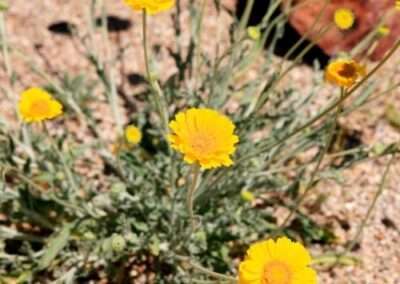
Carlsbad Caverns National Park, located in the Chihuahuan Desert of southeastern New Mexico, supports a diverse array of plant life adapted to its hot, dry environment. The park's vegetation includes agave, yucca, prickly pear and other cacti, creosote bush, sotol, grasses, and desert shrubs. Along canyons and other areas where moisture is more readily available, trees and other vegetation provide additional habitat for wildlife. Together, these hardy plants demonstrate the remarkable adaptations of desert flora and add color and ecological diversity to the rugged landscape surrounding the park's famous underground caves.
Animals
Mammals
Carlsbad Caverns National Park is home to a diverse range of mammals adapted to the hot, arid conditions of the Chihuahuan Desert and the rugged terrain of the Guadalupe Mountains. Many species are most active during the cooler hours of the day or at night.
Mexican Free-tailed Bat (Tadarida brasiliensis): Carlsbad Caverns is famous for its large population of Mexican free-tailed bats. These bats emerge from the cave in the evening to feed on insects and play an important role in controlling insect populations.
Mule Deer (Odocoileus hemionus): Mule deer inhabit the park's desert scrub, canyons, and higher-elevation areas. They are recognizable by their large ears and distinctive bounding gait.
Coyote (Canis latrans): Coyotes are adaptable predators and scavengers found throughout the park. They feed on a wide variety of prey and plant material and are often most active around dawn, dusk, and nighttime.
Black-tailed Jackrabbit (Lepus californicus): These large desert hares are well adapted to hot, dry conditions. Their oversized ears help dissipate heat, and they are generally most active during the cooler parts of the day.
Gray Fox (Urocyon cinereoargenteus): Gray foxes inhabit the park's desert and rocky habitats. They are primarily nocturnal and are notable for their ability to climb trees and rocky surfaces.
Mountain Lion (Puma concolor): Mountain lions occupy remote and rugged areas of the park. They are solitary, elusive predators that are rarely seen by visitors and are generally most active during the nighttime and twilight hours.
Collared Peccary (Pecari tajacu): Also known as javelinas, collared peccaries are social mammals that travel in groups. They are well adapted to desert environments and feed on a variety of plants, fruits, and other foods.
Black-tailed Prairie Dog (Cynomys ludovicianus): Black-tailed prairie dogs may occur in suitable grassland habitats around the park. These highly social rodents live in colonies and create extensive underground burrow systems.
Ringtail (Bassariscus astutus): Ringtails are small, nocturnal mammals related to raccoons. They are excellent climbers and are recognizable by their long, bushy tails marked with alternating dark and light rings.
White-nosed Coati (Nasua narica): White-nosed coatis are members of the raccoon family and are distinguished by their elongated snouts and ringed tails. They forage for insects, fruits, small animals, and other foods in wooded and rocky habitats.
Together, these mammals contribute to the ecological diversity of Carlsbad Caverns National Park, demonstrating the remarkable adaptations that allow wildlife to survive in the challenging conditions of the Chihuahuan Desert and Guadalupe Mountains.
Reptiles
Carlsbad Caverns National Park, situated in the Chihuahuan Desert of southeastern New Mexico, supports a variety of reptiles adapted to its hot, dry conditions, rocky terrain, and desert vegetation.
Western Diamondback Rattlesnake (Crotalus atrox): This venomous snake is well adapted to the desert environment and is recognized by its diamond-shaped markings and rattle. It helps regulate populations of rodents and other small animals.
Eastern Collared Lizard (Crotaphytus collaris): Eastern collared lizards are colorful, active reptiles commonly associated with rocky habitats. Males can display particularly bright blue, green, and yellow coloration and are often seen basking in the sun.
Greater Earless Lizard (Cophosaurus texanus): This small desert lizard lacks external ear openings and is well camouflaged against sandy and rocky surroundings. It is primarily active during the day and feeds on insects and other small invertebrates.
Regal Horned Lizard (Phrynosoma solare): Regal horned lizards have flattened bodies, prominent horns, and excellent camouflage. They primarily feed on ants and other insects and can use unusual defensive behaviors, including squirting blood from the eyes.
Striped Whipsnake (Masticophis taeniatus): This slender, nonvenomous snake is known for its speed and agility. It occurs in rocky areas, grasslands, and desert habitats, where it hunts small reptiles, mammals, and other prey.
Western Banded Gecko (Coleonyx variegatus): This small nocturnal gecko is adapted to the desert environment and has distinctive bands across its body. It emerges at night to hunt insects and other small invertebrates.
Texas Horned Lizard (Phrynosoma cornutum): Texas horned lizards have heavily spined bodies and distinctive horn-like projections on their heads. They are primarily insectivorous, with ants making up a major part of their diet, and rely on camouflage and defensive displays to avoid predators.
Sonoran Gopher Snake (Pituophis catenifer affinis): This large, nonvenomous constrictor is adapted to desert and grassland environments. Gopher snakes feed on rodents, birds, lizards, and other small animals and help control prey populations.
Long-nosed Leopard Lizard (Gambelia wislizenii): This fast-moving, diurnal lizard is recognizable by its long snout and spotted pattern. It inhabits open desert landscapes and feeds on insects, lizards, and other small animals.
Southwestern Fence Lizard (Sceloporus cowlesi): These lizards are commonly associated with rocky areas, shrubs, and trees. They bask in the sun during the day and feed primarily on insects and other small invertebrates.
Together, these reptiles demonstrate the remarkable adaptations that allow wildlife to survive in the hot and arid conditions of the Chihuahuan Desert. They also play important ecological roles as predators, prey, and regulators of insect and small-animal populations within Carlsbad Caverns National Park.
Birds
Carlsbad Caverns National Park provides a variety of habitats, ranging from desert scrub and grasslands to rocky canyons and higher-elevation woodlands. These diverse environments support a rich bird community, including resident species, seasonal visitors, and several species of conservation interest.
Mexican Spotted Owl (Strix occidentalis lucida): This threatened subspecies of spotted owl is associated with rugged canyon and forest habitats in the Southwest. It may occur in suitable higher-elevation and wooded areas of the park, where it hunts small mammals and other prey.
Black-chinned Hummingbird (Archilochus alexandri): These small hummingbirds are common during the warmer months and are attracted to flowering plants throughout the park. They feed primarily on nectar and small insects.
Mountain Bluebird (Sialia currucoides): Mountain bluebirds can be found in open habitats, particularly in higher-elevation areas. Their bright blue plumage makes them a distinctive sight, and they nest in cavities.
Turkey Vulture (Cathartes aura): Turkey vultures are commonly seen soaring over the park's canyons and desert landscapes. As scavengers, they play an important role in the ecosystem by consuming carrion.
American Kestrel (Falco sparverius): This small falcon inhabits open areas where it hunts insects, small mammals, reptiles, and birds. Males are especially recognizable by their combination of blue-gray and reddish-brown plumage.
Chihuahuan Raven (Corvus cryptoleucus): Chihuahuan ravens are well adapted to the desert environment and can be found in open areas of the park. They are social, intelligent birds that feed on a wide variety of foods.
Canyon Towhee (Melozone fusca): Canyon towhees are ground-foraging birds commonly associated with dry, brushy habitats. Their muted coloration provides excellent camouflage among rocks and desert vegetation.
Juniper Titmouse (Baeolophus ridgwayi): This small songbird inhabits pinyon-juniper woodlands and is often identified by its prominent crest and distinctive calls. It feeds on insects, seeds, and other plant material.
Northern Pygmy-Owl (Glaucidium californicum): This small, active owl occurs in suitable woodland habitats. Unlike many owls, it may hunt during daylight hours and feeds on small birds, mammals, insects, and reptiles.
Scott's Oriole (Icterus parisorum): Scott's orioles are striking desert birds with contrasting black and yellow plumage. They are associated with desert scrub and open woodland and feed on insects, fruit, and nectar.
Together, these birds illustrate the ecological diversity of Carlsbad Caverns National Park, where desert landscapes, rocky canyons, and higher-elevation habitats provide food, shelter, and nesting opportunities for a wide variety of avian species.
Fish
Carlsbad Caverns National Park is located in the arid Chihuahuan Desert and has very limited permanent surface water. As a result, fish diversity within the park is low compared with areas containing larger rivers and lakes. The park's aquatic habitats are primarily associated with springs, seeps, and other localized water sources.
Pecos Gambusia (Gambusia nobilis): Also known as the Pecos mosquitofish, this small freshwater fish is native to the Pecos River drainage and is adapted to warm, shallow aquatic habitats such as springs and streams. Its populations have been affected by habitat alteration, changes in water availability, and competition with introduced species.
Rio Grande Silvery Minnow (Hybognathus amarus): The Rio Grande silvery minnow is a federally endangered native fish of the Rio Grande basin. It is not generally considered a resident fish of Carlsbad Caverns National Park, but its conservation is important to the broader region's aquatic ecosystems. Habitat loss, altered river flows, and other environmental pressures have contributed to its decline.
Overall, fish are a relatively minor component of Carlsbad Caverns National Park's wildlife because of the area's limited permanent aquatic habitat. The park's biological diversity is instead dominated by desert-adapted plants and animals, while its caves provide especially important habitat for bats and other specialized organisms.
Amphibians
Amphibians are relatively uncommon in Carlsbad Caverns National Park because the Chihuahuan Desert provides limited permanent water and generally dry conditions. Most amphibians depend on seasonal rainfall, springs, seeps, or temporary pools for breeding and survival. Their presence is therefore often closely tied to periods of heavy rain and increased water availability.
Couch's Spadefoot (Scaphiopus couchii): Couch's spadefoots are highly adapted to arid environments and spend much of their lives underground, where they can avoid extreme heat and dryness. Following heavy summer rains, they may emerge rapidly to breed in temporary pools and other rain-filled depressions.
Rio Grande Leopard Frog (Lithobates berlandieri): Rio Grande leopard frogs are associated with permanent or semi-permanent aquatic habitats such as streams, ponds, springs, and wetlands. Although they occur in the broader Pecos and Rio Grande region, suitable habitat is limited within the park, making them less commonly encountered than desert-adapted amphibians.
Overall, amphibian diversity at Carlsbad Caverns National Park is limited by the region's arid climate and scarcity of permanent water. Species that occur in or around the park demonstrate remarkable adaptations to survive and reproduce in one of the driest environments in the United States.
“Something that is as remote as the galaxy, incomprehensible as a nightmare, and beautiful in spite of everything.”
- Ansel Adams
“Carlsbad Caverns National Park is best described as living artwork.”
―
"The beauty, the weirdness, the grandeur, and the omniscience absolved my mind of all thoughts of a world above - I forgot time, place, and distance."
- Jim White
Explore More With Us
Stay updated on National Parks EDU resources, park news, community updates, and and ways to explore, and protect.

National Parks Edu's mission is to help kids and families understand what makes these places so important. Because when you learn about nature, you start to care about protecting it.
National Parks EDU is an independent educational website and is not affiliated with, endorsed by, sponsored by, or officially connected to the National Park Service (NPS) or the U.S. government. © National Parks EDU. All Rights Reserved. October 18, 2026