Arches
National Park
Utah
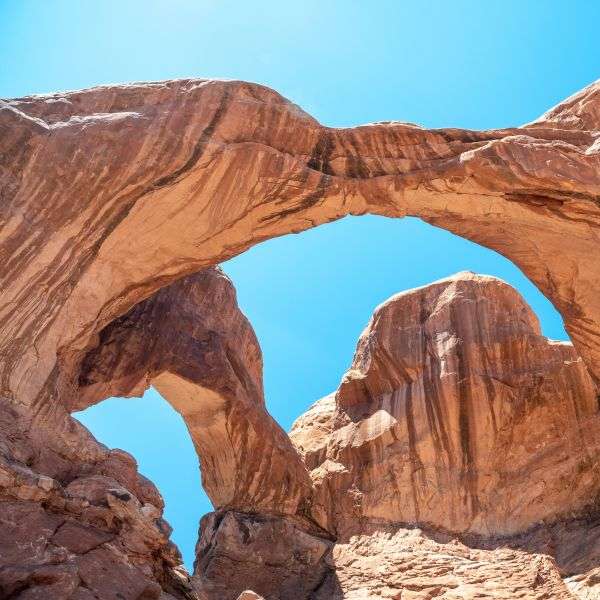
a desert landscape adorned with over 2,000 natural stone arches and contrasting red rock formations
Fast Facts
Location
southeastern Utah
Established in
1975
Established by
President Richard Nixon
Size
120 sq. miles
Known For
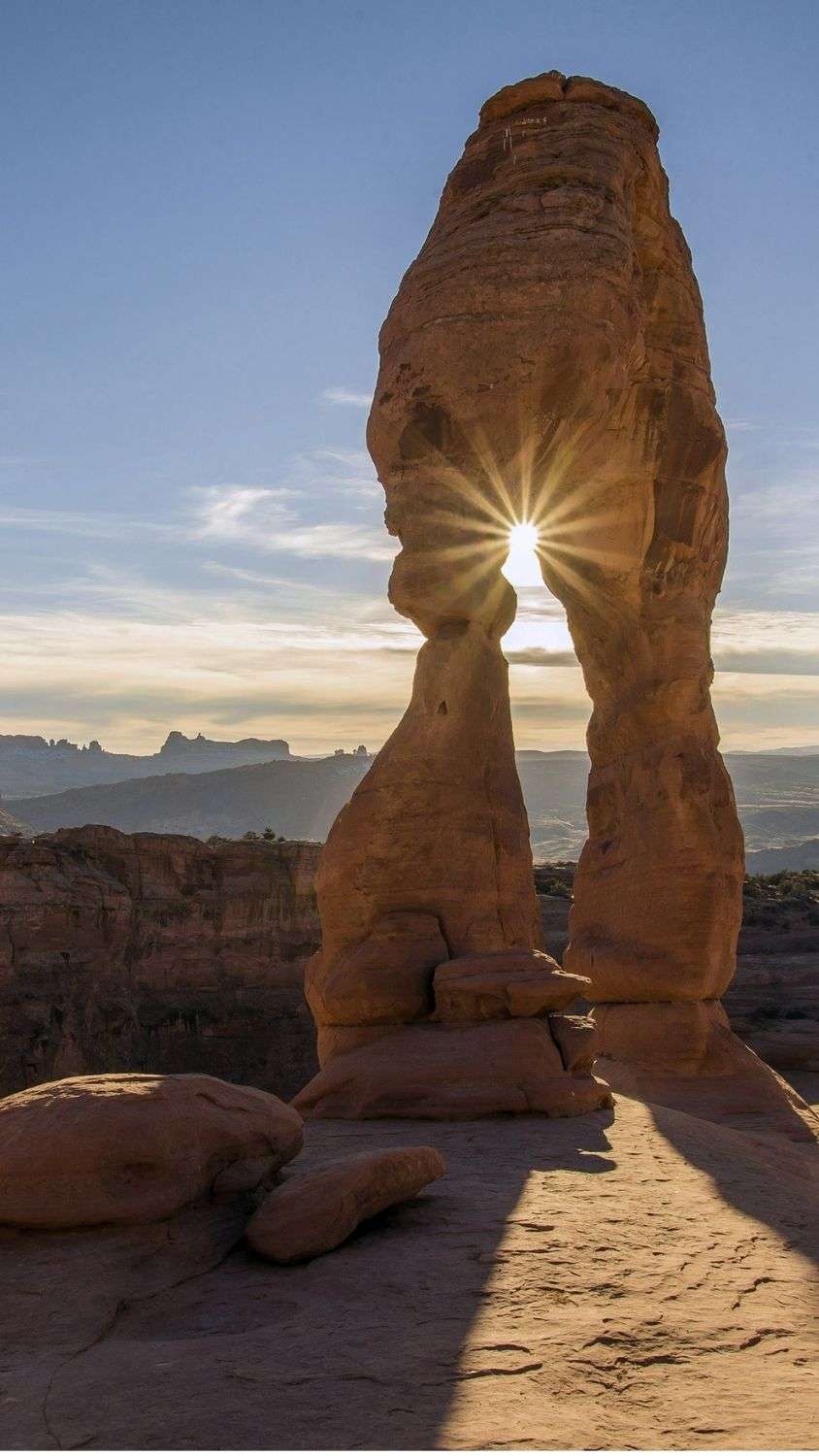
- Home to over 2,000 natural sandstone arches, including the iconic Delicate Arch and Landscape Arch
- Red rock landscapes and unique geological features, showcasing the region's vibrant and varied colors
- Panoramic views of the Colorado River, canyons, and expansive desert landscapes
History
Natural History and Formation
The geology of Arches National Park tells a story that goes back hundreds of millions of years. Ancient seas, deserts, buried salt deposits, tectonic forces, water, and erosion all helped create the red rock landscape seen today. These forces formed the fins, towers, canyons, and more than 2,000 natural stone arches found throughout the park.
Ancient Seas and Salt: More than 300 million years ago, the area was part of a large basin that was sometimes covered by seawater. As the water came and went, it left behind thick layers of salt. Over millions of years, sand, rock, and other sediments built up on top of the salt.
Jurassic Deserts: About 200 to 140 million years ago, the region went through major changes and was covered by large deserts and coastal environments. Layers of sand were deposited and eventually became sandstone. The Navajo Sandstone formed from ancient sand dunes, while the Entrada Sandstone formed from sand deposited in coastal and desert environments.
Salt and Tectonic Forces: The thick salt layers deep underground slowly moved and pushed the rock above them. Later, tectonic forces folded and fractured the rock. These movements created cracks called joints that would become important pathways for water and erosion.
Uplift of the Colorado Plateau: About 65 million years ago, the region began to rise. As the Colorado Plateau was lifted thousands of feet above sea level, layers of rock that had been buried deep underground were slowly exposed at the surface.
Water and Erosion: Water is one of the most important forces shaping Arches today. Rain and melting snow enter cracks in the sandstone. In winter, water can freeze and expand inside these cracks, breaking pieces of rock away. Over time, these processes weaken and reshape the sandstone.
Formation of Fins and Arches: As erosion continued, tall, narrow walls of sandstone called fins formed. Water slowly wore away weaker parts of these fins, creating holes. When these openings became large enough, they formed the natural arches that give the park its name. Most of the park's arches formed in the Entrada Sandstone.
Ongoing Change: The landscape of Arches is still changing. Erosion continues to widen cracks and openings in the sandstone. Eventually, every arch will collapse, although some may remain standing for thousands or even millions of years. The collapse of Wall Arch in 2008 is one example of how the landscape continues to change.
The Big Idea: Arches National Park was shaped by hundreds of millions of years of geological change. Ancient salt deposits, desert sands, tectonic forces, water, ice, and gravity all played a role in creating the remarkable landscape visitors see today.
Native History
Arches National Park has a long Native American history. Indigenous people have lived in and traveled through this region for thousands of years. Evidence found in the park includes stone tools, rock art, and other archaeological remains.
Early Peoples: Hunter-gatherers began visiting the area about 10,000 years ago. They used local plants and animals for food and found rocks such as chert and chalcedony that were useful for making tools.
Archaic Peoples: For thousands of years, Archaic peoples lived and traveled across the region. They hunted animals, gathered plants, and made tools from stone. Evidence of their activities can still be found in the park.
Ancestral Puebloans: About 2,000 years ago, Ancestral Puebloan people began farming in the Four Corners region. They grew crops such as corn, beans, and squash. Their presence in the Arches area is shown through rock art and stone tools. Because Arches was near the northern edge of their territory, they may have visited the area seasonally.
Fremont Peoples: Fremont cultures lived in the region at about the same time as the Ancestral Puebloans. Archaeologists have found evidence of their traditions, including pottery, tools, and rock markings.
Ute and Paiute Peoples: After Ancestral Puebloan and Fremont peoples began leaving the area about 700 years ago, nomadic groups such as the Ute and Paiute moved into the region. These peoples have longstanding cultural connections to the Colorado Plateau.
Rock Art: Petroglyphs and pictographs are some of the most visible signs of Indigenous history in Arches. These markings tell us that people returned to this landscape for generations. Some rock art was created much later, including Ute images showing people on horseback.
Cultural Connections Today: Arches National Park is connected to the ancestral homelands of many Indigenous peoples, including the Ute, Paiute, Navajo, Hopi, Zuni, and others. These connections continue today, and the National Park Service works to protect and respect the park's cultural resources.
Respecting Cultural Sites: Archaeological sites and rock art are important parts of the park's history. Visitors should never touch, climb on, or remove anything from these places. Protecting these resources helps preserve them for future generations.
The Native American history of Arches National Park is much older than the park itself. The tools, rock art, and other evidence found throughout the landscape help tell the story of the people who have lived in and traveled through this region for thousands of years.
Preservation
The preservation history of Arches National Park shows how people worked over many years to protect its unique rock formations, landscapes, and cultural resources.
1929 – Arches National Monument: President Herbert Hoover established Arches National Monument on April 12, 1929. The monument was created to protect the area's unusual sandstone formations, including arches, natural bridges, windows, spires, and balanced rocks. At first, the monument covered only a small area of what is now the national park.
Growing the Monument: Over the years, the boundaries of Arches National Monument were expanded several times. New lands were added to protect more of the area's important geological and cultural resources. In 1938, President Franklin D. Roosevelt greatly increased the size of the monument.
1971 – Arches National Park: On November 12, 1971, Congress established Arches National Park. President Richard Nixon signed the law that changed the area from a national monument to a national park. The change recognized the area's importance as a place of national natural and scenic value.
National Park Service: Today, the National Park Service manages Arches National Park. Its work includes protecting the park's geology, plants, animals, archaeological sites, and other resources while allowing visitors to enjoy and learn about the landscape.
Protecting the Night Sky: Arches is also known for its dark night skies. In 2019, the park was named an International Dark Sky Park. This recognition highlights the importance of protecting natural darkness and reducing the effects of light pollution.
Research and Conservation: Scientists and researchers study the park's geology, wildlife, plants, and cultural resources. This research helps park managers understand changes in the environment and make decisions about how to protect the park.
Preserving Arches Today: Protecting Arches is an ongoing effort. Millions of visitors come to experience its famous red-rock landscape, so the park must balance public access with the protection of its natural and cultural resources.
Today, Arches National Park protects one of the world's most remarkable collections of natural stone arches and other desert formations. Its preservation is an ongoing effort to make sure these special places remain for future generations.
Future Preservation
Protecting Arches National Park for the future comes with many challenges. The park must balance millions of visitors with the need to protect its desert landscape, wildlife, cultural sites, and natural resources.
Visitor Impact: Arches is one of the most popular national parks in the United States. Heavy visitation can lead to crowded roads and parking areas, damage to plants and soil, and wear on popular trails. The National Park Service continues to look for ways to manage crowds while giving visitors a safe and enjoyable experience.
Traffic and Parking: During busy times of the year, roads and parking areas can become very crowded. Some popular trailheads may fill early in the day. Managing traffic and finding ways to improve access are important parts of protecting the park and its visitors.
Climate Change: Rising temperatures and changes in weather can affect the desert environment. Arches already experiences very hot and dry conditions, and extreme heat can be dangerous for visitors and wildlife. Changes in temperature and water availability may also affect plants and animals that live in the park.
Water Resources: Water is limited in the desert. Changes in rainfall and other environmental conditions can affect the plants and animals that depend on the park's small streams, springs, and other water sources. Protecting these areas is important for the health of the desert ecosystem.
Invasive Species: Non-native plants can compete with native species and change the natural balance of the desert. Plants such as tamarisk, cheatgrass, Russian knapweed, and Russian olive have been identified as concerns in the region. The National Park Service works to study and manage these species.
Cultural Resource Protection: Arches contains archaeological sites, petroglyphs, and other evidence of thousands of years of human history. These resources can be damaged by vandalism, theft, or visitors getting too close. Protecting them helps preserve the stories and history of the people connected to this land.
Protecting the Night Sky: Arches is known for its dark skies and was designated an International Dark Sky Park in 2019. Light from nearby communities can still affect the night sky. Protecting natural darkness is important for wildlife, astronomy, and the visitor experience.
Air and Water Quality: Pollution from outside the park can affect the air, water, and views within Arches. Because the park is part of a larger ecosystem, protecting its resources also requires cooperation with communities and organizations outside the park.
Limited Resources: Protecting a large national park requires staff, funding, research, and regular maintenance. Park managers must decide how to use available resources while addressing visitor needs and protecting natural and cultural resources.
Ongoing Conservation: Protecting Arches requires cooperation among park staff, scientists, local communities, Tribal Nations, visitors, and other partners. Through careful planning, research, and responsible visitor behavior, people can help protect the park's unique landscape for future generations.
Geography
Arches National Park, located in southeastern Utah, is famous for its red rock landscape and more than 2,000 natural stone arches. Over millions of years, wind, water, ice, and other natural forces have shaped the sandstone into arches, cliffs, fins, spires, and balanced rocks. The park's layers of sandstone tell the story of an ever-changing landscape shaped by ancient seas, deserts, erosion, and other geological forces.
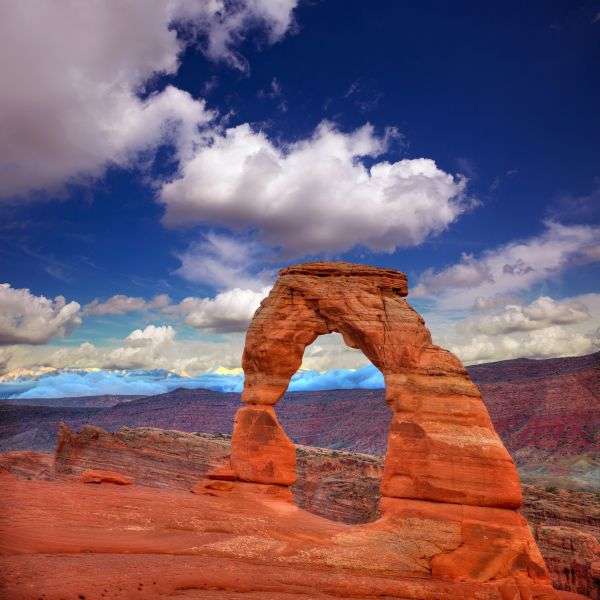
Natural Stone Arches
Arches National Park is famous for its natural stone arches, with over 2,000 documented arches within its boundaries. These arches are the result of erosion that has sculpted the Entrada and Navajo sandstone into various shapes over millions of years.
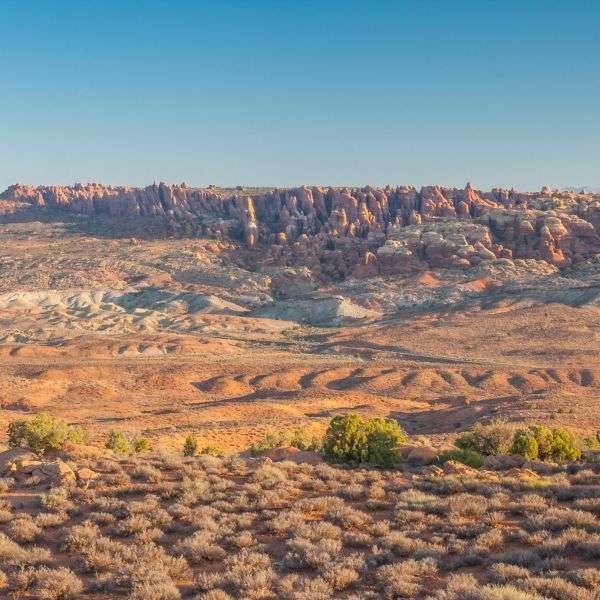
Colorado Plateau
The park is situated on the Colorado Plateau, a vast uplifted region known for its dramatic landscapes and diverse geological formations. This plateau extends across parts of Utah, Colorado, New Mexico, and Arizona.
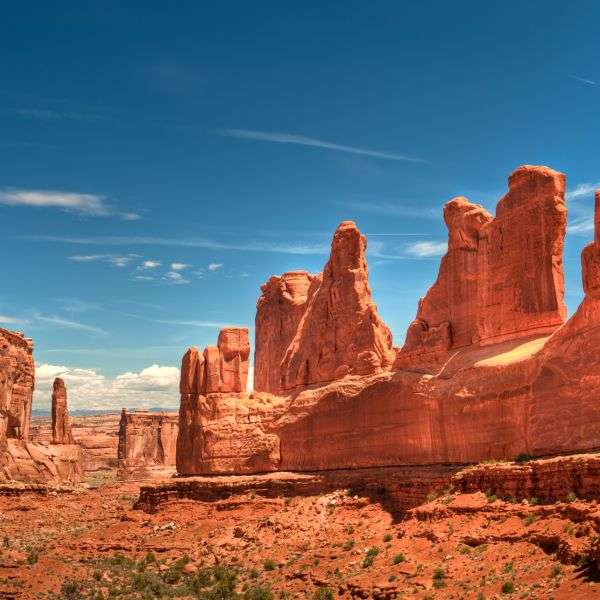
Rock Formations
The dominant rock formations in the park are the Entrada and Navajo sandstone layers. These sedimentary rocks give rise to the iconic features such as arches, fins, spires, and balanced rocks that characterize the landscape.
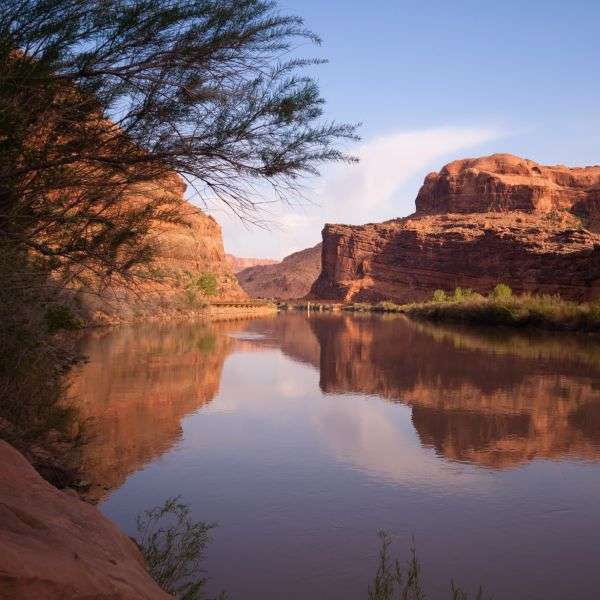
Colorado River
The Colorado River forms the southern boundary of the park. While the river itself is not within the park boundaries, it has played a crucial role in shaping the canyons and landscape through erosion over millions of years.
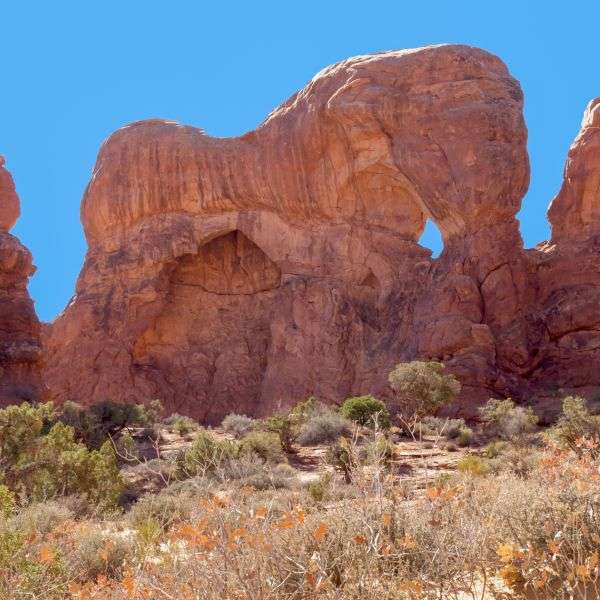
Elevation
The elevation of Arches National Park varies across the landscape, ranging from approximately 4,085 feet at the lowest point along the Colorado River to over 5,600 feet at the highest point on the Elephant Butte.
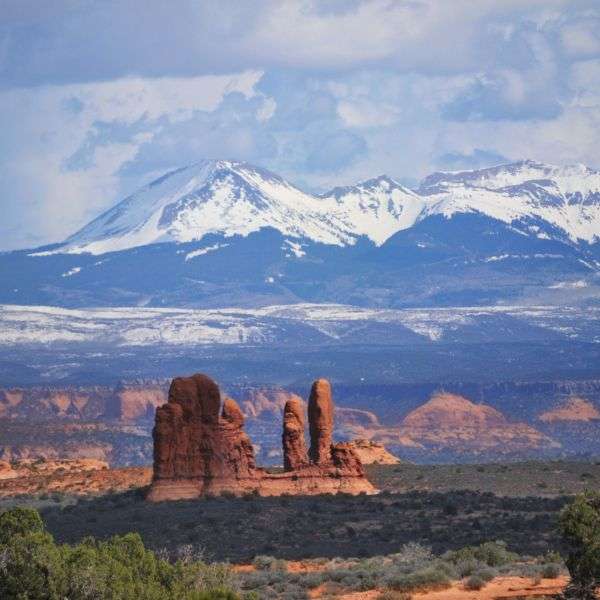
La Sal Mountains
The distant La Sal Mountains provide a contrasting backdrop to the red rock landscape of Arches National Park. Snow-capped peaks in the winter add to the visual diversity of the region.
Plants
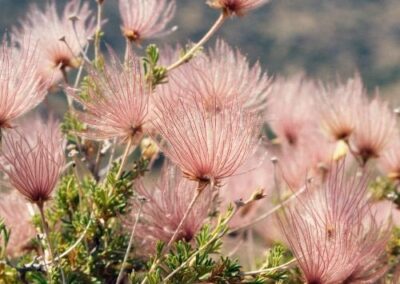
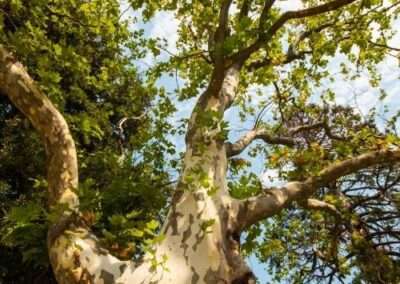
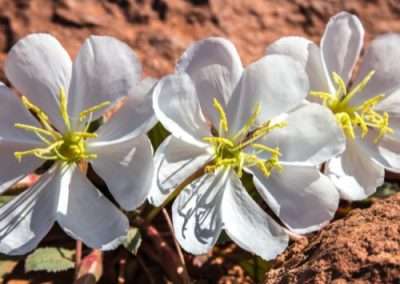
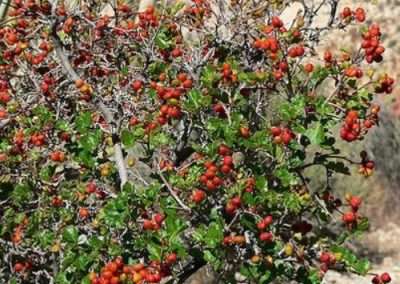
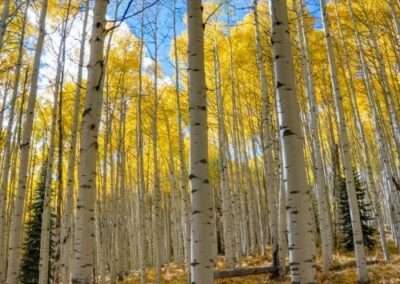
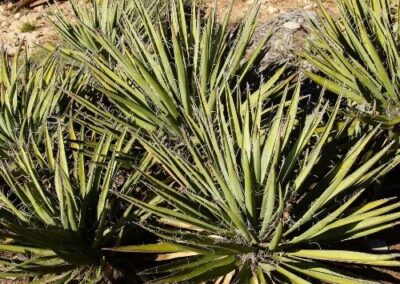
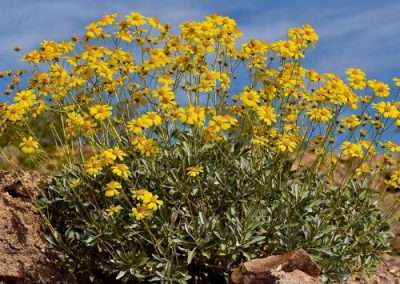
Arches National Park is home to a variety of plants that have adapted to the hot, dry desert environment. Visitors can find hardy shrubs, grasses, cacti, and wildflowers throughout the park. In spring, wildflowers can add bright colors to the red-rock landscape. These plants have special adaptations that help them survive with little water, making them an important part of the park's desert ecosystem.

Animals
Mammals
Arches National Park is home to many mammals that have adapted to the hot, dry desert environment. Almost 50 species of mammals are known to live in the park. Many are most active at night or around sunrise and sunset, so visitors may see tracks or other signs of wildlife more often than the animals themselves.
Mule Deer (Odocoileus hemionus): Mule deer are one of the mammals visitors may see in Arches. They are named for their large ears and can often be found feeding on plants in the cooler parts of the day.
Desert Cottontail (Sylvilagus audubonii): These small rabbits are well adapted to the desert. They are often active around sunrise and sunset and feed on grasses and other plants.
Coyote (Canis latrans): Coyotes are adaptable animals that live in many different environments. In Arches, they are most active during the cooler parts of the day and may sometimes be seen by visitors.
Black-tailed Jackrabbit (Lepus californicus): Black-tailed jackrabbits have very long ears and powerful back legs. They are well adapted to desert life and are most active during the cooler parts of the day.
Rock Squirrel (Otospermophilus variegatus): Rock squirrels are commonly seen around the park's rocky areas. Unlike many desert mammals, they are active during the day. Visitors should never feed them or other wildlife.
Striped Skunk (Mephitis mephitis): Striped skunks are mostly active at night. They use their strong sense of smell to find insects, plants, and other foods.
Bobcat (Lynx rufus): Bobcats are secretive cats that live in the park's rocky and brushy areas. They are rarely seen because they are mostly active at night.
Mountain Lion (Puma concolor): Mountain lions live in the Arches area but are very rarely seen. They need large areas to find enough food and water and may travel long distances through the desert.
Desert Bighorn Sheep (Ovis canadensis): Desert bighorn sheep live in Arches year-round. They are specially adapted to steep, rocky terrain and can move across cliffs and slopes with ease. Even though they live in the park, they are rarely seen.
North American Porcupine (Erethizon dorsatum): Porcupines are found in Arches and are usually active around dawn and dusk. They use their sharp quills as protection from predators and feed on plants.
Bats: Several species of bats live in Arches. They are mostly active at night, when they hunt insects. Rock formations and other natural features provide places for bats to rest and shelter.
Black Bear (Ursus americanus): Black bears are not common in Arches, but they occasionally wander into the park from the nearby La Sal Mountains. These visits are most often reported in late summer and early fall.
Arches may look quiet at first, but many mammals live among its rocks, canyons, and desert plants. Some are easy to spot, while others are rarely seen. Looking for tracks, scat, and other signs of wildlife can be a great way to learn about the animals that call the park home.
Reptiles
Arches National Park is home to about 21 species of reptiles, including lizards and snakes. These animals are well adapted to the park's hot, dry desert environment. Reptiles help keep the ecosystem healthy by eating insects and small animals. During hot summer days, many reptiles can be seen resting on rocks, looking for food, or moving quickly through the desert.
Western Collared Lizard (Crotaphytus collaris): These colorful lizards are often seen sitting on rocks and searching for insects. They are active during the day and are known for their bright markings and strong legs.
Desert Spiny Lizard (Sceloporus magister): Desert spiny lizards have rough, spiny scales that help protect them. They are often found on rocks and other warm surfaces, where they search for insects.
Common Side-blotched Lizard (Uta stansburiana): These small lizards are common throughout the park. They have a dark spot on each side of their body and feed mainly on insects and other small invertebrates.
Plateau Fence Lizard (Sceloporus tristichus): Plateau fence lizards can often be found on rocks, trees, and other surfaces where they can warm themselves in the sun. They eat insects and other small animals.
Ornate Tree Lizard (Urosaurus ornatus): These small lizards are often found climbing on trees, shrubs, and rocks. Their coloring helps them blend into the desert surroundings.
Northern Whiptail (Aspidoscelis septemvittata): Northern whiptails are fast-moving lizards that use their long tails to help them balance as they run. They are active during the day and search the ground for insects and other small prey.
Plateau Striped Whiptail (Aspidoscelis velox): This fast-moving lizard has light and dark stripes along its body. The species is unusual because it is made up entirely of females, and offspring are genetic copies of their mothers.
Long-nosed Leopard Lizard (Gambelia wislizenii): These larger lizards have spotted patterns that help them blend into the desert. They hunt insects and other small animals and can sometimes eat smaller lizards.
Gopher Snake (Pituophis catenifer): Gopher snakes are non-venomous snakes that help control populations of rodents and other small animals. They are usually harmless to people and will normally try to escape when approached.
Midget-faded Rattlesnake (Crotalus viridis concolor): This small rattlesnake is a subspecies of the western rattlesnake. It is venomous and is usually active at night during the hottest part of the year. Visitors should never approach or disturb a rattlesnake.
Arches' reptiles have many ways to survive in the desert. They use rocks and shade to control their body temperature, and many become inactive during very cold or very hot conditions. If you see a reptile in the park, give it plenty of space and watch it from a safe distance.
Birds
Arches National Park is home to a variety of bird species that are well adapted to its desert landscapes, rocky cliffs, and pinyon-juniper woodlands. Visitors may see birds soaring above the park, perched on rock formations, or moving through desert plants. The park is also an important stop for some migratory birds.
Golden Eagle (Aquila chrysaetos): Golden eagles can be seen soaring above the park's cliffs and canyons. They use their strong eyesight and powerful flight to hunt small animals.
Red-tailed Hawk (Buteo jamaicensis): Red-tailed hawks are common birds of prey that may be seen soaring above the park or perched on high rocks. They hunt small mammals, birds, and reptiles.
Turkey Vulture (Cathartes aura): Turkey vultures are often seen gliding high above the park. They use rising warm air to soar and help the ecosystem by feeding on dead animals.
Common Raven (Corvus corax): Common ravens are year-round residents of Arches. They are intelligent birds that can often be seen flying between rock formations or searching for food.
Western Scrub-Jay (Aphelocoma californica): Western scrub-jays live in areas with shrubs and pinyon-juniper trees. They are active, vocal birds that feed on seeds, fruits, insects, and other foods.
Rock Wren (Salpinctes obsoletus): Rock wrens are well suited to the park's rocky landscape. They often move among rocks while searching for insects and are sometimes easier to hear than see.
Juniper Titmouse (Baeolophus ridgwayi): Juniper titmice live mainly in pinyon-juniper woodlands. These small birds feed on insects, seeds, and other foods and can be heard calling from the trees.
Canyon Wren (Catherpes mexicanus): Canyon wrens are closely associated with rocky cliffs and canyons. Their clear, ringing calls can often be heard echoing through the park.
White-throated Swift (Aeronautes saxatalis): White-throated swifts are fast-flying birds that spend much of their time in the air. They often fly around cliffs and rock walls while catching insects.
Peregrine Falcon (Falco peregrinus): Peregrine falcons can be found in the park and may nest on tall cliffs. They are powerful hunters and are known for their extremely fast dives when catching other birds.
Fish
Arches National Park is located in the dry desert of southeastern Utah, where water is limited. The park does not have permanent rivers or large natural lakes that support fish populations. Most streams and pools are temporary, filling with water after rain or snowmelt and often drying out during the warmer months. Because of these conditions, there are no native fish populations in the park's streams or pools.
Colorado River: The Colorado River flows just south of Arches National Park and supports many species of fish. Although the river is outside the park, it is an important part of the larger ecosystem surrounding Arches. Visitors may encounter the river and its aquatic wildlife in nearby areas.
Desert Water Sources: Water in Arches is found mainly in temporary streams, potholes, springs, and small pools. These water sources are important for wildlife, even though they do not provide permanent habitat for fish.
Amphibians
Arches National Park is located in the dry desert of southeastern Utah, where permanent water sources are limited. Even so, a few amphibian species can survive in the park by using temporary pools, springs, and other wet areas. These animals are adapted to the desert and spend much of their lives away from water.
Red-spotted Toad (Anaxyrus punctatus): Red-spotted toads are well adapted to the desert and may be found near rocky areas and temporary pools after rain. They can remain hidden during dry periods and become active when conditions are wet.
Woodhouse's Toad (Anaxyrus woodhousii): Woodhouse's toads may be found near temporary water sources in the region. They breed in pools and streams that form after heavy rain.
Great Plains Toad (Anaxyrus cognatus): Great Plains toads are adapted to dry environments and can survive long periods without water. They may become active after summer storms when temporary pools form.
Western Chorus Frog (Pseudacris triseriata): Western chorus frogs may occur in suitable wet areas in the region. They use temporary pools and other shallow water sources for breeding.
Desert Spadefoot (Scaphiopus couchii): Desert spadefoots are specially adapted to desert life. They spend much of their time underground and can quickly emerge, breed, and lay eggs after heavy rainfall creates temporary pools.
“Mother Nature is a master sculptor and in no place is that more evident than at Arches National Park.”
―
"A landscape of contrasting colors, land forms, and textures unlike any other. The park has over 2,000 natural stone arches, hundreds of soaring pinnacles, massive rock fins, and giant balanced rocks. This red-rock wonderland will amaze you with its formations, refresh you with its trails, and inspire you with its sunsets."
- National Park Services
Explore More With Us
Stay updated on National Parks EDU resources, park news, community updates, and and ways to explore, and protect.

National Parks Edu's mission is to help kids and families understand what makes these places so important. Because when you learn about nature, you start to care about protecting it.
National Parks EDU is an independent educational website and is not affiliated with, endorsed by, sponsored by, or officially connected to the National Park Service (NPS) or the U.S. government. © National Parks EDU. All Rights Reserved. October 18, 2026