Badlands
National Park
South Dakota
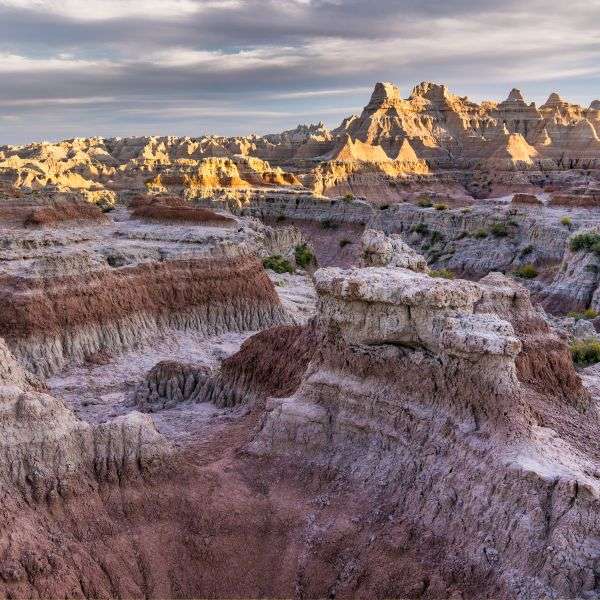
a striking landscape known for rugged canyons, towering spires, and colorful layered rock formations
Fast Facts
Location
southwestern South Dakota
Established in
1978
Established by
President Jimmy Carter
Size
379 sq. miles
Known For
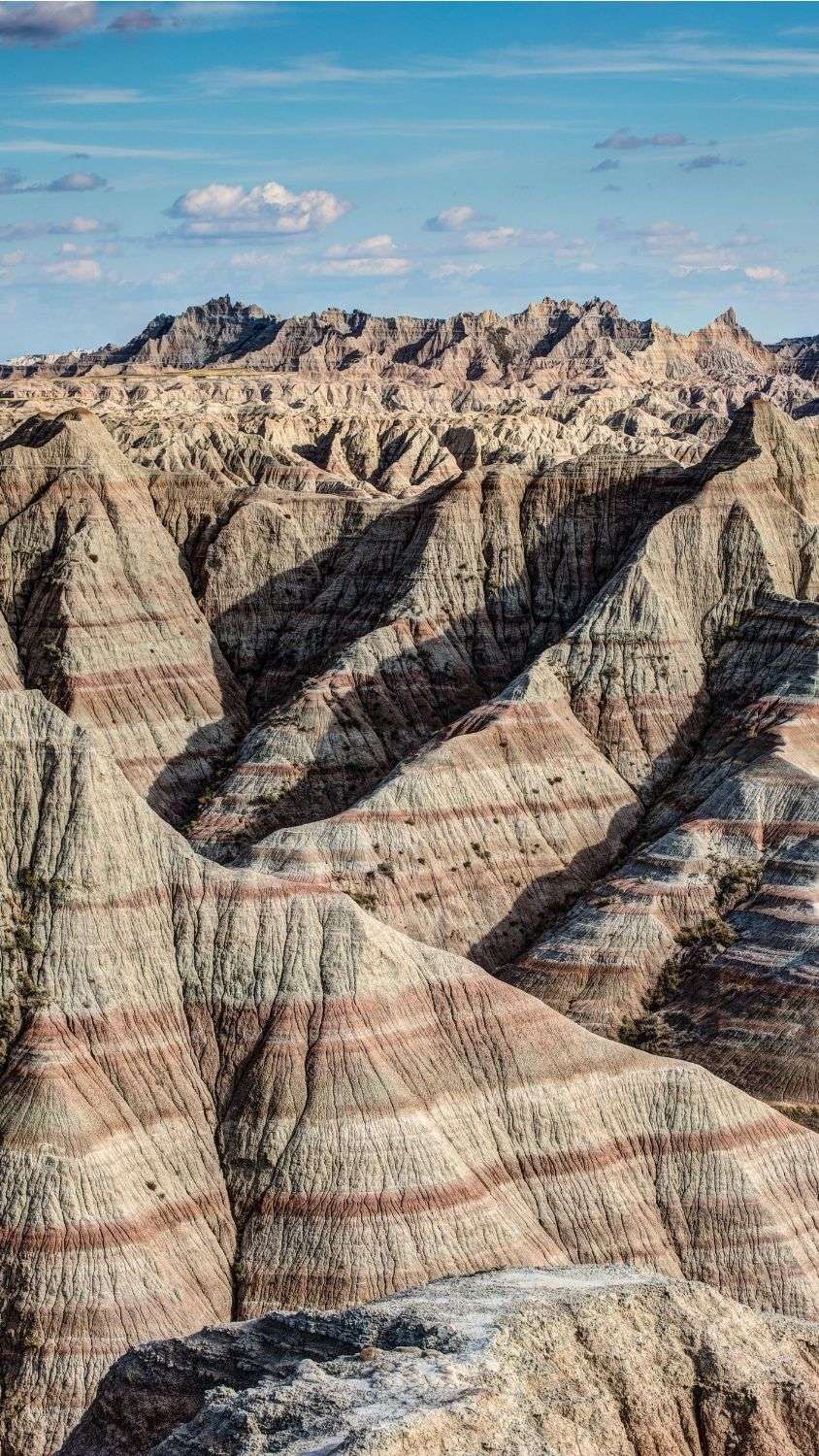
- Renowned for its distinctive and otherworldly landscape, featuring eroded buttes, towering spires, and deep canyons formed by sedimentary rock layers
- An abundance of well-preserved fossils from ancient mammals like rhinoceroses, horses, and sabertooth cats, provides valuable insights into the region's prehistoric biodiversity
- Home to a variety of wildlife, including bison, bighorn sheep, prairie dogs, and black-footed ferrets
History
Natural History and Formation
Badlands National Park has a fascinating geological history that stretches back millions of years. Its colorful rock layers, steep cliffs, and deep canyons were shaped by ancient seas, rivers, wind, and erosion.
Ancient Sea: About 75 million years ago, a shallow inland sea called the Western Interior Seaway covered much of the Great Plains. It left behind layers of mud and sediment that later became rock. These ancient layers are still found in the Badlands today.
Layers of Sediment: Over millions of years, rivers, wind, and other natural forces added new layers of sand, silt, clay, and volcanic ash. The youngest major layers in the park were deposited about 28 million years ago. Together, these layers created the rocks that make up the Badlands landscape.
Erosion: About 500,000 years ago, rivers began cutting deeply into the layers of rock. Rain, snow, and wind continue to wear away the softer rock today. This erosion has created the park's narrow canyons, steep walls, pinnacles, and spires.
Fossils: Erosion has exposed many fossils throughout the park. The Badlands contain fossils from both ancient marine animals and land animals. Fossils from the area include ammonites and other sea creatures from the time of the ancient inland sea, as well as mammals such as ancient horses, rhinoceroses, and oreodonts from later periods.
Ongoing Erosion: The Badlands continue to change today. The park's formations erode at an average rate of about one inch each year. Rainwater carries small pieces of rock and soil away, slowly changing the shape of the landscape.
Native History
Badlands National Park has a long Native American history. People have lived in and traveled through the Badlands for more than 12,000 years. Today, the area remains an important place for the Oglala Lakota and other Indigenous nations.
Ancient People: The oldest known archaeological site in the Badlands is more than 12,000 years old. Early people traveled through the area as hunters and gatherers. Archaeologists have found evidence of camps, fires, animal butchering, and stone tools.
Plains Cultures: Over thousands of years, different Indigenous groups used the Badlands as a seasonal hunting and gathering area. Archaeological evidence includes stone tools, pottery, fire pits, and bison remains. The exact history of some of these early groups is still being studied.
Arikara: The Arikara were among the Indigenous peoples who lived in and used the Badlands region. They were known for farming, hunting, and living in villages along the Missouri River and surrounding areas.
Oglala Lakota: The Oglala Lakota have a deep and continuing connection to the Badlands. By the 1700s, the Lakota had become the main Indigenous group in the area. The Badlands were part of a much larger homeland where the Lakota hunted bison and gathered plants and other resources.
Cultural and Spiritual Importance: The Badlands hold deep cultural and spiritual meaning for the Oglala Lakota. The landscape, animals, water, and plants are connected to Lakota traditions and stories. The South Unit of the park is especially important to the Oglala Lakota and is located within the Pine Ridge Indian Reservation.
European-American Settlement: During the 1800s, settlers, soldiers, traders, and homesteaders entered the region. These changes greatly affected the Lakota way of life. The loss of land and bison, along with U.S. government policies, caused major hardship for Indigenous communities.
Wounded Knee: In 1890, the Wounded Knee Massacre took place near the Badlands on the Pine Ridge Reservation. U.S. soldiers killed hundreds of Lakota men, women, and children. The event remains an important and painful part of Lakota history.
Today: The National Park Service works with the Oglala Sioux Tribe and other Indigenous nations to protect cultural resources and share the history of the Badlands. The park continues to recognize the living connections Indigenous peoples have with this land.
Preservation
The preservation history of Badlands National Park reflects efforts to protect its unique rock formations, fossils, wildlife, prairie, and cultural resources. Over time, the protected area grew and gained stronger protections for its natural and cultural treasures.
National Monument: In 1929, Congress authorized the creation of Badlands National Monument to protect the area's unusual landscape and important fossil beds. The monument was officially established on January 25, 1939, after South Dakota completed the requirements for creating the protected area.
Expansion: In 1968, Congress expanded Badlands National Monument by about 134,000 acres. Much of this land became part of the South Unit, which is located within the Pine Ridge Indian Reservation and has strong connections to the Oglala Lakota.
Wilderness Protection: In 1976, about 64,000 acres of the monument were designated as wilderness. This added another layer of protection for the area's natural landscapes and wildlife.
National Park: On November 10, 1978, Congress redesignated Badlands National Monument as Badlands National Park. The change recognized the area's importance as a place of natural beauty, scientific research, wildlife habitat, and cultural history.
Fossil Preservation: Badlands National Park protects one of the world's richest fossil beds. Scientists continue to study fossils found in the park, helping us learn about animals and environments that existed millions of years ago. The National Park Service also works to protect these fossils from damage and illegal collecting.
Natural Resource Protection: The National Park Service works to protect the park's mixed-grass prairie, wildlife, water, and other natural resources. Management includes monitoring ecosystems, protecting native species, and addressing threats such as invasive species.
Cultural Preservation: The park also protects important archaeological and cultural resources. The National Park Service works with the Oglala Sioux Tribe and other Indigenous communities to better understand and protect places connected to Native American history and culture.
Dark Sky Protection: In July 2026, Badlands National Park became an International Dark Sky Park. The designation recognizes the park's efforts to protect its naturally dark night skies and improve lighting practices. Dark skies are also important for nighttime wildlife and visitors who come to enjoy the stars.
Today: Badlands National Park continues to balance conservation with visitor access and education. Through scientific research, resource protection, and partnerships with Indigenous communities, the park works to preserve its natural and cultural heritage for future generations.
Future Preservation
Protecting Badlands National Park for the future comes with several challenges. The National Park Service works to protect the park's unusual landscape, wildlife, fossils, plants, and cultural resources while also allowing visitors to enjoy the area.
Erosion: Erosion is one of the biggest challenges in the Badlands. Rain, snow, and wind continue to wear away the soft rock. While erosion creates the park's famous landscape, it can also damage trails, roads, fossils, and other important resources.
Invasive Species: Non-native plants can compete with native grasses and other plants. The park works to control invasive species and protect the native prairie that provides food and shelter for wildlife.
Climate Change: Changes in temperature and rainfall can affect the park's plants, animals, water, and soil. Warmer and drier conditions may also change where certain species can live and how the prairie grows.
Wildlife Protection: Badlands provides habitat for many animals, including bison, bighorn sheep, prairie dogs, and black-footed ferrets. Protecting these animals requires monitoring their populations and protecting the habitats they depend on.
Visitor Impact: Large numbers of visitors can put pressure on trails, roads, plants, and other park resources. Staying on designated trails, leaving fossils and rocks in place, and following park rules help reduce damage.
Fossil Protection: The Badlands are famous for their fossils, which are protected by federal law. Erosion naturally exposes new fossils, but visitors can also damage or remove them. The park works to document, study, and protect these important scientific resources.
Cultural Resources: The park contains archaeological sites and places connected to Native American history. Protecting these resources requires careful management and cooperation with Indigenous communities, including the Oglala Sioux Tribe.
Wildfire: Fire is a natural part of the Great Plains ecosystem, but managing wildfire can be challenging. Park managers must consider both the health of the prairie and the safety of visitors, nearby communities, and park facilities.
Water Resources: Water is limited in the Badlands. Changes in rainfall and drought can affect plants, animals, and park operations. Protecting available water is important for the health of the park's ecosystems.
Visitor Education: Teaching visitors how to safely enjoy the park is an important part of conservation. Simple actions, such as staying on trails, not collecting fossils, and leaving plants and wildlife undisturbed, can help protect the Badlands.
Limited Resources: Protecting a large national park requires staff, funding, research, and regular maintenance. The National Park Service must balance many needs while making sure important natural and cultural resources receive proper care.
Protecting Badlands National Park requires cooperation among the National Park Service, Indigenous communities, scientists, local communities, and visitors. By understanding these challenges and making responsible choices, we can help preserve the Badlands for future generations.
Geography
Badlands National Park, located in southwestern South Dakota, is known for its dramatic landscape of colorful rock formations, deep canyons, sharp ridges, and towering spires. Millions of years of sediment buildup, followed by erosion from water and wind, created the unique landscape visitors see today. The park's changing layers of rock also reveal a fascinating history of ancient environments and animals that once lived in the region.
Geological Formations
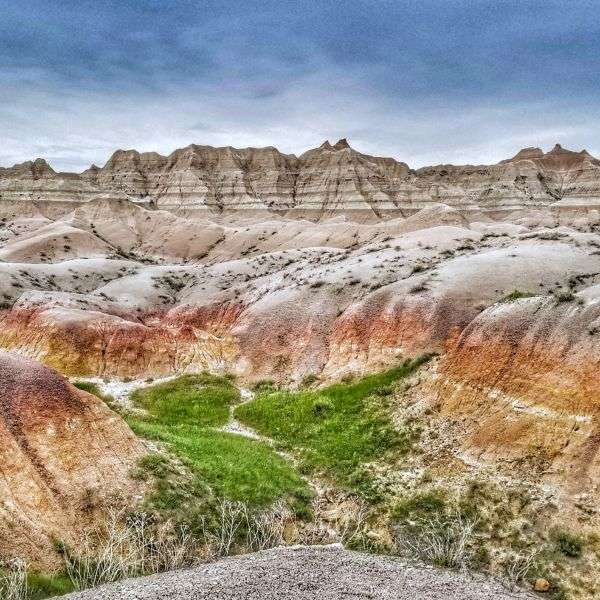
The park is renowned for its striking geological formations, which include eroded buttes, pinnacles, and deep canyons. The landscape is dominated by layered sedimentary rocks, primarily consisting of shale, siltstone, and sandstone, which have been sculpted by wind and water over millions of years.
Badlands Wall
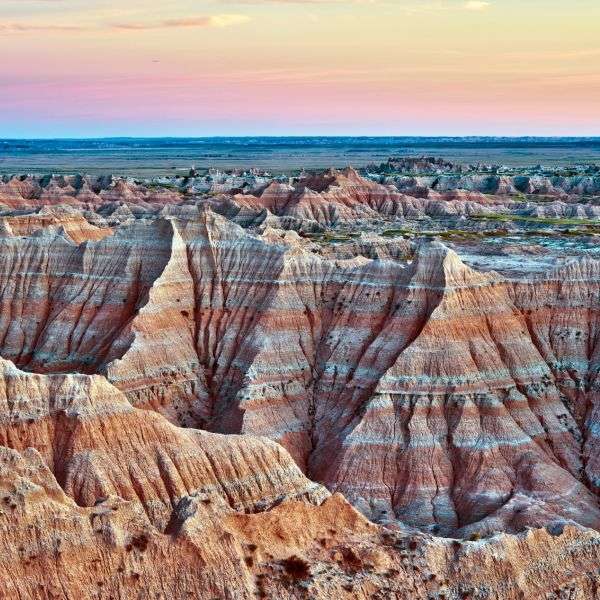
The Badlands Wall is a prominent feature that runs along the northern edge of the park. It is a steep escarpment that provides breathtaking views of the layered rock formations. The Wall is a result of differential erosion, where softer rock erodes more quickly than harder rock layers.
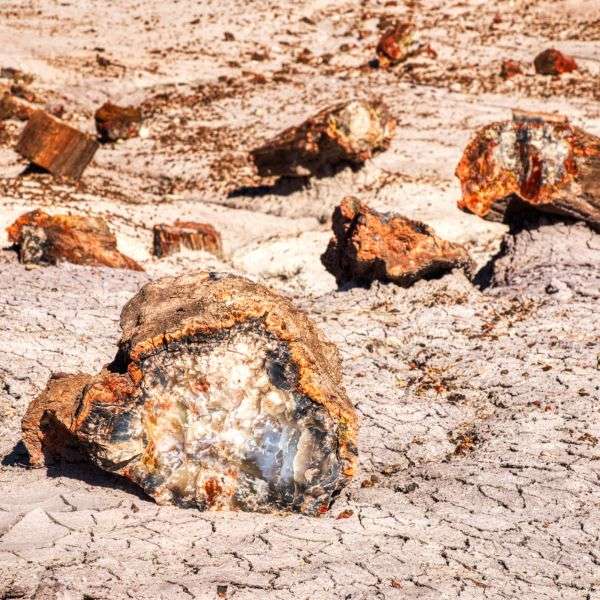
Fossil Beds
The park contains one of the world's richest fossil beds from the Oligocene epoch, approximately 33 to 23 million years ago. Fossils of ancient mammals, including rhinoceroses, horses, and sabertooth cats, have been discovered in the Badlands, providing valuable insights into the prehistoric biodiversity of the region.
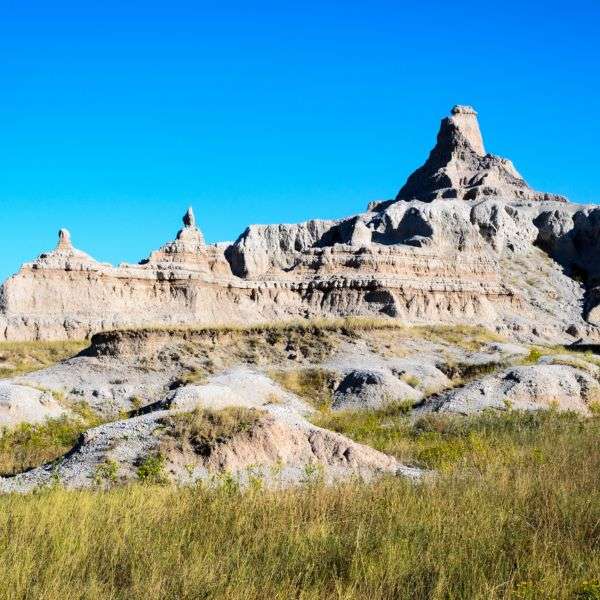
Erosional Features
The landscape is characterized by unique erosional features, including hoodoos (tall, thin spires of rock), gullies, and deep canyons. The constant process of erosion continues to shape the land, creating an ever-changing and dynamic environment.
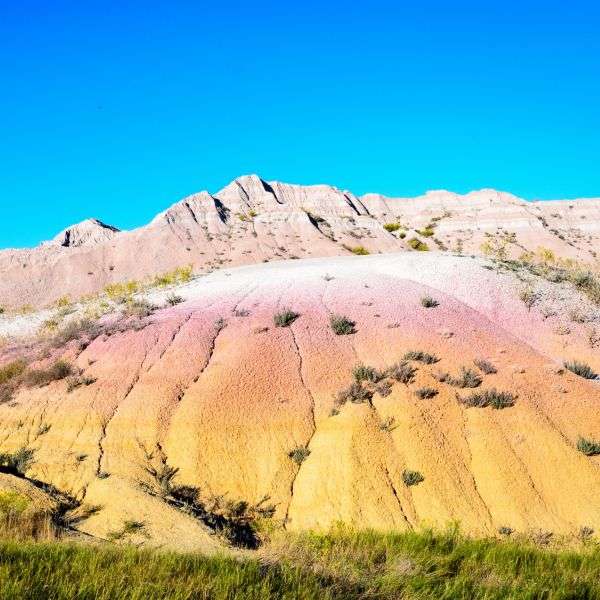
Colorful Layers
The exposed rock layers in the Badlands display a variety of colors, ranging from soft pinks and purples to vibrant yellows and oranges. These colors are indicative of different geological formations and sedimentary deposits.
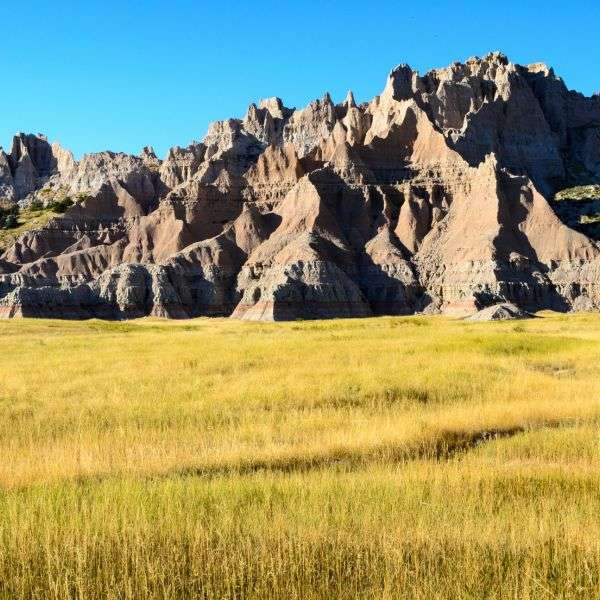
Mixed Grass Prairie
While the eroded formations are a prominent feature, the park also includes expansive mixed-grass prairie. The prairie ecosystem supports a variety of plant and animal species, including bison, bighorn sheep, prairie dogs, and various bird species.
Plants
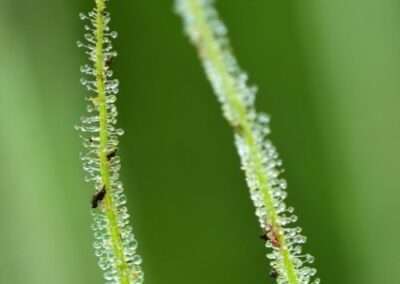
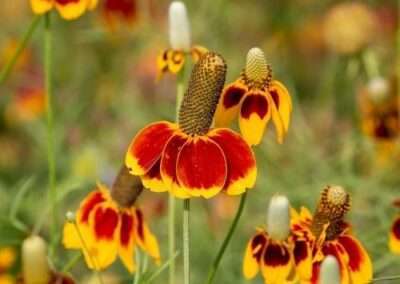
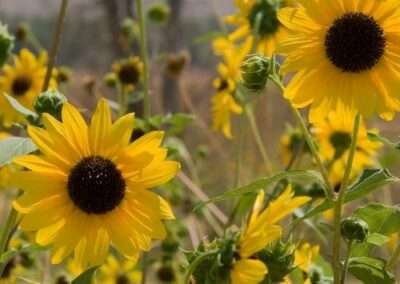
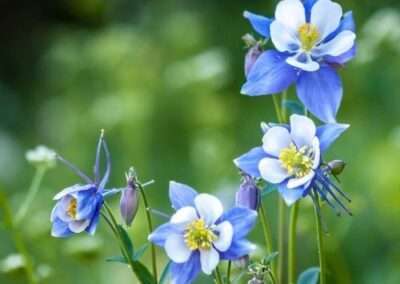
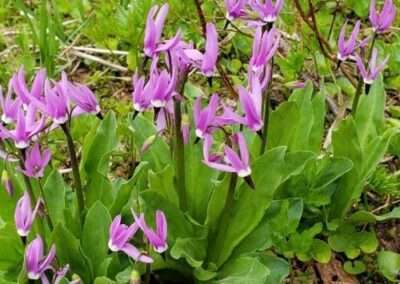
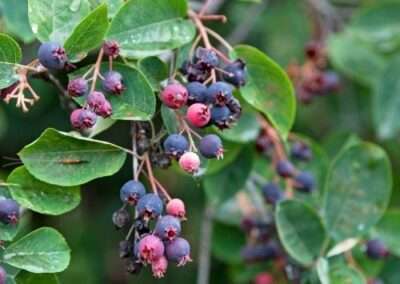
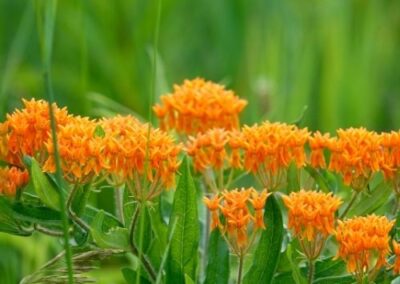
Badlands National Park is home to a wide variety of plants that are adapted to its dry, windy environment. Grasses cover much of the park, while shrubs, wildflowers, and cacti grow in areas with enough soil and moisture. Plants such as buffalo grass and prickly pear cactus are well adapted to the park's harsh conditions and provide food and shelter for wildlife.

Animals
Mammals
Badlands National Park is home to many mammals that are adapted to its grasslands, rugged badlands, and areas near the White River. These animals play important roles in the park's ecosystem.
Bison (Bison bison): American bison graze on the park's grasslands. They are one of the largest land mammals in North America and are an important part of the prairie ecosystem.
Bighorn Sheep (Ovis canadensis): Bighorn sheep are well adapted to the steep, rocky slopes of the Badlands. Their strong legs and hooves help them move across rough terrain.
Pronghorn (Antilocapra americana): Pronghorn live in the park's open grasslands. They are known for their incredible speed and are the fastest land animal in North America over long distances.
Black-footed Ferret (Mustela nigripes): Black-footed ferrets are one of North America's most endangered mammals. They have been reintroduced to the Badlands as part of conservation efforts and depend heavily on prairie dogs for food and shelter.
Black-tailed Prairie Dog (Cynomys ludovicianus): Prairie dogs live in large underground colonies called towns. Their burrows provide shelter for other animals, making them an important part of the prairie ecosystem.
Coyote (Canis latrans): Coyotes are adaptable predators found throughout the park. They eat a variety of foods, including small mammals, birds, and insects.
Swift Fox (Vulpes velox): Swift foxes are small, fast-moving foxes that live in prairie habitats. They mainly hunt small mammals and are most active at night.
American Badger (Taxidea taxus): Badgers are powerful diggers that use their strong claws to dig burrows and search for prey. They often eat rodents, including prairie dogs.
Bobcat (Lynx rufus): Bobcats are secretive predators that live in the park's grasslands and rocky areas. They hunt small mammals and birds.
Mule Deer (Odocoileus hemionus): Mule deer can be found throughout the park. They eat grasses, shrubs, and other plants and are named for their large ears.
White-tailed Deer (Odocoileus virginianus): White-tailed deer are most often found near the White River and other areas with trees and water. They feed on plants, shrubs, and grasses.
Porcupine (Erethizon dorsatum): Porcupines are large rodents that may be found in wooded areas and along river corridors. They eat plants, bark, and other vegetation.
Reptiles
Badlands National Park is home to several reptile species that are adapted to its dry grasslands, rocky areas, and badlands. These reptiles help keep the ecosystem balanced by eating insects, rodents, and other small animals.
Prairie Rattlesnake (Crotalus viridis): Prairie rattlesnakes live in the park's grasslands and rocky areas. They are venomous and use their rattle as a warning when they feel threatened.
Bullsnake (Pituophis catenifer sayi): Bullsnakes are large, non-venomous snakes found in grasslands and open areas. When threatened, they may hiss and shake their tails, which can make them sound like rattlesnakes.
Plains Hog-nosed Snake (Heterodon nasicus): Plains hog-nosed snakes are well adapted to the dry Great Plains. They use their upturned snouts to dig through loose soil and are known for their unusual defensive behavior when threatened.
Plains Gartersnake (Thamnophis radix): Plains gartersnakes can be found in grasslands and near areas with water. They are non-venomous and eat small animals such as insects, amphibians, and other small prey.
Eastern Yellow-bellied Racer (Coluber constrictor flaviventris): These fast-moving, non-venomous snakes live in open areas such as grasslands. They hunt during the day and feed on insects, small mammals, lizards, and other animals.
Short-horned Lizard (Phrynosoma hernandesi): Short-horned lizards are small, flat-bodied reptiles covered with spiny scales. They live in dry areas and mainly eat ants and other insects.
Western Painted Turtle (Chrysemys picta bellii): These freshwater turtles can be found in ponds and other suitable water habitats. They often bask on logs or rocks and feed on plants and small aquatic animals.
Common Snapping Turtle (Chelydra serpentina): Snapping turtles live in freshwater habitats, including ponds and streams. They have powerful jaws and should be observed from a safe distance.
Western Terrestrial Gartersnake (Thamnophis elegans): These non-venomous snakes may be found in grasslands and areas near water. They eat a variety of small animals, including insects and amphibians.
Birds
Badlands National Park is home to many bird species, from large birds of prey soaring over the cliffs to small songbirds living in the grasslands. The park's badlands, prairies, and areas along the White River provide a variety of habitats for birds.
Golden Eagle (Aquila chrysaetos): Golden eagles can be seen soaring above the park's cliffs and open spaces. They use their excellent eyesight to hunt mammals and other animals.
Turkey Vulture (Cathartes aura): Turkey vultures are often seen gliding high above the park. They help the ecosystem by feeding on dead animals.
Prairie Falcon (Falco mexicanus): Prairie falcons live in the open landscapes of the Badlands. They hunt birds, small mammals, and other prey and may nest on rocky cliffs.
Swainson's Hawk (Buteo swainsoni): These hawks spend the warmer months in the Badlands before migrating south for winter. They can often be seen soaring over the grasslands.
Western Meadowlark (Sturnella neglecta): Western meadowlarks are common in the park's grasslands. Their bright, flute-like songs are a familiar sound across the prairie.
Say's Phoebe (Sayornis saya): Say's phoebes are small flycatchers that live in open and rocky areas. They often perch on rocks or other high spots while searching for insects.
Mountain Bluebird (Sialia currucoides): Mountain bluebirds can be found in open areas of the park, especially during migration and the breeding season. Males are known for their bright blue feathers.
Black-billed Magpie (Pica hudsonia): Black-billed magpies are intelligent and adaptable birds found in a variety of habitats. They may be seen around grasslands, shrubs, and wooded areas.
Common Raven (Corvus corax): Ravens are large, intelligent birds that can be seen flying over the Badlands or perched on cliffs and rock formations.
Western Kingbird (Tyrannus verticalis): Western kingbirds are common in open habitats during the warmer months. They catch insects from the air and often perch on fences or branches.
Burrowing Owl (Athene cunicularia): Burrowing owls are small owls that live in underground burrows. They may use abandoned prairie dog burrows for shelter and nesting.
Cassin's Sparrow (Peucaea cassinii): Cassin's sparrows live in open grasslands and are more often heard than seen. Their song is especially noticeable during the breeding season.
Fish
Badlands National Park has limited fish habitat because much of the park is dry grassland and rugged badlands. The White River flows through the southern part of the park and supports some fish, although it is not known for having a large or diverse fish population.
White River Fish: Fish can be found in the White River, including species such as channel catfish, common carp, and plains killifish. The river's fish community is adapted to its changing water levels and conditions.
Limited Water Habitat: The park has few permanent streams, ponds, and other bodies of water. Many small streams flow only after rain or snowmelt, making them poor habitats for fish.
Role in the Ecosystem: Fish in the White River are part of the park's larger food web. They provide food for animals such as birds and other wildlife that live near the river.
Amphibians
Badlands National Park has a small number of amphibian species. The park's dry climate and limited permanent water make it harder for amphibians to live and breed. However, some species can be found near rivers, ponds, and temporary pools.
Northern Leopard Frog (Lithobates pipiens): Northern leopard frogs live near wetlands, ponds, streams, and other areas with water. They may be found near the White River and other suitable habitats in the park.
Plains Spadefoot Toad (Spea bombifrons): Plains spadefoot toads are adapted to dry grasslands and spend much of their time underground. After heavy rains, they may come out and quickly breed in temporary pools.
Western Tiger Salamander (Ambystoma mavortium): Western tiger salamanders live in grasslands and other habitats near water. They spend part of their lives on land but return to ponds and other water sources to breed.
"For centuries humans have viewed South Dakota's celebrated Badlands with a mix of dread and fascination."
― National Park Services
“It looks a bit like the inside of a cave that has been turned inside out and warmed by the sun.”
―
"The Bad Lands grade all the way from those that are almost rolling in character to those that are so fantastically broken in form and so bizarre in color as to seem hardly properly to belong to this earth."
- Theodore Roosevelt
"The Badlands' geologic formations consist of a peculiarly beautiful succession of imposing mounds, deep canyons, and towering spires. Magnificent in its desolation, the barren beauty of the Badlands is unexcelled."
- President Franklin D. Roosevelt
Explore More With Us
Stay updated on National Parks EDU resources, park news, community updates, and and ways to explore, and protect.

National Parks Edu's mission is to help kids and families understand what makes these places so important. Because when you learn about nature, you start to care about protecting it.
National Parks EDU is an independent educational website and is not affiliated with, endorsed by, sponsored by, or officially connected to the National Park Service (NPS) or the U.S. government. © National Parks EDU. All Rights Reserved. October 17, 2026